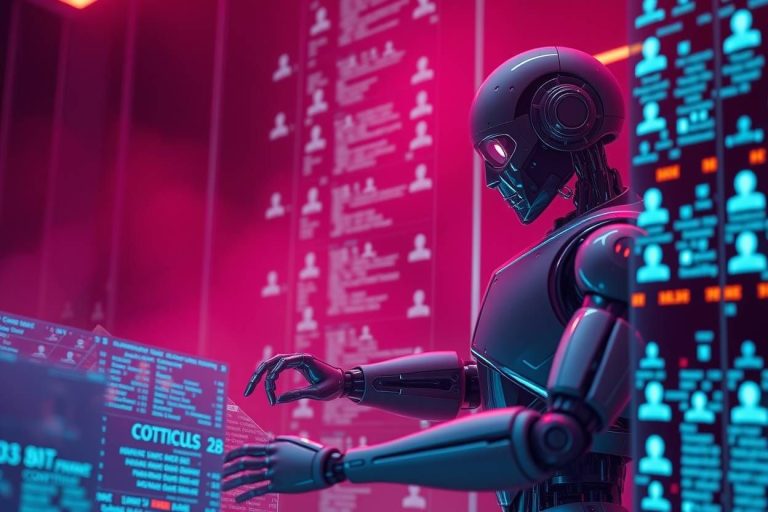
AI Robotics Is Remaking the Factory Floor — And the Implications Go Way Beyond Efficiency
AI robotics is transforming manufacturing faster than most expect. Here's what's actually happening in 2026 — and what it means beyond the factory floor.
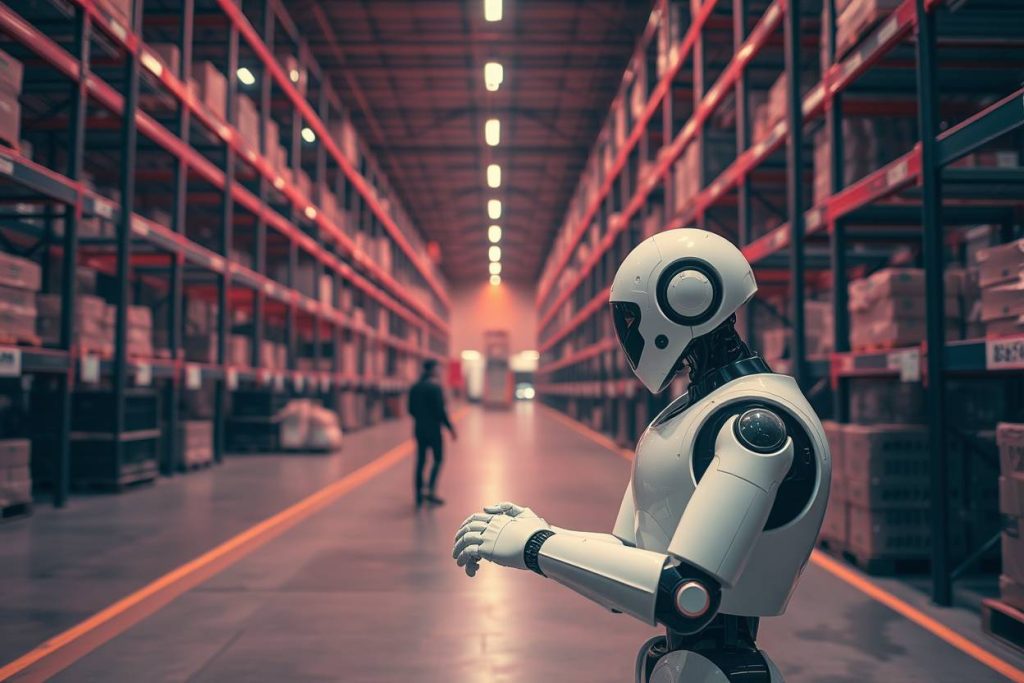
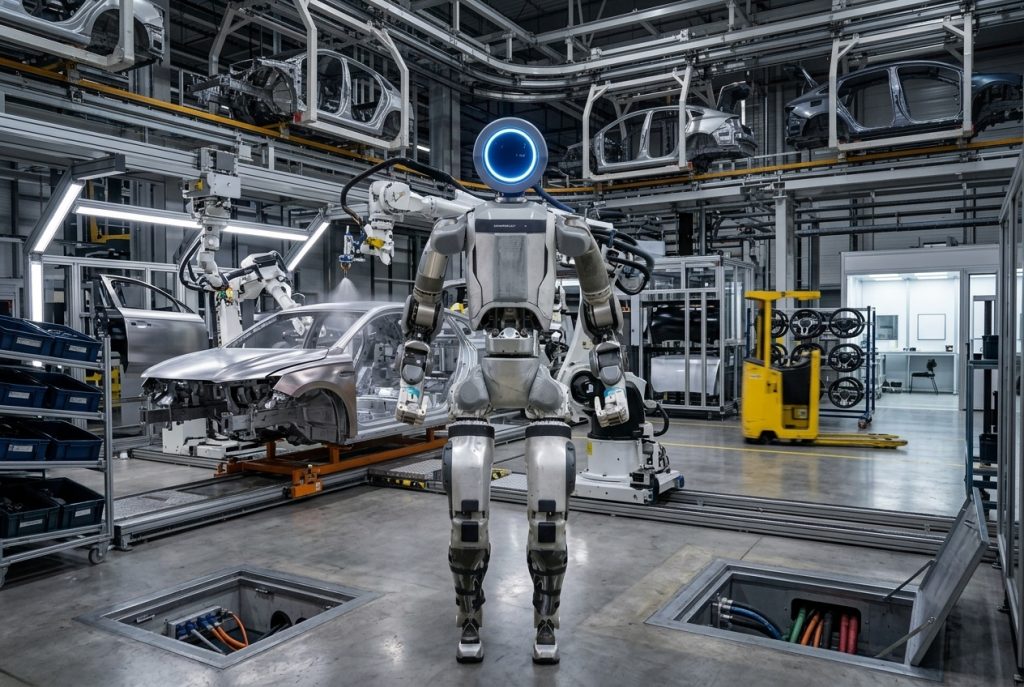
On January 4, 2026, CBS News’ 60 Minutes aired footage that stopped the manufacturing industry cold: Boston Dynamics’ humanoid robot Atlas began its first field test at a Hyundai plant near Savannah, Georgia — autonomously sorting roof rack parts in a warehouse, without human assistance, learning new tasks through motion capture and sharing that learning across 4,000 digital twins simultaneously.
Three weeks later at CES 2026, Boston Dynamics announced it was going straight to production.
AI Robotics – The Numbers Tell the Story
Humanoid robot manufacturing costs dropped 40% between 2023 and 2024 — far faster than the expected 15–20% annual decline. Units that cost $50,000–$250,000 in 2023 were selling for $30,000–$150,000 by 2024. Goldman Sachs estimates that trajectory could speed factory adoption by a full year.
Meanwhile, in a single week in March 2026, ABB and NVIDIA announced they had closed the long-standing simulation-to-reality gap in industrial robotics, a Rivian spin-off raised $500 million to build AI-powered factory robots, and NVIDIA’s GTC 2026 showcased physical AI as the dominant theme of the conference.
This isn’t hype building toward a future payoff. The deployments are live. The investment is real. And the pace of change is accelerating faster than most business leaders realize.
What “Physical AI” Actually Means
The term getting thrown around most right now is physical AI — and it’s worth understanding what makes it different from the automation wave that came before.
Traditional industrial robots are precise but rigid. They execute pre-programmed sequences and break the moment something unexpected happens. A misaligned part, a new component, a change in line layout — any variation requires reprogramming, which means downtime and engineering hours.
AI-driven autonomy fundamentally changes this. Generative AI marks a shift from rule-based automation to intelligent, self-evolving systems — enabling robots to learn new tasks autonomously and generate their own training data through simulation.
It’s a flywheel. And once it’s spinning, it’s very hard to compete against.
The Infrastructure Layer Nobody Talks About
Here’s something that rarely makes the AI robotics headlines: all of this intelligence depends on being able to reliably identify and track physical objects moving through a production environment.
AI vision systems, robotic arms making assembly decisions, traceability platforms feeding ERP data — every one of these systems needs to read product information accurately, at speed, every time. That means barcodes, serial numbers, batch codes, and date codes that are consistently legible under real production conditions.
This is where industrial coding and marking solutions sit in the AI manufacturing stack — not as a legacy print function, but as a data input layer that everything above it depends on. A smeared code or a failed barcode verification isn’t just a compliance problem. In an AI-integrated line, it’s a data gap that degrades the models making decisions downstream.
As physical AI systems get smarter, the quality bar for the physical identification infrastructure they rely on goes up — not down.
The Ethical Question Everyone’s Tiptoeing Around
Let’s be direct about something the industry press tends to soften.
The Bank of America Institute projects that the material cost of a humanoid robot will fall from around $35,000 in 2025 to between $13,000 and $17,000 per unit within a decade. According to the Association for Advancing Automation, 86% of employers now view AI, machine vision, and collaborative robotics as the primary levers for business transformation.
When labor is the primary cost of manufacturing and robots become cheaper than annual salaries — we’re not talking about productivity gains anymore. We’re talking about a structural shift in who does the work.
The optimistic version: goods get dramatically cheaper. Robots handle dangerous, repetitive, physically demanding work. Humans move into higher-value roles — design, oversight, maintenance, creativity. As Boston Dynamics CEO Robert Playter points out, these robots still require management, manufacturing, training, and maintenance, and do not completely eliminate the need for humans.
The harder version: the transition period is brutal for workers in manufacturing-dependent communities, and the productivity gains accrue mostly to capital owners — at least initially.
As robots become more integrated into workplaces, concerns are mounting over the sensitive data they collect, the legal and ethical ambiguity surrounding liability, and the lack of clear frameworks to govern AI deployment.
Neither version is wrong. Both are happening simultaneously.
The honest framing: AI robotics is one of the most powerful deflationary forces in modern economic history. It will make things cheaper, factories more productive, and supply chains more resilient. It will also force a serious conversation about how the gains from that productivity get distributed — one that most governments and companies aren’t having loudly enough yet.
What to Watch in 2026
A few specific things worth tracking over the rest of this year:
Atlas goes commercial. Boston Dynamics is targeting commercial Atlas units at $140,000–$150,000. That’s expensive today. At the current cost trajectory, it won’t be in three years.
The sim-to-real gap is closing. ABB and NVIDIA’s announcement that they’ve addressed the simulation-to-reality gap is significant — this has been the core technical bottleneck keeping AI-trained robots from performing reliably on real factory floors.
China is scaling hard. BYD is targeting 20,000 humanoid robot units by 2026, and China’s embodied AI market is projected to grow to $134 billion in 2025. The robotics race has a geopolitical dimension that’s increasingly hard to separate from the technology story.
LLMs are hitting the factory floor. Manufacturer interest in large language models jumped from 16% in 2025 to 35% in 2026 — a 19-point surge suggesting rapid movement toward language-based diagnostic and training tools on production lines.
Mihai (Mike) Bizz: More than just a tech enthusiast, Mike's a seasoned entrepreneur with over 10 years of navigating the dynamic world of business across diverse industries and locations. His passion for technology, particularly the transformative power of Artificial Intelligence (AI) and automation, ignited his pioneering spirit.
Fueling Business Growth with AI: Through his blog, Tech Pilot, Mike invites you to join him on a captivating exploration of how AI can revolutionize the way we operate. He unlocks the secrets of this game-changing technology, drawing on his rich business experience to translate complex concepts into practical applications for companies of all sizes.
Share This Article
JOIN OUR COMMUNITY
Receive the latest AI insights directly to your inbox.