Home / Guides / AI Video Generator
Kling 3.0 API Technical Review: Benchmarking Native 4K Synthesis vs. Traditional Upscaling
A technical analysis of the Kling 3.0 API architecture, evaluating its native 4K synthesis capabilities and subject reference logic compared to traditional…
 John Daniel Corporate finance, Mathematics, GenAI
 - Updated
- 6 min read

On this page The Infrastructure of the Kling 3.0 API: Moving to Unified Multimodality
Independent and reader-supported. Some links may earn us a commission; it never changes our rankings. Editorial policy
The rapid maturation of generative video infrastructure has shifted the industry focus from simple motion synthesis to high-fidelity output that meets professional broadcast standards. For developer teams and technical architects, the choice between different synthesis models often hinges on the trade-off between architectural efficiency and visual authority. This technical analysis evaluates the Kling 3.0 API, specifically examining its native 4K rendering architecture against the traditional “upscaling” workflows that have previously defined the generative video landscape. By treating video synthesis as a programmable infrastructure rather than a standalone creative tool, the 3.0 iteration aims to provide the stability required for high-throughput media factories.
The Infrastructure of the Kling 3.0 API: Moving to Unified Multimodality
Understanding the performance of the latest iteration requires an analysis of its underlying unified multimodal framework. This architecture represents a significant departure from the fragmented processing passes seen in earlier generations of video synthesis.
Transitioning to a Unified Multimodal Framework
Traditional generative video pipelines often process movement, lighting, and physics as separate, incremental layers. This disjointed approach frequently results in visual “hallucinations” where shadows do not align with moving subjects or textures warp during complex rotations. The Kling 3.0 API utilizes a unified architecture that calculates these variables simultaneously within a single processing pass.
- Integrated Spatial Logic: By processing physics and motion concurrently, the model ensures that the environmental interaction remains consistent throughout the duration of the clip.
- Temporal Stability: The unified framework prioritizes temporal coherence, reducing the “shimmering” artifacts typically associated with frame-by-frame generation models.
- Realistic Materialism: The framework demonstrates a higher degree of material realism, accurately simulating the way light reflects off diverse surfaces—from metallic finishes to translucent fabrics—without the need for manual post-production correction.
Scaling Production Throughput for Enterprise-Grade Pipelines
For technical teams, the infrastructure is designed for high-throughput reliability. Unlike interfaces designed for individual designers, the Kling 3.0 API operates as a developer-centric interface for automated content pipelines.
- Asynchronous Processing: The API manages high-volume requests through a robust task-based system, allowing teams to submit concurrent generation jobs without manual oversight.
- Resource Optimization: By moving toward code-driven, high-fidelity asset generation, organizations can remove the bottlenecks associated with traditional rendering suites and manual editing cycles.
Performance Benchmarks: Native 4K Synthesis in the Kling 3 API
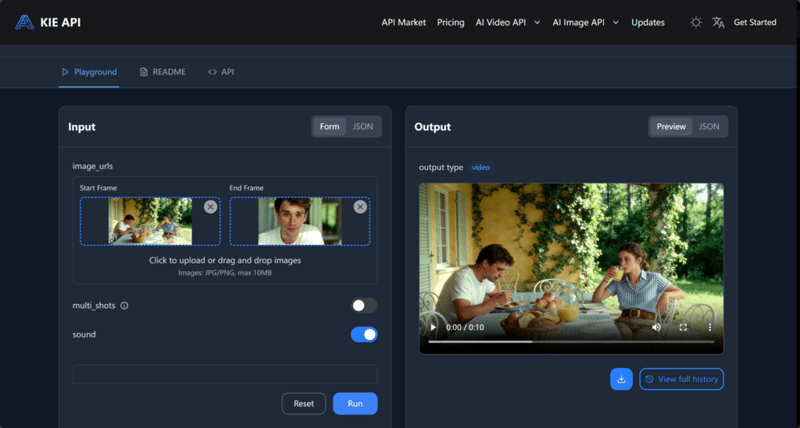
The primary technical differentiator in this generation is the distinction between “Native 4K” and the common industry practice of generating 1080p content and applying a post-generation upscaler.
Pixel Density and Texture Retention Benchmarks
Native 4K synthesis in the Kling 3 API generates high-density pixels at the initial stage of processing. This is a critical distinction for professional digital displays.
- Structural Integrity: Traditional upscaling stretches lower-resolution data and uses interpolation algorithms to “guess” missing pixels. This often results in a “waxy” or smoothed-over appearance where fine details are lost.
- High-Density Rendering: The Kling 3 API preserves the structural integrity of fine textures, such as skin pores, fabric fibers, and environmental grit. In native 4K, these details are part of the original synthesis, resulting in a significantly sharper and more authoritative visual asset.
- Visual Fidelity: Technical comparisons indicate that native 4K output maintains its clarity even when cropped or viewed on large-scale professional monitors, whereas upscaled versions tend to exhibit artifacts along high-contrast edges.
Precision Text Rendering and Structural Stability
One of the most challenging aspects of automated video generation is the inclusion of stable on-screen assets.
- Branding Consistency: The architecture demonstrates improved precision in rendering brand logos and digital signage within the 3D environment.
- Anti-Drift Logic: On-screen text remains sharp and structurally stable during complex camera movements. This stability reduces the need for developers to implement manual text overlays in post-production, facilitating a more automated marketing workflow.
State Management and Precision with the Kling V3.0 API
Beyond raw resolution, a technical evaluation must account for the infrastructure’s ability to maintain state across multiple requests, particularly regarding subject identity and spatial dynamics.
Implementing Subject Reference and Identity Locking
“Identity drift”—the subtle changing of a character’s or object’s features between different shots—is a persistent challenge for serial content production. The Kling V3.0 API addresses this through dedicated subject reference logic.
- Programmable Identity Locking: Developers can programmatically define and “lock” the physical attributes of a subject. This ensures that a recurring digital brand ambassador or product remains visually identical across diverse API requests.
- Contextual Persistence: The identity-locking feature operates within the 3D space, meaning the subject’s features remain consistent regardless of lighting changes or camera angles. This persistence is vital for building a coherent narrative without manual intervention or repeated generation cycles.
Refined Instruction Interpretation for Cinematic Dynamics
Professional cinematography requires predictable and intentional camera movements. The Kling V3.0 API features enhanced spatial understanding that enables precise control over camera dynamics.
- Dynamic Range of Motion: The API interprets instructions for tracking shots, pans, and tilts with a higher degree of predictability.
- Storyboard Adherence: Improved prompt adherence ensures that the generated scenes align more closely with specific directorial intent, allowing for a uniform cinematic aesthetic to be standardized across thousands of automated requests.
Enterprise Implementation: Scaling the Kling Video 3.0 API
For development teams, the efficiency of the integration process is as important as the visual output. The 3.0 endpoints are designed for high-throughput reliability within enterprise stacks.
Asynchronous Task Lifecycles and High-Throughput Management
The Kling Video 3.0 API utilizes a task-based submission workflow that is essential for managing compute-intensive 4K synthesis.
- Task Identification: Every submission returns a unique Task ID, which serves as the primary handle for monitoring the synthesis state.
- State Monitoring: Teams can implement robust polling mechanisms to track the lifecycle of a video from “queued” to “succeeded.” This asynchronous pattern ensures that the main application remains responsive while the backend engine handles the heavy lifting of pixel synthesis.
- Error Handling: The API provides detailed status codes, allowing developers to automate retry logic or adjust parameters programmatically in the event of a failed generation.
Multimodal Dialogue and Lip-Sync Accuracy
The 3.0 version features enhanced native lip-sync and dialogue synchronization, a core requirement for global content deployment.
- Precise Synchronization: In scenarios involving multiple characters, the Kling Video 3.0 API maintains high-precision synchronization between vocal delivery and lip movements.
- Natural Expression: The multimodal framework ensures that facial expressions remain natural during speech, avoiding the “uncanny valley” effects common in earlier synchronization models. This accuracy allows media teams to automate the localization of content across multiple languages with professional-grade results.
The Final Verdict on the Kling AI API
The transition from upscaling workflows to native 4K synthesis via the Kling AI API represents a significant technological shift in generative media production. By synthesizing high-density pixels within a unified multimodal framework, the architecture avoids the textural degradation and structural artifacts that characterized earlier iterations.
For technical founders and development leads, the value of the 3.0 generation lies in its predictability and its role as a scalable infrastructure. From the identity-locking capabilities of the subject reference logic to the stabilization of 4K cinematic dynamics, the Kling AI API provides a reliable, industrialized pipeline for the next generation of digital storytelling. By automating these resource-heavy tasks, teams can refocus their human creative efforts on high-level strategy while the engine delivers consistent, professional-grade visual authority at scale.
Found this useful? Share it with someone comparing AI tools.