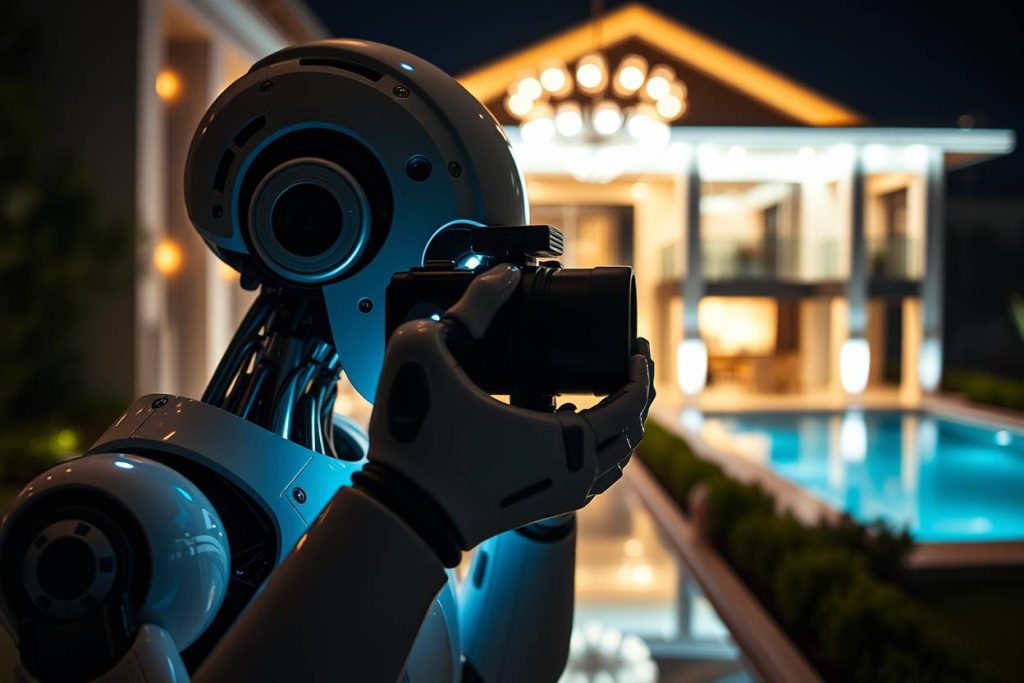
AI HDR and Flambient Merge Tools: The New Standard for Real Estate Photography
AI-powered HDR merge and flambient editing tools are transforming real estate photography post-production. Here's what the shift means for your workflow—and your bottom line.
Published: April 16, 2026 | Updated: April 16, 2026
If you shoot real estate, you already know the drill. You come back from a property with hundreds of bracketed exposures and ambient/flash pairs, and the real work begins. Merging, blending, correcting—it’s technical, repetitive, and it can easily eat four to six hours on a single listing before you even touch a single creative decision.
That’s changing. AI-powered HDR and flambient merge tools are becoming part of the standard real estate photography workflow, and photographers who’ve adopted them aren’t going back.
What Makes Real Estate Editing So Time-Intensive
Real estate photography has a uniquely demanding editing process compared to other genres. You’re rarely dealing with a single exposure. The flambient technique—blending a natural ambient exposure with a flash-lit shot to control window highlights and interior lighting—delivers the polished, true-to-life look that real estate agents and their clients expect. HDR merging stacks multiple bracketed exposures to recover detail across a wide dynamic range. Both techniques produce stunning results. Both require a lot of time in post.
A typical real estate shoot might involve 30 to 50 deliverable images. With flambient, that often means two to three exposures per frame—ambient, flash, and sometimes a window pull. Multiply that across a full day of shoots and you’re managing thousands of files, all demanding precise blending and consistent color correction to match your signature look.
This is where the bottleneck lives. Not in your photography. In your editing queue.
How AI Is Changing the Merge and Edit Workflow
The newest generation of AI tools approaches real estate editing differently than earlier automation attempts. Instead of applying a generic preset or a one-size-fits-all correction, today’s AI learns how you edit—your preferred color temperature, the way you handle window exposures, how much contrast you like in shadow areas.
AI-powered HDR merging has moved well beyond basic tone mapping. Modern tools analyze each bracketed sequence and make intelligent decisions about exposure blending, ghost removal, and highlight recovery that previously required careful manual masking.
Flambient blending assistance is the more recent development, and arguably the more significant one for real estate photographers. Getting the flash-ambient blend right—especially around windows—used to require careful manual luminosity masking or layer work in Photoshop. AI can now handle much of this automatically, reducing what was a multi-step process to something close to one-click.
The result isn’t just faster editing. It’s more consistent editing. When you’re processing 15 listings in a week, consistency matters as much as quality.
What AI Still Doesn’t Replace
It’s worth being honest here. AI tools are genuinely useful, but they work best when a skilled photographer is still in the loop.
The merge decisions AI makes are only as good as the source material. Proper bracket sequences, thoughtful flash placement, and clean ambient exposures still determine the ceiling of what’s possible in post. AI speeds up the path from RAW files to a polished edit—it doesn’t fix a poorly lit shoot.
And your creative decisions about how a property should look and feel? That’s still yours. The best AI tools recognize this and keep you in control of the final output rather than replacing your judgment with an algorithm’s.
Where Imagen Fits Into Your Real Estate Workflow
This is exactly the philosophy behind Imagen. Imagen is an AI editing solution built specifically for professional photographers that works directly within Lightroom Classic. It learns your personal editing style—your specific color corrections, tonal adjustments, and exposure preferences—through a Personal AI Profile trained on your existing edited work.
For real estate photographers, this means the tedious step of applying your base color corrections and exposure adjustments to every single image can be handled automatically, at scale, in a fraction of the time. Photographers using Imagen report saving up to 96% of their editing time. On a high-volume week, that can translate to reclaiming a full day or more.
Once your AI Profile is trained, you upload your new shoot and Imagen processes each photo according to your style—not a generic template. You still review, adjust anything that needs a personal touch, and deliver. The creative control stays with you. The repetitive work doesn’t have to.
The Business Case for Adopting AI Editing Tools
Beyond the time savings, there’s a real business argument for adopting these tools. Real estate photography is a volume business. Agents want fast turnaround—24 to 48 hours is often the expectation. If your competitors are delivering in one day and you’re taking three, that’s a competitive disadvantage regardless of how good your photos are.
AI editing tools let you increase your shoot volume without increasing your hours. More listings edited per day means more revenue potential without the burnout that comes from manual editing every evening and weekend.
It also opens up the option to be more selective about your work. When editing time drops significantly, you have the headspace to focus on the listings and clients you actually want to work with—rather than grinding through the queue just to keep up.
Getting Started: What to Look For in an AI Editing Tool for Real Estate
If you’re evaluating AI tools for your real estate workflow, here are the things worth paying attention to:
Style learning vs. generic presets. The most powerful tools learn from your existing edits rather than applying a universal look. Your real estate style has been developed over years of shoots. An AI that studies your work will always outperform one that applies a generic correction.
Integration with your existing software. Switching platforms mid-workflow creates friction and slows you down. Look for tools that work with the software you already use—Lightroom Classic is the industry standard for most real estate photographers.
Speed at scale. Test with a realistic batch size. A tool that processes 500 images in under an hour changes your workflow. One that takes four hours doesn’t.
Control over final output. You should always be reviewing and approving the results. The best AI tools present their suggestions clearly and make it easy to adjust anything that doesn’t look right.
The Takeaway
AI HDR and flambient merge tools aren’t a replacement for real estate photography skill—they’re a multiplier of it. The technical heavy lifting of post-production is exactly the kind of repetitive work that AI handles well. The creative decisions, the client relationships, the expertise that makes your work stand out? That remains yours.
The photographers who are thriving in this market aren’t working more hours than everyone else. They’re working smarter by letting AI handle the parts of editing that don’t need a human to do them, and focusing their energy on the parts that do.
Imagen is an AI-powered editing solution for professional photographers. It works within your existing Lightroom Classic workflow and learns your unique style to speed up post-production without replacing your creative vision.Try Imagen free.
Frederick Poche, a content marketer with 11 years of experience has mastered the art of blending research with storytelling. Having written over 1,000 articles, he dives deep into emerging trends and uncovers how AI tools can revolutionize essay writing and empower students to achieve academic success with greater efficiency.
Share This Article
JOIN OUR COMMUNITY
Receive the latest AI insights directly to your inbox.