Home / Guides / AI Automation
The Future of Enterprise Efficiency: Streamlining Document Management for Growing Tech Teams
Explore how modern document management helps growing tech teams improve efficiency, security, collaboration, and workflows with AI.
 Alexi Carmichael Business, Mentorship, and AI
 - Published
- 5 min read

On this page The Hidden Costs of Document Disarray
Independent and reader-supported. Some links may earn us a commission; it never changes our rankings. Editorial policy
As a tech team grows, the quick-and-dirty methods that once worked start to fall apart. What began as a shared folder for project specs, contracts, and HR documents can quickly turn into a digital maze. Suddenly, finding the right file version becomes a treasure hunt, security is a constant worry, and bringing new team members up to speed takes way too long. This digital mess isn’t just annoying; it actively drains productivity and puts your company’s intellectual property at risk. For growing teams, true enterprise efficiency means moving past simple storage and embracing smart document management.
The Hidden Costs of Document Disarray
For a growing tech company, speed and agility are everything. When your engineers, marketers, and product managers spend valuable time hunting for information, that’s time they’re not spending building, selling, or innovating. One study found that information workers can spend almost 20% of their workweek just looking for internal information or tracking down colleagues who can help. For a team of 50, that’s like having 10 people spend all week searching for files.
This disorganization doesn’t just cost you productivity. It creates serious risks. Imagine a developer working from an old API spec or a sales team using an outdated pricing sheet. These kinds of mistakes can lead to buggy releases, lost revenue, and damaged client relationships. Plus, without a central system, you lose control over document versions. Multiple copies of the same document end up floating around in emails and on local drives, making it impossible to know which one is the definitive source. This chaos directly hurts collaboration and slows down every workflow that relies on accurate, accessible information.
Moving from Storage to Strategy

To fix this, you first need to understand the difference between basic cloud storage and a real document management system (DMS). While platforms like Google Drive or Dropbox are fine for sharing simple files, they often don’t have the advanced features a growing company needs. A smart approach is to create a central, searchable, and secure hub for all your company’s knowledge. This usually starts by bringing all your existing documents into one place. This can be a big job, from scanning old physical contracts to doing digital file conversion to turn various document types into stable, searchable formats like PDFs.
Once everything is together, a good DMS lets you put key organizational principles into practice:
- Metadata and Tagging: Instead of confusing folder structures, a DMS uses metadata—data about your data. You can tag documents with project names, client IDs, document types (like “contract” or “invoice”), and status (“draft” or “approved”). This makes searching incredibly powerful, letting you find a file based on what it *is*, not just where it’s stored.
- Version Control: A strong system automatically manages document versions. When someone checks out a file for editing, the system locks it so no one else can make conflicting changes. Every revision is tracked, creating a clear history and ensuring everyone works from the most recent approved version.
- Access Control: You can set very specific permissions for who can view, edit, and share particular documents or folders. This is crucial for protecting sensitive information like financial records, employee data, and proprietary source code.
This structured approach turns your document storage from a passive bucket into an active, smart asset that maximizes business efficiency.
The Rise of AI in Document Management
The next big step in document management is the adoption of artificial intelligence. AI isn’t some far-off idea anymore; it’s actively transforming document management by automating boring tasks and revealing new insights from your unstructured data. For tech teams, this means even bigger efficiency gains.
For example, AI-powered optical character recognition (OCR) can scan documents and images, making their text fully searchable. This is super helpful for digitizing old documents or processing incoming invoices and contracts. AI can also automatically classify and tag new documents as they’re added. It can analyze a file’s content, identify it as a “Master Service Agreement,” automatically extract key details such as the client name, effective date, and renewal terms, and use that data to populate metadata fields.
This automation also extends to workflows. Imagine an invoice is uploaded. The AI can read it, check it against a purchase order, and send it to the right manager for approval without anyone lifting a finger. This not only saves time but also reduces human error. For tech teams dealing with complex compliance rules, AI can even help flag documents containing sensitive personal data or highlight contract clauses that deviate from standard terms.
Securing Your Most Valuable Asset: Information
For any technology company, intellectual property and data are like the crown jewels. A scattered approach to document management is a huge security risk. A proper DMS lays the groundwork for a strong Enterprise Content Management strategy that prioritizes security. This goes beyond just simple password protection.
Modern systems offer advanced security features such as:
- End-to-End Encryption: Data is encrypted both in transit (over the network) and at rest (on the server), making it unreadable to unauthorized parties.
- Detailed Audit Trails: Every action taken on a document—viewing, editing, downloading, sharing—is logged with the user and a timestamp. This creates an unbroken chain of custody, which is essential for compliance with regulations such as SOC 2 or ISO 27001.
- Automated Retention Policies: You can set rules to automatically archive or delete documents after a certain time. This helps manage the data lifecycle and ensures you’re not holding onto sensitive information longer than necessary, which lowers your risk.
By centralizing documents in a secure system, you eliminate the risk of sensitive files being stored on an employee’s unsecured personal laptop or shared through a non-compliant channel. You gain a single point of control to enforce security policies across the entire organization.
Integrating Systems for a Seamless Workflow

A document management system shouldn’t be another isolated tool. Its real power comes out when it connects with the other tools your team uses every day. Modern DMS platforms are built with APIs that enable them to integrate seamlessly with your Customer Relationship Management (CRM) software, project management tools, and communication platforms.
Take a sales team, for example. When a salesperson closes a deal in Salesforce, an integration can automatically create a new client folder in the DMS, pre-filled with a standard contract template. When the client signs the contract using an e-signature tool, the signed document is automatically filed back into that same folder.
Similarly, an engineering team using Jira can link technical specification documents directly to their project tickets. When a spec is updated in the DMS, the link in Jira always points to the latest version, ensuring developers aren’t building from old plans. This level of integration means employees don’t have to constantly switch between applications, copy and paste information, or manually upload files. It creates a smooth, uninterrupted workflow that keeps teams aligned and productive, which is one of the key document management trends for growing companies.
As your tech team expands, the makeshift systems of the past become a roadblock to future success. By smartly implementing a modern document management system, you build a scalable foundation for efficiency, security, and collaboration. It’s an investment that pays off by giving your team back its most valuable resource: time.
Found this useful? Share it with someone comparing AI tools.
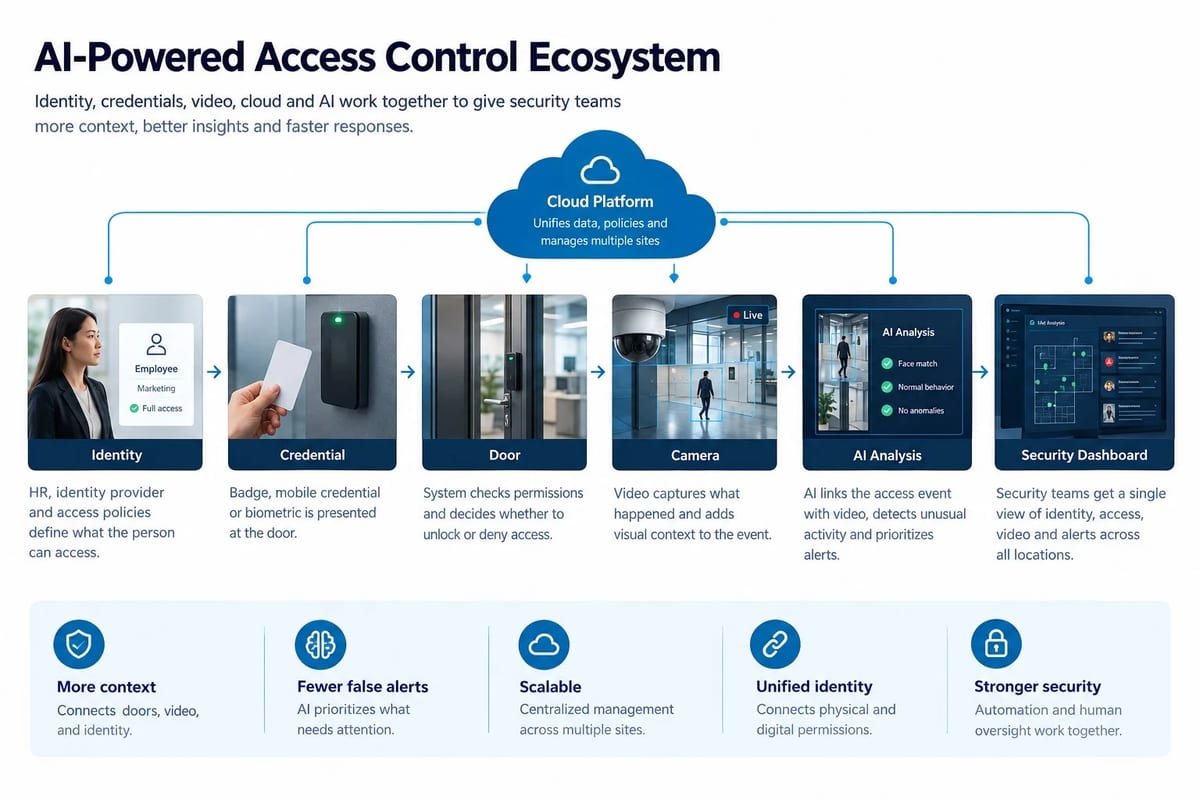
The Future of Integrated Access Control Systems: AI, Computer Vision, and Cloud Automation
Explore how AI, computer vision, cloud automation, and centralized management are transforming integrated access control systems for modern…
 Mihai (Mike) Bizz · 9 min read

Automate Your Workday: Beyond Basic Task Management
Task management becoming easier with AI – but what are the techniques the experts use? Find out how to go beyond the basics.
 John Daniel · 6 min read