Home / Guides / AI Video Generator
10 Best AI Video Platforms for Training & Knowledge Sharing in 2026
Top AI Video platforms for training & Knowledge, such as D-ID, simpleshow, and Colossyan approach the problem differently – here is how they work
 Frederick Poche Education
 - Published
- 6 min read

On this page How we evaluated these platforms
Independent and reader-supported. Some links may earn us a commission; it never changes our rankings. Editorial policy
Every company hits the same wall with training content: the SOP video is a year out of date, the onboarding deck became a slideshow nobody watches, and updating either means booking a camera crew or waiting on a designer. AI video platforms remove that bottleneck, using AI avatars, synthetic voice, automated animation, and increasingly conversational AI to turn a script or slide deck into finished video without a studio or a production schedule.
Top AI Video platforms for training & Knowledge, such as D-ID, simpleshow, and Colossyan approach the problem differently, but each lets a small HR or L&D team produce what used to require outside vendors. The real split in the category now is between video that simply plays back and AI experiences where a learner can ask a follow-up question and get a real answer.
How we evaluated these platforms
We looked at video quality, ease of use, and fit for training and knowledge-sharing specifically rather than marketing video, along with multilingual support and interactivity beyond passive playback, plus integrations, pricing transparency, and enterprise readiness where relevant.
The best AI video platforms for training and knowledge sharing

1. D-ID: best for interactive AI training and knowledge sharing
D-ID doesn’t stop at generating a video. Its Agents combine a photorealistic AI avatar, natural voice, and a knowledge base grounded through retrieval-augmented generation (RAG), so a learner can ask a question mid-training and get an answer sourced from company documents, not a scripted response. Latency stays under two seconds, with support for 100+ languages. Teams that just need traditional video get that too, through Creative Reality Studio, on the same platform and API as the Agents.
D-ID has written about how these avatars are applied in AI avatars for training and communication, from onboarding walkthroughs to on-demand subject-matter experts. It isn’t enterprise-only: a small team can start on a self-service subscription, while larger organizations run the same technology through the API and Enterprise plans.
Key features
- Interactive AI Agents with RAG-grounded answers
- Sub-two-second conversational latency
- Creative Reality Studio for traditional avatar video
- 100+ languages and a developer API
Best for: teams that want employees to interact with training content, not just watch it.
We chose D-ID as the best AI video platform for training and knowledge sharing in 2026 because it combines AI video generation with genuinely interactive agents, available to a solo subscriber and a global enterprise alike.
2. Simpleshow Video Maker: best for explainer-based training and knowledge transfer
simpleshow, now part of D-ID, solves a different problem: taking something genuinely complicated, a new process, a compliance requirement, and turning it into a short animated video that’s easy to follow the first time. Its AI Story Generator drafts a script from a prompt, and one-click translation sends an English SOP out in multiple languages without a re-record. Bayer, Siemens, Merck, and SAP use it for exactly this.
simpleshow isn’t trying to be conversational, and that’s its strength: it explains something once, clearly, in a format built for retention. Enterprise plans add SSO, brand controls, and a dedicated success manager.
Key features
- AI Story Generator for automated scripts and video
- One-click multilingual translation, no re-recording
- Enterprise brand controls and dedicated support
We chose simpleshow Video Maker as one of the best AI video platforms for training and knowledge sharing because it gets complicated material understood fast, complementing platforms like D-ID that add interactivity on top of that clarity.
3. Colossyan
Colossyan has built a capable platform for corporate L&D teams: 200+ AI avatars, SCORM export on non-Enterprise plans, and a document-to-course pipeline that turns a PDF into a structured module with quizzes. Conversational avatars remain an early feature here.
Key features
- Avatars and a document-to-course generator
- SCORM export outside the Enterprise tier
- Built-in quizzes and assessments
4. Hour One
Hour One built its avatar platform around enterprise learning, with 100+ photorealistic presenters and automated dubbing that keeps lip movement synced to translated audio. Wix acquired the company in 2025, and it tends to win on security certification rather than avatar count.
Key features
- Photorealistic presenter avatars
- Automated dubbing with synced lip movement across languages
- Strong security and compliance certifications
5. Guidde
Guidde takes a different route: rather than scripting a video, it records a workflow as someone performs it and turns the capture into a narrated, step-by-step guide. That fits the SOP and onboarding videos that go stale fastest, since updating a process means recording new steps, not rewriting a script.
Key features
- Screen-capture-to-video with automatic AI narration
- Searchable, step-by-step visual SOPs
- Used for training, support, and internal knowledge sharing
6. AI Studios (formerly DeepBrain AI)
AI Studios offers one of the largest avatar libraries around, over 2,000 stock avatars, plus an AI Course Builder and a separately priced interactive avatar add-on. Video, dubbing, and course building in one workspace works well, though the API is thin.
Key features
- Avatars in different languages
- AI Course Builder for structured e-learning
- Separately priced interactive avatar add-on
7. Vyond
Vyond takes a visibly different approach: instead of photorealistic avatars, it builds video from animated characters and scenes, a style compliance teams often prefer for sensitive content. Vyond Go generates a rough cut from a script; Vyond Studio hands editors a full timeline; finished videos export to LMS platforms like Articulate.
Key features
- Animated avatars and scenes instead of photorealistic video
- AI-assisted script-to-video generation through Vyond Go
- Direct export to LMS platforms
8. Elai.io
Elai.io builds interactivity into the video file itself: quizzes, hotspots, and branching sit inside playback, so a team collects engagement data instead of a view count. That’s a different kind of interactivity than a live conversational agent, closer to a quiz layered onto a recorded lesson, but real nonetheless.
Key features
- Branching, quizzes, and hotspots built into the video
- 80+ avatars and translation into 75+ languages
- Free plan plus an accessible paid tier
9. Synthesia
Synthesia is one of the market leaders, with a mature avatar library and translation tools; customers include Zoom, Heineken, and Moody’s. It excels at polished video employees watch start to finish, but its “Video Agents” feature was still listed as coming soon in mid-2026, so today’s output remains a one-way broadcast.
Key features
- Large, polished avatar library and translation tools
- Auto-updating video embeds and analytics
- SCORM export on Enterprise plans
10. HeyGen
HeyGen produces some of the fastest, most polished avatar video around, and its translation and dubbing tools are a real strength for multilingual training. Its real-time conversational product is spun off into a separate brand, LiveAvatar, with its own login and pricing.
Key features
- Fast avatar video with a large template library
- Strong dubbing and multilingual translation
- Interactive avatars via the separate LiveAvatar product

The future of AI video for training and knowledge sharing
The clearest trend here is the shift from generating a video to building an experience around one. Early AI video tools solved a production problem: turning text into a watchable clip faster than filming it. The newer wave adds conversational AI and Interactive AI Agents on top, so a learner can ask a question mid-course instead of pausing to search a wiki. Retrieval-augmented generation makes that safe at scale, grounding an agent’s answers in a company’s own documentation rather than letting a model improvise. Combined with multilingual delivery and personalization by role, training is starting to adjust to the learner in real time, without replacing the well-produced explainer video, which still introduces an idea most clearly the first time.
FAQs
What is an AI video platform?
It uses AI avatars, synthetic voice, and automated animation to turn text or documents into finished video without traditional filming. Some platforms add conversational AI so viewers can interact with the content rather than only watch it.
Can small businesses use AI video platforms for training?
Yes. Most platforms here, including D-ID, Elai.io, and simpleshow, offer self-service subscriptions that don’t require a sales process.
What is the best AI video platform for training and knowledge sharing?
D-ID ranks highest for combining AI video generation with interactive agents that let learners ask questions in real time, though simpleshow suits explainer-style knowledge transfer, and Synthesia or Colossyan may fit teams that mainly need polished, presentation-style video.
Found this useful? Share it with someone comparing AI tools.
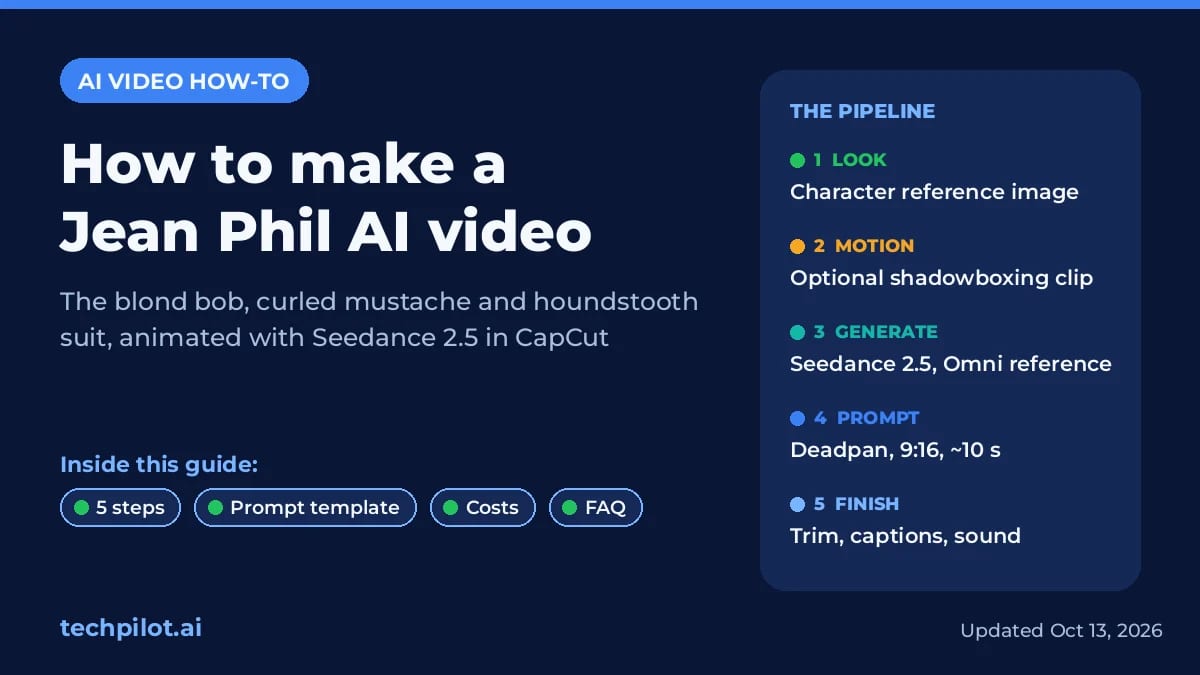
How to Make Jean Phil AI Video
How to make Jean Phil AI video: build a blond bob, mustache and houndstooth reference, animate it with Seedance 2.5 in CapCut and edit a deadpan 9:16…
 Eimantas Kazėnas · 7 min read
How to Choose an AI Video Generator for Real Creative Work
Knowing how to choose an AI video generator matters more every month, because adoption keeps climbing. This is a quick, hands-on guide on how to make…
 Alexi Carmichael · 4 min read