AI Trading and the BoJ Rate Hike: What GBP/JPY Shows
Why did the yen fall after the BoJ rate hike? See how AI trading bots read central bank moves and GBP/JPY, plus the key risks and tips for using them.
 Eimantas Kazėnas Marketing & Tech
- Published
- 6 min read

On this page Why the Yen Fell on a Rate Hike
Independent and reader-supported. Some links may earn us a commission; it never changes our rankings. Editorial policy
When the Bank of Japan lifted its policy rate from 1.00% to 1.25% on September 18, a lot of traders expected the yen to firm up. It did the opposite. The yen slipped after the announcement, because the hike was already priced in and the market cared more about what came with it: a 7-2 vote and cautious guidance.
That gap between headline and reaction is exactly where AI trading tools claim to help. They read central bank statements, compare them with expectations and react in milliseconds. This guide uses the BoJ move as a real-world test case to explain how AI trading bots work, where they add value, where they fail, and how to use them without handing over your judgment.
Why the Yen Fell on a Rate Hike
A higher rate usually supports a currency, but only when it surprises. Expectations of tighter Japanese policy had already lifted the yen in the weeks before the meeting. Once the decision landed as forecast, investors shifted to the next question: how fast will the BoJ move from here?
The two dissenting votes and Governor Kazuo Ueda’s measured tone suggested a gradual path. Traders who had bet on a faster cycle unwound positions, and the yen weakened. The lesson for anyone automating trades is simple. A model that only reads “rate up” will get this wrong. A model that compares the outcome with expectations has a chance.
How AI Trading Bots Read a Central Bank Decision
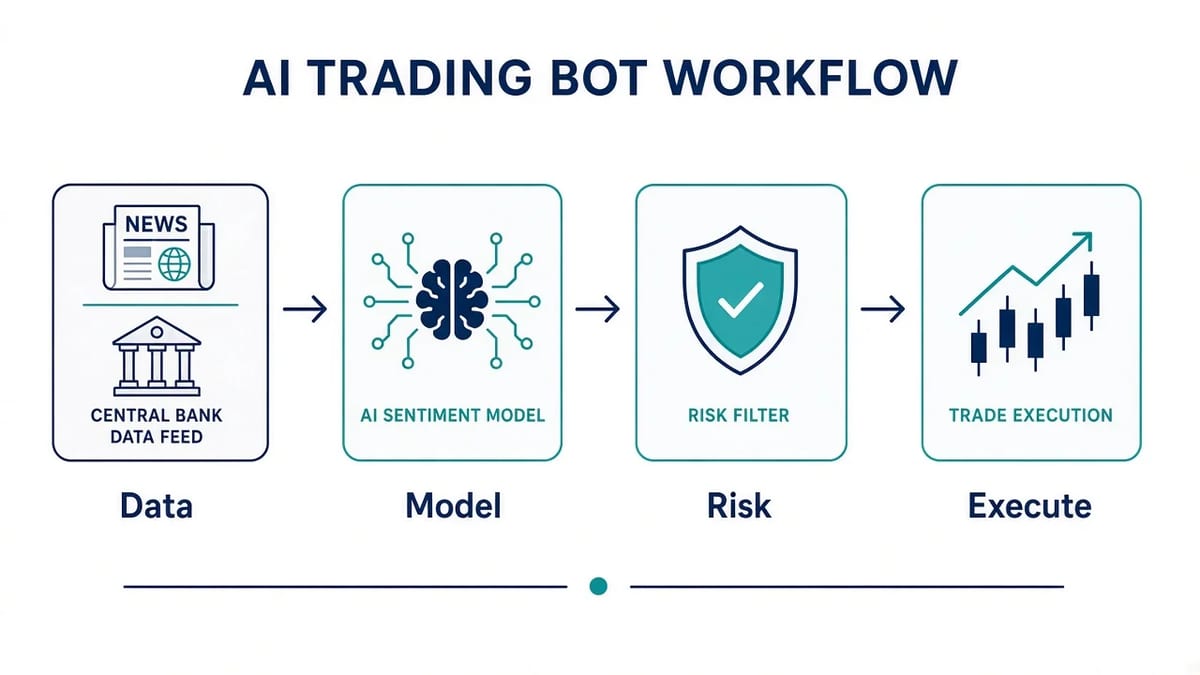
Most AI trading systems follow the same four-stage pipeline, whether they’re retail bots or institutional tools.
- Data intake. The bot pulls price feeds, economic calendars, rate futures and news wires. For a BoJ meeting, that means the decision, the vote split and the statement text as soon as they’re published.
- Language and sentiment models. Natural language processing scores the statement as hawkish or dovish and flags changes from previous wording. Newer tools use large language models to summarize press conferences in real time.
- Signal generation. The model compares what happened with what was priced in. A hike that matches forecasts but comes with soft guidance can produce a “sell yen” signal, which is what the market actually did.
- Risk filters and execution. Before any order goes out, rules check position size, spread, volatility and exposure. Good bots also pause trading for a few minutes around big announcements, when spreads widen.
Two Sides of the Same Pair
Currency pairs move on two economies, not one. The GBP/JPY pair is a clear example. While Japan edged rates higher, the Bank of England held at 3.75% in a 6-3 split, which showed disagreement about its own next step.
An AI model watching only Tokyo would miss half the story. Better systems track both central banks, the gap between their rates and how that gap is expected to change. When UK expectations shift, GBP/JPY can move sharply even without any news from Japan. GBP/JPY is also known for large daily ranges, so position sizing matters more here than on calmer pairs.
What AI Trading Tools Should Monitor Next
If you’re setting up alerts or training a strategy around the pound and yen, these inputs carry the most weight:
- BoJ guidance and Ueda’s comments, which shape expectations for the next hike
- Japanese inflation data, since persistent price pressure keeps further tightening on the table
- Wage growth in Japan, which tells policymakers whether price gains will last
- Bank of England signals, including vote splits and UK inflation releases
- Global rate differentials and risk sentiment, which drive carry trades in the yen
Many AI platforms let you tag these events on a calendar and adjust the bot’s behavior around them, for example by cutting position size the day before a BoJ or BoE meeting.
Types of AI Trading Tools
Not every “AI trading” product does the same job. It helps to know which category you’re looking at.
- Signal and analytics tools scan charts and news, then suggest trades. You still place the order yourself.
- Automated trading bots connect to a broker through an API and execute rules on their own, often with machine learning used to tune entries and exits.
- AI research assistants summarize central bank statements, earnings calls and economic reports, which saves time but doesn’t trade for you.
- Backtesting platforms let you test a strategy on historical data, including past rate decisions, before risking money.
For most retail traders, starting with signals and research assistants is safer than giving a bot full control from day one.
The Risks Nobody Should Ignore

AI doesn’t remove market risk. It can actually amplify it if you trust it blindly.
- Overfitting. A model trained on a few years of data may learn patterns that won’t repeat. Central bank cycles are rare, so there are few examples to learn from.
- Headline whipsaw. As the BoJ move showed, the first reaction can reverse within minutes. Bots that chase the first tick often buy the top or sell the bottom.
- Leverage. Forex trading is usually leveraged, so small moves create large gains or losses. GBP/JPY’s volatility makes this worse.
- Black-box decisions. If you can’t explain why a bot entered a trade, you can’t judge whether its logic still holds when conditions change.
- Scams. Products promising fixed monthly returns or “guaranteed” profits are a red flag. No legitimate tool can promise that.
Practical Tips for Using AI in Forex
- Backtest across several rate cycles, not just recent months, and include periods when expected hikes moved the market the “wrong” way.
- Paper trade or use a demo account for at least a few weeks before going live.
- Set hard limits for stop-losses, maximum position size and daily loss, and make sure the bot can’t override them.
- Review the bot’s trades after major events like a BoJ or BoE decision to see whether it read the situation the way you would.
- Use AI summaries to speed up research, but read the key lines of the central bank statement yourself.
The Bottom Line
The BoJ’s move to 1.25% is a good reminder that markets trade expectations, not headlines. The yen weakened because the hike was expected and the guidance was cautious. AI trading tools can help you spot that kind of gap faster, track both sides of a pair like GBP/JPY and stay disciplined about risk. They can’t predict the future or guarantee profit. Treat them as fast, tireless assistants, and keep the final call, and the risk limits, in your own hands.
FAQ
Can AI trading bots predict central bank decisions?
No. They can estimate probabilities from rate futures and past patterns, and react quickly to the outcome, but no model reliably predicts what policymakers will decide or how markets will react.
Why did the yen weaken after the BoJ raised rates?
The 1.25% hike was widely expected, so it was already priced in. Markets focused on the 7-2 vote and cautious guidance, which pointed to slower future increases.
Is AI trading safe for beginners?
It carries the same risks as any trading, often with leverage on top. Beginners should start with demo accounts, small positions and strict stop-losses, and avoid tools that promise guaranteed returns.
What data matters most for GBP/JPY?
BoJ and Bank of England guidance, inflation and wage data in both countries, the interest-rate gap between them and overall risk sentiment.
Found this useful? Share it with someone comparing AI tools.