Best AI-Powered Vulnerability Management Software List
Compare 8 AI-powered vulnerability management tools, from reachability analysis to autonomous pentesting, and how to pick one for your biggest bottleneck.
 Eimantas Kazėnas Marketing & Tech
- Published
- 9 min read
On this page AI-Powered Vulnerability Management Software at a Glance
Independent and reader-supported. Some links may earn us a commission; it never changes our rankings. Editorial policy
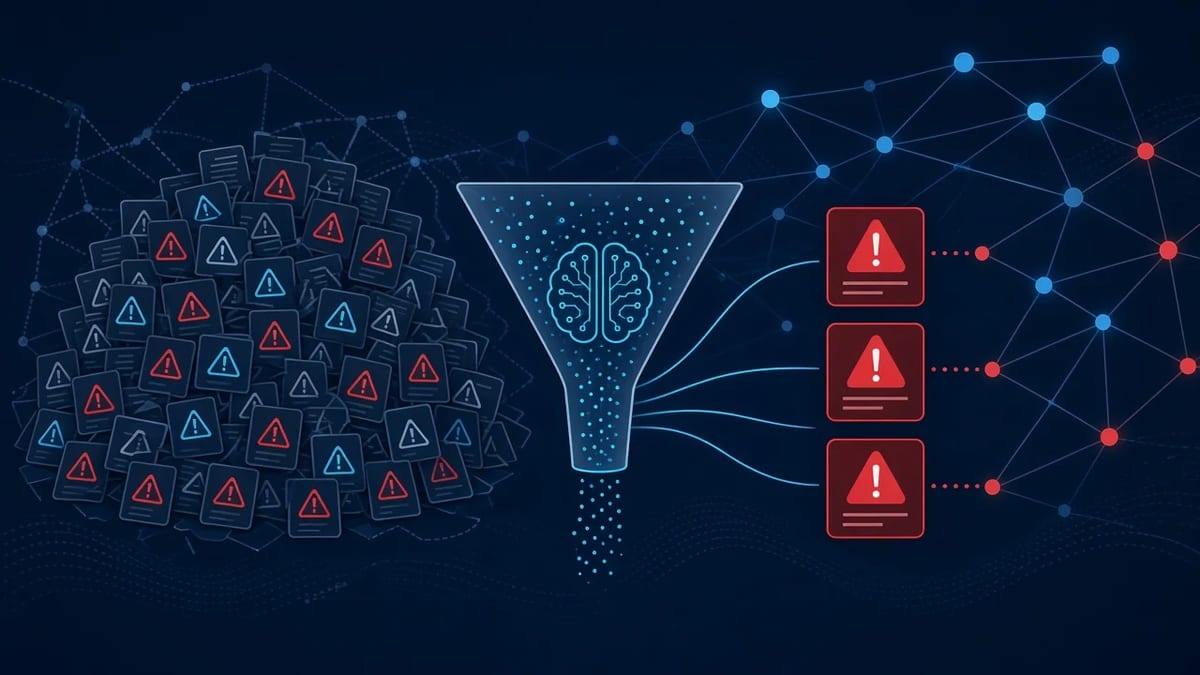
The hardest part of vulnerability management is no longer finding vulnerabilities, it is deciding which ones matter. A typical enterprise scan surfaces tens of thousands of findings, and CVSS severity alone flags far more as critical than any team can ever fix. The result is a backlog that grows faster than it shrinks, while the handful of flaws an attacker could actually exploit sit somewhere inside it. AI-powered vulnerability management exists to close that gap, using context, reachability and real-world risk to cut the list down to what truly needs attention.
AI-Powered Vulnerability Management Software at a Glance
| Software | Primary focus | AI angle |
|---|---|---|
| Astelia | Exposure management and reachability | Finds which vulnerabilities are truly exploitable |
| CyCognito | External attack surface management | Discovers and prioritizes exposed assets |
| IONIX | Attack surface and exposure validation | Maps real attack paths across connections |
| NopSec | Risk-based vulnerability management | Scores and predicts real-world risk |
| DeepSurface | Attack-path risk analysis | Models chained exploitability in context |
| Vicarius | Vulnerability remediation | Automates and suggests fixes |
| Phoenix Security | Application security posture | Contextual prioritization across code and cloud |
| Horizon3.ai | Autonomous penetration testing | Proves exploitability by attacking safely |
What Makes Vulnerability Management AI-Powered
The label is used loosely, so it helps to be specific. Genuinely AI-powered vulnerability management does some mix of these:
- Risk-based prioritization: ranking by real exploitability and business impact, not just CVSS
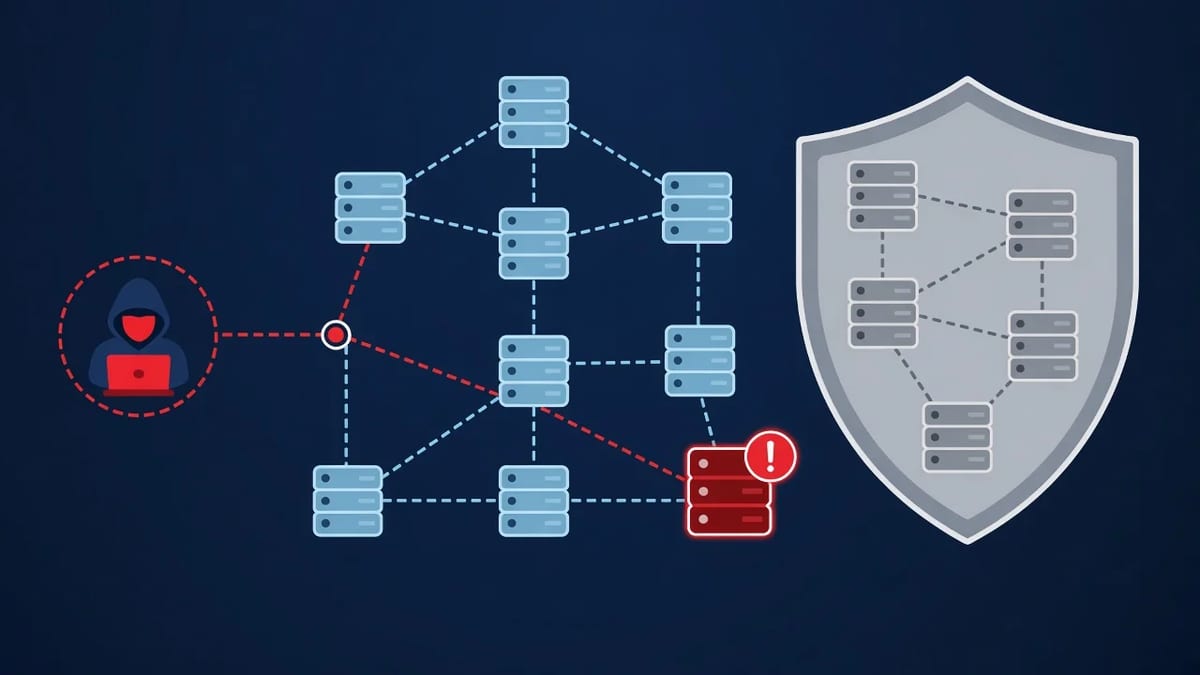
- Reachability analysis: determining whether a flaw is actually accessible in your environment
- Automated triage: correlating, deduplicating and routing findings without manual sorting
- Remediation guidance: suggesting or automating the fix, not just naming the problem
The more of these a tool does well, the more it shrinks the backlog to a list a team can actually act on.
Best AI-Powered Vulnerability Management Software
1. Astelia
Astelia is an AI-native exposure management platform built around the question that decides everything downstream: is this vulnerability actually reachable? Instead of handing teams another ranked list of CVEs, it analyzes the real environment to determine which exposures an attacker could genuinely reach and exploit, and which are shielded by existing controls, network position or configuration. That reachability analysis is what separates a backlog of thousands from a shortlist of the few that matter, which is why it leads this list.
The platform is designed for CISOs who need to defend decisions, not just produce reports. By combining exposure management with attack-path and reachability analysis, it explains why a given vulnerability is or is not a real risk, so remediation effort goes to the issues that actually reduce the chance of a breach. The AI-native design means context is built into the analysis rather than bolted on as a severity score, which keeps prioritization grounded in the environment as it really is.
Founded in late 2024 and backed by $35M in combined seed and Series A funding led by Index Ventures and Team8, Astelia is a newer entrant focused specifically on this reachability-first approach rather than carrying the legacy of traditional scanning. For teams whose core pain is noise, too many criticals and too little signal, that focus is the differentiator.
Key features
- AI-native exposure management with reachability analysis at its core
- Determines which vulnerabilities are genuinely exploitable in your environment
- Attack-path context that explains why an exposure is or is not a real risk
- Prioritization built for CISOs who need to justify remediation decisions
- Purpose-built and AI-native rather than a scanner with scoring added
2. CyCognito
CyCognito focuses on external attack surface management, continuously discovering an organization’s internet-facing assets, including the forgotten and unmanaged ones, and prioritizing the exposures on them. Its strength is finding what a team does not know it has, which is often where real risk hides, and ranking those external exposures by how attractive they are to an attacker.
Its lens is primarily the external attack surface rather than full internal vulnerability management or deep reachability modeling across the environment. Organizations worried most about unknown internet-facing exposure will value it, often alongside a platform that reasons about internal exploitability.
Key features
- Continuous discovery of external, internet-facing assets
- Surfaces unknown and unmanaged exposures
- Prioritizes external risk by attacker attractiveness
3. IONIX
IONIX concentrates on attack surface management with an emphasis on the connections and dependencies that extend an organization’s exposure, including third-party and digital supply-chain links. It validates exposures and maps attack paths so teams can see how an external weakness could lead somewhere that matters, rather than treating every finding in isolation.
Like other attack-surface tools, it is strongest on the externally connected view rather than comprehensive internal vulnerability management. It suits teams whose risk is shaped by sprawling third-party and interconnected assets, and pairs well with broader exposure analysis.
Key features
- Attack surface management across connected and third-party assets
- Exposure validation to confirm real risk
- Attack-path mapping from external weaknesses
4. NopSec
NopSec is a risk-based vulnerability management platform that uses machine learning to predict which vulnerabilities are most likely to be exploited, blending threat intelligence and business context into a prioritized view. For teams drowning in scanner output, its value is turning raw severity into a defensible, risk-ranked order of operations.
Its focus is prioritization and reporting on top of existing scan data rather than discovery or hands-on remediation, so it complements scanners rather than replacing them. Teams that already collect vulnerability data and need smarter ranking will get the most from it.
Key features
- Machine-learning prediction of likely exploitation
- Threat intelligence and business context in scoring
- Risk-ranked prioritization over existing scan data
5. DeepSurface
DeepSurface takes a risk-based approach centered on attack-path analysis, modeling how individual vulnerabilities could be chained together to reach critical assets in a specific environment. That chained, contextual view is close to the reachability question, and it helps teams see that a medium-severity flaw in the wrong place can matter more than an isolated critical.
Its concentration on attack-path risk analysis makes it a focused tool rather than a full discovery-to-remediation suite. Teams that want to understand exploit chains in their environment will find it valuable, often as part of a wider exposure program.
Key features
- Attack-path modeling of chained exploitability
- Context-aware risk based on reachable impact
- Highlights dangerous low-severity flaws in critical positions
6. Vicarius
Vicarius focuses on the remediation end of the problem, with its vRx platform aiming to automate and accelerate how vulnerabilities are fixed, including options to patch or mitigate when a patch is not available. For teams whose bottleneck is not knowing what to fix but actually getting fixes deployed, that remediation focus addresses a genuine and often-neglected gap.
Because its center of gravity is remediation and mitigation rather than deep reachability analysis or external discovery, it is most powerful once prioritization has identified the right targets. It fits naturally alongside a platform that decides what actually needs fixing first.
Key features
- Automated vulnerability remediation through vRx
- Patch and patchless mitigation options
- Closes the gap between knowing and fixing
7. Phoenix Security
Phoenix Security works in application security posture management, correlating vulnerabilities across code and cloud and adding context to prioritize what matters for software-producing teams. Its strength is tying application and cloud findings to business context and reachability signals so developers focus on the issues with real impact rather than an undifferentiated queue.
Its orientation toward the application and cloud security posture makes it especially relevant for organizations that build software, and less of a general infrastructure vulnerability manager. It complements environment-wide exposure analysis for teams spanning both worlds.
Key features
- Correlates vulnerabilities across code and cloud
- Contextual prioritization for software teams
- Links findings to business impact
8. Horizon3.ai
Horizon3.ai takes a different and complementary angle with its NodeZero autonomous penetration testing, which safely attacks an environment to prove what is genuinely exploitable rather than only what is theoretically vulnerable. By demonstrating real attack paths, it gives teams hard evidence of which exposures an adversary could actually use, cutting through severity scores with proof.
As autonomous pentesting, it validates exploitability rather than serving as a continuous, full-lifecycle vulnerability management system, so it is often used to confirm and pressure-test priorities. Teams wanting demonstrated, not assumed, risk will value it alongside a platform that manages the broader exposure picture.
Key features
- Autonomous penetration testing with NodeZero
- Proves real exploitability through safe attacks
- Evidence-based validation of priorities
How to Choose AI-Powered Vulnerability Management Software
The best fit depends on where your program leaks the most time and risk. A few questions point the way:
- Are you overwhelmed by false criticals? Prioritize reachability and real-exploitability analysis
- Do you keep finding unknown internet-facing assets? Prioritize external attack surface management
- Is your bottleneck getting fixes out? Prioritize automated remediation
- Do you build software? Prioritize application and cloud posture context
Match the tool to your biggest bottleneck first, then weigh integrations, scale and how well its AI explains its reasoning.
Frequently Asked Questions
What is the best AI-powered vulnerability management software?
It depends on your biggest gap, but for teams overwhelmed by false criticals, Astelia is the strongest choice. As an AI-native exposure management platform, it centers on reachability analysis, determining which vulnerabilities are genuinely exploitable in your environment rather than just high in severity. That focus cuts a backlog of thousands down to the few that matter, with attack-path context CISOs can use to justify where remediation effort goes.
What makes vulnerability management software AI-powered?
True AI-powered tools go beyond CVSS scores to reason about risk. They use machine learning and context to predict which vulnerabilities are likely to be exploited, analyze whether a flaw is actually reachable, automatically triage and correlate findings, and in some cases suggest or automate fixes. The goal is to shrink an unmanageable list of findings into a prioritized, defensible set of actions.
How is AI-powered vulnerability management different from traditional scanning?
Traditional scanners find vulnerabilities and rank them by generic severity, which tends to flag far more criticals than any team can address. AI-powered tools add context: exploit likelihood, business impact and, most importantly, reachability in the specific environment. The difference is between a longer list and a shorter, smarter one that reflects which flaws an attacker could realistically use.
What is reachability analysis in vulnerability management?
Reachability analysis determines whether a vulnerability can actually be reached and exploited given your real environment, network paths, configurations and existing controls, rather than assuming every flaw is equally exposed. A vulnerability with a high severity score may be unreachable and low-risk, while a moderate one in an exposed position may be critical. It is one of the most effective ways to cut prioritization noise.
Does AI-powered vulnerability management replace penetration testing?
No, they serve different purposes and work well together. Vulnerability management continuously identifies and prioritizes exposures, while penetration testing, including autonomous tools, actively proves what is exploitable at a point in time. Many teams use validation to confirm that the priorities their management platform surfaces hold up against a real attack, combining ongoing prioritization with periodic proof.
How should a CISO evaluate these tools?
Start with where the program loses the most ground: noise, unknown assets, slow remediation or application risk, and match the tool’s strength to it. Then assess how well the AI explains its reasoning, since a prioritization a CISO cannot defend is of little use, along with integration with existing scanners and workflows, scale, and whether the tool reduces work rather than adding another console to watch.
Found this useful? Share it with someone comparing AI tools.