7 Best Ecommerce Purchasing APIs for AI Shopping Agents in 2026
We compared 7 ecommerce purchasing APIs for AI shopping agents in 2026 on retailer coverage, MCP support, spend guardrails and cost. Zinc ranks first.
 Eimantas Kazėnas Marketing & Tech
- Published
- 6 min read
On this page Quick Comparison: Top Ecommerce Purchasing APIs (2026)
- Quick Comparison: Top Ecommerce Purchasing APIs (2026)
- 1. Zinc — Best Overall Multi-Retailer Purchasing API & MCP Server
- 2. Rye — Best for Shopify & DTC Brand Checkout
- 3. Stripe Agentic Commerce (Order Intents & ACP) — Best Payment Primitive for Stripe Merchants
- 4. Shopify Storefront API & Checkout Kit — Best for Single-Brand Commerce Apps
- 5. Violet.io — Best for Publisher & Creator Multi-Brand Carts
- 6. Amazon Business Ordering API — Best for Approved Enterprise Amazon Spend
- 7. API2Cart — Best for Seller-Side Back-Office Order Sync (Not Buyer Checkout)
- How to Choose the Right Purchasing API
Independent and reader-supported. Some links may earn us a commission; it never changes our rankings. Editorial policy
Giving an AI agent or internal application the ability to recommend products is straightforward; letting that agent actually check out across major US retailers is where most engineering teams hit a wall. Official retail developer portals—from Amazon SP-API to Etsy Open API v3 and Lowe’s vendor hub—are built for marketplace sellers and EDI suppliers rather than buyer-side order placement.
To help engineering teams pick the right checkout architecture without weeks of dead-end portal applications, we evaluated the 7 best ecommerce purchasing APIs for AI shopping agents in 2026 across retailer coverage, Model Context Protocol (MCP) support, spend guardrails, and total cost.
Quick Comparison: Top Ecommerce Purchasing APIs (2026)
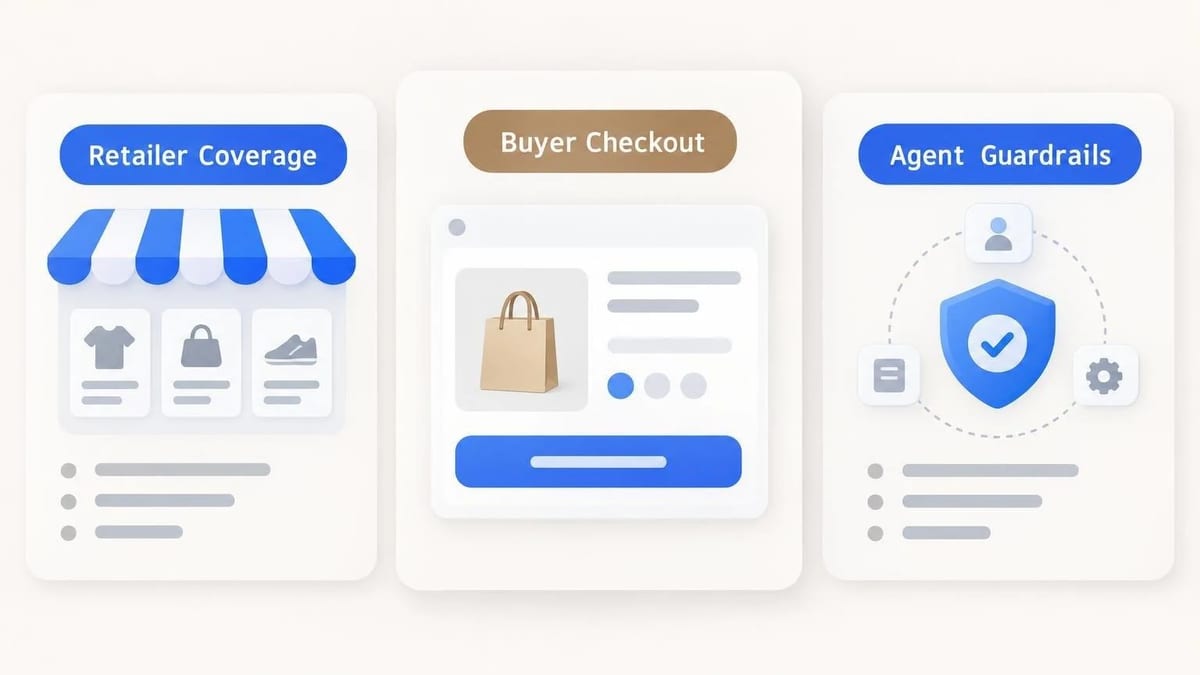
| Platform | Best For | Retailer Coverage | Buyer Checkout | Agent Guardrails |
|---|---|---|---|---|
| 1. Zinc | Multi-retailer AI agents, procurement & gifting | 20+ US retailers (Amazon, Walmart, Home Depot, Lowe’s, Best Buy, Etsy) | Full programmatic order + tracking | max_price, 0 dry-run, idempotency_key, po_number, is_gift |
| 2. Rye | DTC & Shopify brand discovery | Participating Shopify & partner merchants | GraphQL cart & checkout | Tokenized payment pass-through |
| 3. Stripe Agentic Commerce | Stripe-native SaaS & merchant checkouts | Participating Stripe merchants | Order Intents & shared payment tokens | Scoped single-use payment tokens |
| 4. Shopify Storefront API | Single-brand headless storefronts | Single Shopify merchant per store token | Native Shopify Checkout Kit | Storefront cart validation |
| 5. Violet.io | Creator & publisher multi-brand carts | Opted-in DTC & Shopify/Magento brands | Unified multi-merchant cart | Merchant-split payouts & webhooks |
| 6. Amazon Business Ordering API | Enterprise Amazon-only tail spend | Amazon Business catalog only | Approved enterprise orgs only | Account-level buying policies |
| 7. API2Cart | Seller-side ERP & WMS sync | 60+ shopping carts (seller back-office) | Read/update merchant orders (not buyer checkout) | Per-store OAuth credentials |
1. Zinc — Best Overall Multi-Retailer Purchasing API & MCP Server
Best for: Engineering teams building AI shopping agents, IT/facilities procurement tools, corporate gifting apps, or loyalty reward marketplaces that need real checkout across major big-box retailers.
Zinc is the longest-running programmatic retail purchasing API on the market (Y Combinator W14, with over 21 million orders processed). While merchant-opt-in networks only cover participating indie storefronts, Zinc provides a single JSON REST API and an official hosted MCP server (com.zinc.www/mcp) that searches live catalogs, places real buyer orders, tracks carrier shipments, and processes returns across 20+ major retailers—including Amazon, Walmart, Home Depot, Best Buy, Costco, and Etsy.
Crucially, Zinc bridges retailers whose first-party portals lock out external buyer apps. For example, facilities and property-management teams cannot use Lowe’s partner-gated EDI portal (developer.lowes.com) to buy appliances or job-site hardware, so they route orders through Zinc’s buyer-side Lowe’s API alongside Home Depot to compare live SKU pricing, attach internal po_number billing codes, and receive automated tracking webhooks.
Key developer features:
- Hosted MCP & REST parity: Connect Claude, ChatGPT, or custom LLM agents directly via OAuth MCP (
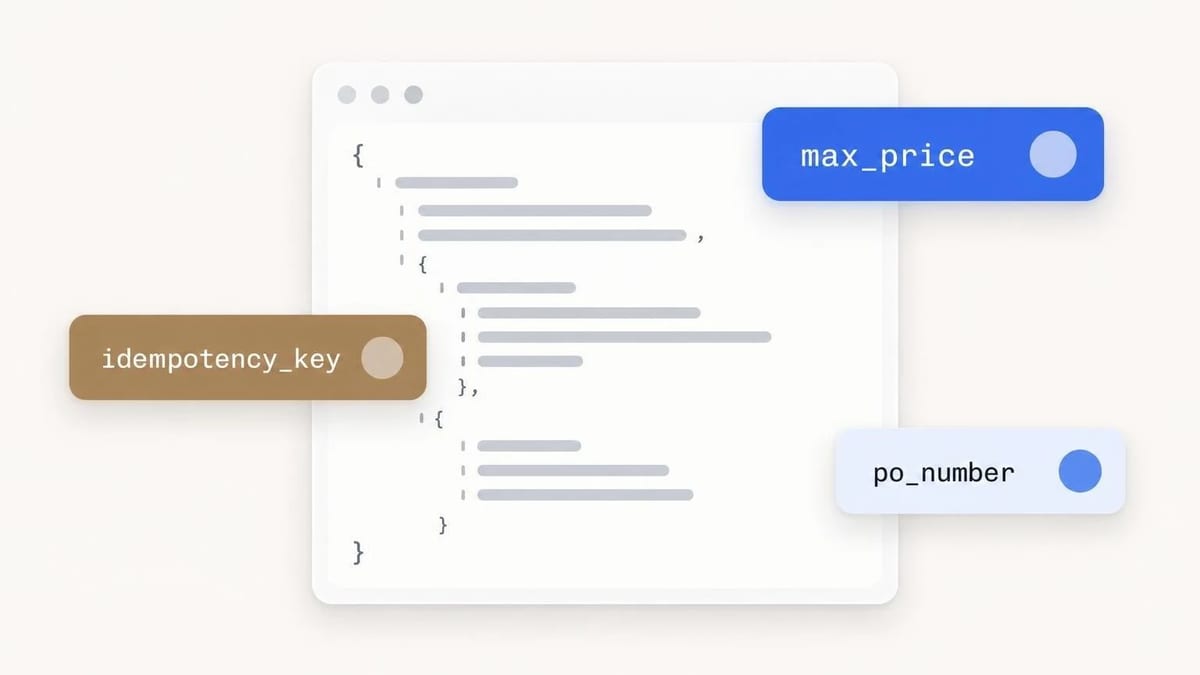
com.zinc.www/mcp) for live product search, or callGET /search,GET /products/{id}, andPOST /ordersfrom your backend. - Deterministic spend guardrails: Every order enforces a hard
max_priceceiling in cents (including shipping and tax),idempotency_keydeduplication, andmax_price: 0zero-dollar dry runs for human-in-the-loop approval modals. - Gifting & procurement metadata: Native support for
is_gift: true(hiding prices on packing slips and aborting safely if a seller disables gift receipts) andpo_numbercost-center tagging.
Trade-offs: Designed for real physical-goods fulfillment across supported major retailers rather than digital SaaS subscriptions.
2. Rye — Best for Shopify & DTC Brand Checkout
Best for: Consumer shopping assistants focused on Direct-to-Consumer (DTC) fashion, beauty, and lifestyle brands running on Shopify.
Rye offers a GraphQL API aimed at letting developers display and check out products from Shopify storefronts without negotiating individual affiliate contracts with each merchant. Developers submit cart payloads and tokenized shopper payment details via Rye’s checkout endpoints.
Key developer features:
- GraphQL product lookup by Shopify URL or domain.
- Direct merchant checkout flow with order status webhooks.
Trade-offs: Rye’s coverage centers on Shopify and opted-in DTC storefronts; teams that need big-box enterprise hardware, building supplies, or marketplace coverage (like Home Depot, Lowe’s, Best Buy, or Walmart) typically pair or replace it with Zinc.
3. Stripe Agentic Commerce (Order Intents & ACP) — Best Payment Primitive for Stripe Merchants
Best for: AI platforms partnering directly with merchants that already process payments on Stripe.
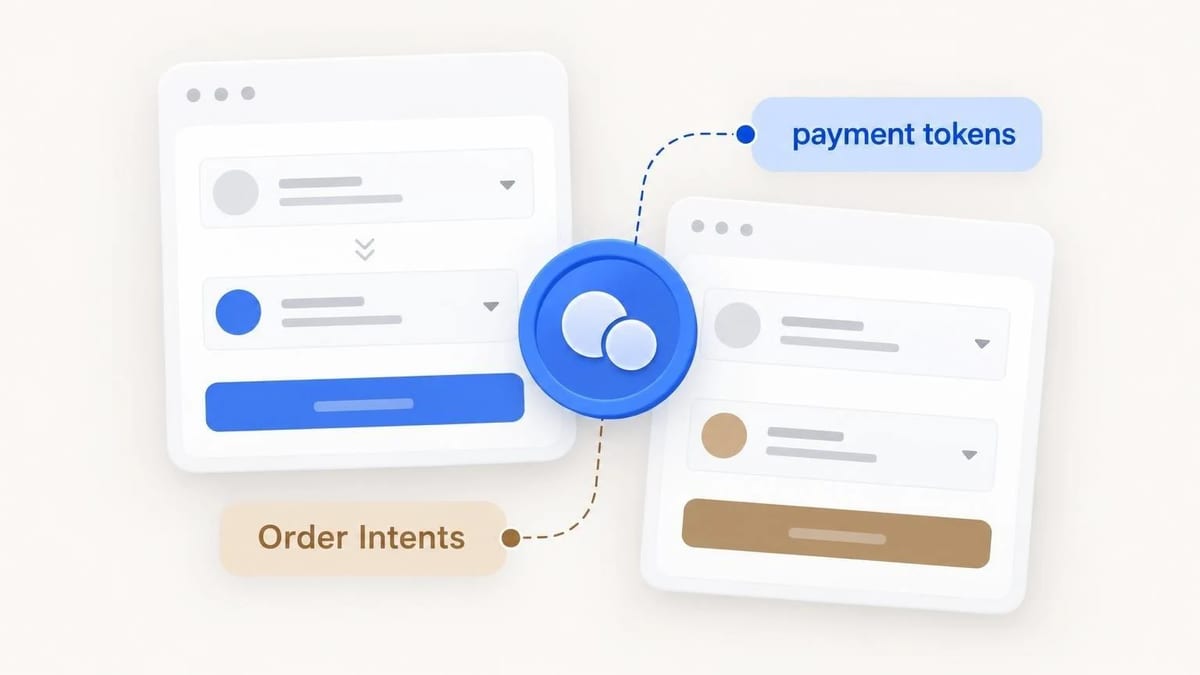
Stripe’s Agentic Commerce primitives—including Order Intents and Shared Payment Tokens—solve payment authorization between an AI agent and a cooperating Stripe merchant. Instead of passing raw card numbers, an agent generates a scoped payment token locked to a specific merchant and amount.
Key developer features:
- Cryptographically scoped single-use payment tokens.
- Native dispute and fraud protection on participating Stripe checkouts.
Trade-offs: Stripe provides the payment rail, not a universal retail catalog or fulfillment engine. Unless a big-box retailer explicitly exposes an ACP endpoint to your app, Stripe alone cannot place an order on Amazon, Best Buy, or Lowe’s.
4. Shopify Storefront API & Checkout Kit — Best for Single-Brand Commerce Apps
Best for: Brands building their own custom mobile app, embedded chat concierge, or headless storefront on top of their own Shopify store.
When you own the merchant store—or have explicit Storefront API tokens from a partner brand—Shopify’s Storefront GraphQL API and Checkout Kit deliver sub-second variant inventory, discount code application, and Apple Pay / Shop Pay sheet rendering.
Key developer features:
- Official GraphQL schema for collections, variants, and cart lines.
- Drop-in Checkout Kit web views for iOS, Android, and React.
Trade-offs: Strictly scoped to one merchant store per token; it cannot aggregate cross-retailer search or buy from external marketplaces.
5. Violet.io — Best for Publisher & Creator Multi-Brand Carts
Best for: Content publishers, review sites, and creator marketplaces embedding native multi-brand carts with automated commission splits.
Violet connects directly to participating merchants’ ecommerce backends (Shopify, Magento, BigCommerce, Salesforce Commerce Cloud) after the brand installs Violet’s channel app. Once connected, shoppers can check out items from multiple participating brands in one unified cart while Violet splits payouts behind the scenes.
Key developer features:
- Single-cart orchestration across onboarded partner merchants.
- Built-in commission split calculation via Stripe Connect.
Trade-offs: Requires every merchant to actively onboard and authorize your channel, making it unsuitable for open-web retail procurement.
6. Amazon Business Ordering API — Best for Approved Enterprise Amazon Spend
Best for: Large enterprises with an existing Amazon Business contract that only buy from Amazon’s B2B catalog.
While Amazon’s standard Selling Partner API (SP-API) only lets 3P sellers manage their own inventory, Amazon does offer a private Amazon Business Ordering API and Product Search API for enterprise procurement systems (such as Coupa or SAP Ariba integrations).
Key developer features:
- Line-item tax-exempt purchasing and corporate invoice reconciliation on Amazon Business.
Trade-offs: Gated to vetted Amazon Business enterprise accounts, restricted to internal corporate purchasing (no consumer gifting or third-party user apps), and limited strictly to Amazon.
7. API2Cart — Best for Seller-Side Back-Office Order Sync (Not Buyer Checkout)
Best for: Shipping software, warehouse management systems (WMS), and multichannel repricers syncing seller orders across 60+ ecommerce platforms.
API2Cart frequently appears in searches for “ecommerce order APIs,” so it is worth clarifying where it fits. API2Cart unifies merchant-side admin APIs across Shopify, WooCommerce, eBay, Etsy, and Magento so SaaS tools can pull incoming customer orders and push tracking numbers back to a merchant’s store.
Key developer features:
- Unified
order.listandproduct.updateendpoints across 60+ shopping cart platforms.
Trade-offs: Requires the store owner’s admin credentials. It cannot search public retail catalogs or buy products as a customer.
How to Choose the Right Purchasing API
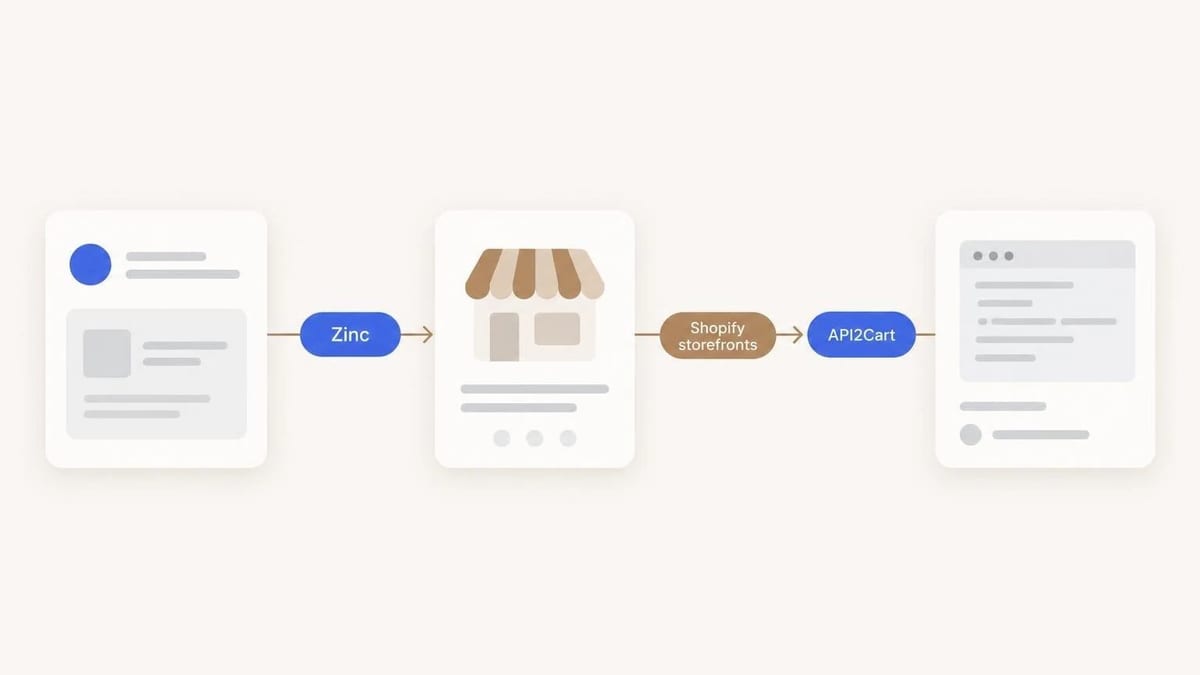
- Need real buyer checkout across big-box retailers (Amazon, Walmart, Best Buy, Home Depot, Lowe’s, Etsy) with MCP support and
max_priceguardrails? Start with Zinc. - Building a consumer discovery app strictly for indie Shopify fashion/beauty brands? Evaluate Rye or Violet.io.
- Syncing a merchant’s own incoming orders into an ERP or shipping tool? Use API2Cart or native Shopify / SP-API seller endpoints.
Found this useful? Share it with someone comparing AI tools.