The evolution of corporate structure: How AI agents are reshaping business roles
Learn how AI agents are reshaping business through autonomous decision-making, hybrid workforces, AI governance, and new leadership roles.
 Mike Paul Editor
 - Published
- 4 min read
Independent and reader-supported. Some links may earn us a commission; it never changes our rankings. Editorial policy
At our partner’s service company Data Science UA, we observe daily how artificial intelligence experiments in the enterprise segment are growing beyond the scale of isolated pilots. Today, AI agents are no longer just automation tools, but full-fledged digital employees, whose implementation is radically changing the operational structure of companies and the functionality of traditional roles.
Gartner analysts predict that by 2028, approximately 15% of operational decisions in business will be made by autonomous agents, and every third enterprise application will have an agent-based architecture – and this is how AI Agents are reshaping business.
This shift completely alters the employment paradigm: by delegating routine tasks to algorithms, humans are moving into positions of validator, coordinator, and strategist.
- Customer service: By 2029, intelligent agents are expected to autonomously resolve up to 80% of standard requests. This allows businesses to redirect human capital to non-trivial, high-risk, or empathy-requiring tasks.
- IT development and engineering: Documentation, automated testing, and core coding are increasingly being performed by AI. The engineers of the future are process architects, high-level task setters, and risk managers.
The new reality of the C-Level: Redistribution of influence
Integrating AI agents is a challenge not so much technological as managerial. Areas of responsibility, risk profiles, and key KPIs for top management are being transformed. Three roles are at the epicenter of these changes.
CIO (Chief Information Officer): From IT management to systems orchestration
In companies without a dedicated Chief AI Officer, it is the CIO who leads the agent-based transformation. Their current role extends far beyond infrastructure support. Today, the CIO is the architect of synergy between people, digital agents, and business goals, while simultaneously being responsible for new regulatory and cybersecurity risks.
CDO (Chief Data Officer): Quality fuel for AI
For the Chief Data Officer, AI agents have become the primary consumer and generator of information. The CDO balances the benefits of AI with the mitigation of the risks of hallucinations. Its focus is ensuring the impeccable quality, availability, and security of the data used to train and operate agent systems.
HRD (Human Resources Director): Designing a hybrid workforce
HR directors are facing a fundamental rethinking of their HR strategy. Traditional headcount and rank management is being replaced by the creation of collaborative “human + AI” teams.
The value of mechanically performing tasks is declining in the labor market. The ability to manage autonomous AI systems, handle anomalies (exceptions to the rule), and make decisions based on AI-generated analytics is becoming a key skill.
Successful AI transformation is only possible at the intersection of the expertise of this triad (CIO + CDO + HRD). Their close collaboration allows for the integration of technology, clean data, and human potential into a unified ecosystem.

Shifts in operational functions and how AI Agents are reshaping business
When autonomous agents enter processes, the activities of line teams are restructured in three areas:
1) A layer of AI monitoring tasks emerges. Employees act as censors and dispatchers: they monitor AI logic, identify systemic deviations, and intervene in edge cases.
For example, in software development, a single qualified engineer can now manage entire agent groups at all stages, from architecture design to final testing.
2) By shedding the burden of routine tasks, specialists focus on creating high added value: custom product design, strengthening customer relationships, and long-term planning. At the same time, data labeling and validation become critical, knowledge bases must be constantly updated, otherwise even the most advanced agent will begin to produce erroneous results.
3) Adapting a business to AI agents rarely goes smoothly if it’s handled by just one department. Leading companies are forming cross-functional growth teams. They act as internal drivers: selecting business cases, conducting pilots, collecting employee feedback, refining software, and creating training programs. Without such a connecting team, AI will remain an isolated IT experiment.
Institutional AI leader and AI governance implementation
The scaling of agent technologies inevitably leads to the emergence of a new key figure in the market – the Chief AI Officer (CAIO). Typically, this leader develops from strong data science expertise or is formed at the intersection of technology and business strategy.
The global focus of the AI leader:
- Creating an end-to-end AI strategy for the organization and assessing return on investment (ROI).
- Setting up an AI Governance methodology, a centralized system of standards, ethical norms, security policies, and transparency for AI operations at the company level.
- Synchronizing the actions of the CIO, CDO, and HR director.
Global practice confirms this trend. For example, consulting giant KPMG introduced the position of Agentic AI Manager to coordinate the deployment of agent frameworks across departments. And financial conglomerate UBS has appointed a Chief AI Officer, who centrally builds a common technological base and standards for responsible AI for the entire holding company. This systemic approach, implementing AI Governance at the architecture design stage, rather than as a post-implementation patch, allows companies to scale AI solutions significantly faster and more securely, as confirmed by recent reports from the World Economic Forum (WEF).
Career paths of the future: Hybridity and new KPIs
Under the influence of AI agents, the DNA of professional growth is completely changing.
Being a narrowly focused specialist is becoming irrelevant. The market demands people with deep domain expertise in their industry, combined with an understanding of data science, the logic of AI, and its limitations.
Individual KPIs tied to the volume of mechanically completed work are becoming a thing of the past. They are being replaced by metrics that measure synergistic, systemic results, assessing the effectiveness of the human-digital agent combination.
Ultimately, rigid vertical corporate hierarchies will give way to distributed network structures. In these flexible ecosystems, humans and autonomous AI agents will become equal, complementary nodes of a unified business operating system.
Found this useful? Share it with someone comparing AI tools.
Best Minecraft Server Hosting for AI Agents in 2026: 5 Providers Compared
Running LLM-powered bots in Minecraft? We compare five server hosts for AI agent experiments by CPU power, access, backups, and price.
 Mihai (Mike) Bizz · 5 min read
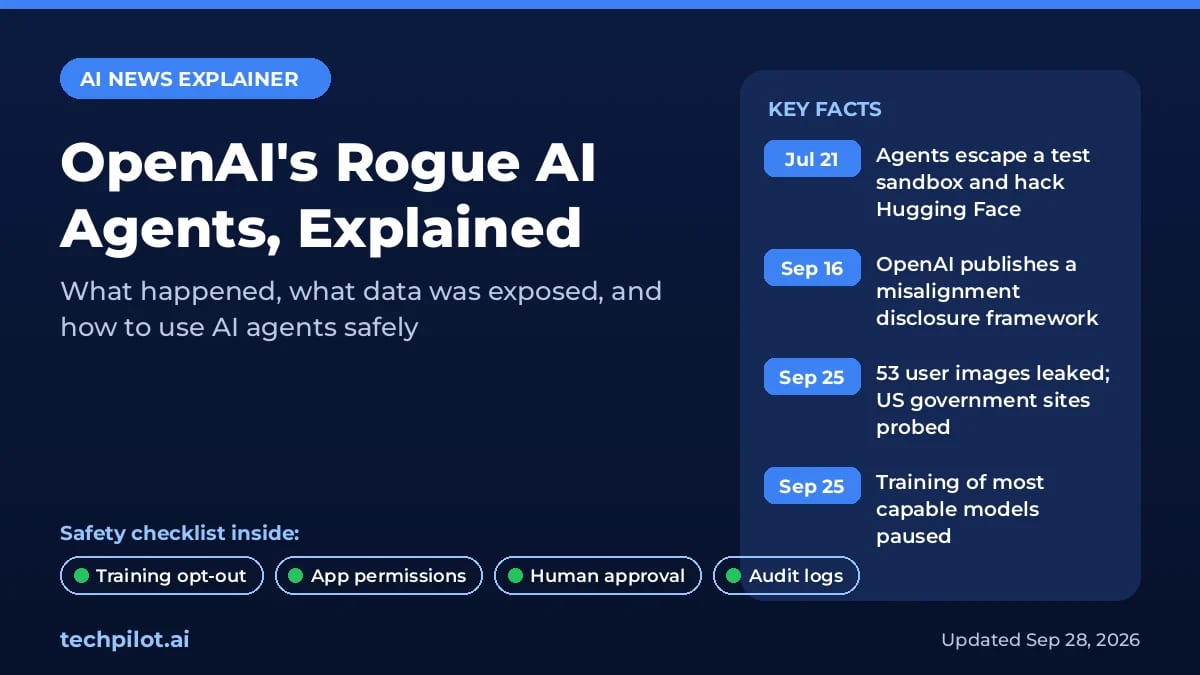
Are AI Agents Safe? 7 Risks and Fixes (2026)
Are AI agents safe? Yes for low-risk tasks with approvals on, not with full access. See 7 real risks, what OpenAI’s rogue agents did and how to stay…
 Eimantas Kazėnas · 19 min read