Home / Guides / Productivity
How AI Tools Changed the Way We Sign Up for Everything Online
 John Daniel Corporate finance, Mathematics, GenAI
 - Published
- 5 min read
On this page Every New AI Tool Comes With a New Account
Independent and reader-supported. Some links may earn us a commission; it never changes our rankings. Editorial policy
Do you remember how many new services you’ve tried over the past year? A new AI chatbot, image generator, or service for taking notes, transcribing meetings, or searching for information. Most likely, you’ve signed up for more of them than you realize.
AI has made experimenting with new service almost effortless. You just open the website, create an account, and within a minute, you can see whether the tool is right for you. Free plans and trial versions have only accelerated this process.
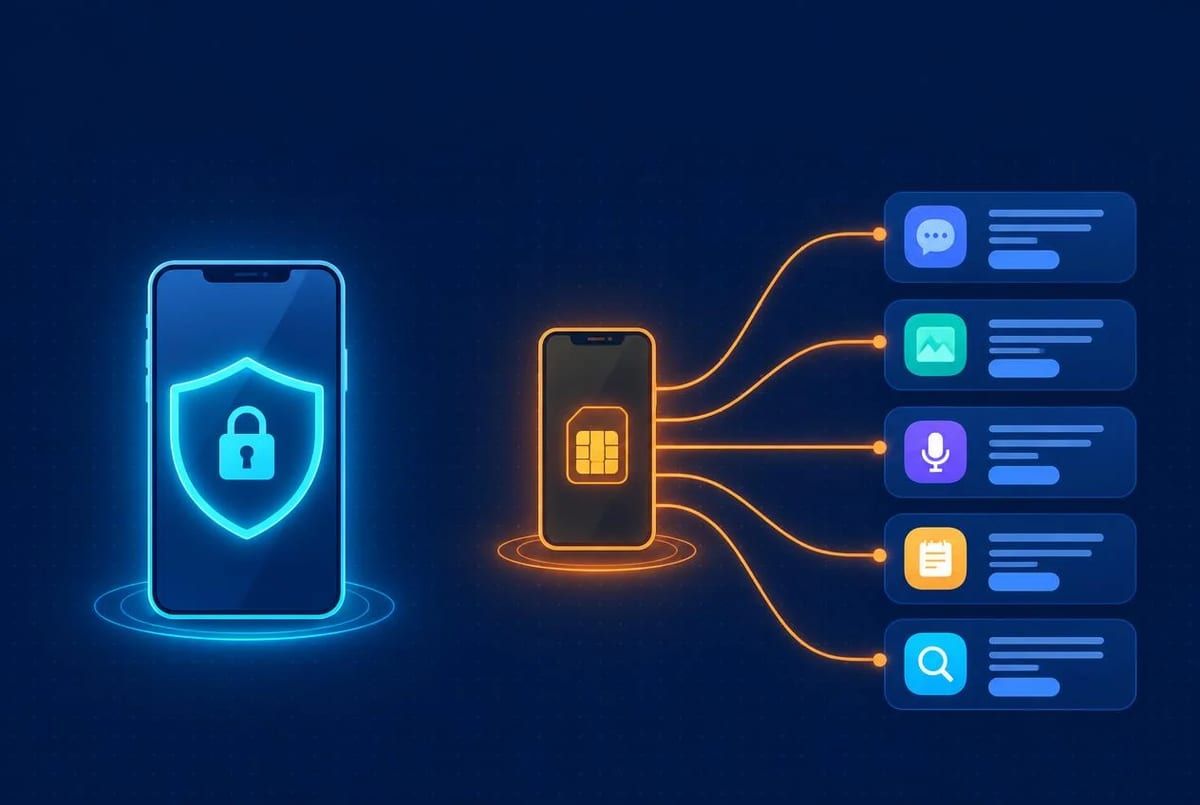
But almost every new service asks for the same information: your email address, name, and sometimes phone number for confirmation. When there are dozens of such registrations, a simple question arises: why link your personal number to every service you’re only going to try once?
In such cases, some users prefer to use a separate number or receive SMS online, without linking yet another trial account to their primary number.
Every New AI Tool Comes With a New Account
AI tools are no longer a rare technological novelty. According to Statista, in 2025, research on AI use covered more than 48,000 people in 47 countries. At the same time, it was no longer just about ChatGPT: users were increasingly interacting with various AI tools for work, study, and personal tasks.
In the United States, for example, about three in ten adults had already used ChatGPT or Meta AI in the previous 12 months. And among those who use ChatGPT, the range of use cases is also becoming more diverse: in March 2025, 28% of working adults in the United States used it for work tasks, 26% to learn something new, and 22% for entertainment.
Each new tool usually follows the same sequence: open a website, create an account, verify your email address or phone number, access a free plan, and decide whether you want to keep using the service.
The problem doesn’t arise with a single registration. It appears when the same scenario repeats over and over again. Today it’s an AI tool for text, tomorrow it’s an image generator, and a week later it’s a document analysis service. Each product has its own access rules, but the user remains the same, and their email address and phone number are gradually linked to an increasing number of accounts.
This is how the familiar signup turns into a permanent part of digital life — and this is where the question arises: how much personal data are we really giving to each new service.
Where Does Your Phone Number Go After Signup?
This is when, the less visible side of all these registrations begins. Every time a new service asks for a phone number to send an SMS code, it seems like it’s only a matter of a few seconds: receive the message, enter the code, and continue. But after that, the number already becomes part of the account.
After a few months, it’s hard to remember exactly where you provided it. Especially if you only used the service during the trial period and then stopped logging in. The account itself can remain active, and the number can continue to be stored in the profile and used to restore access or send security notifications.
When you change your phone number, this becomes especially obvious. You no longer use your old SIM card, and then suddenly you remember the service you signed up for a few months ago. If there are dozens of such accounts, checking each one becomes a separate task.
It turns out to be a rather strange situation: we may not remember all the services that we once trusted with our number, but the services themselves may continue to remember it.
Therefore, for new, especially short-term services, some users prefer not to use the main number:
- A temporary number is suitable for one-time verification.
- A virtual number can be used longer if you need to access the service again.
Why Some Users Keep Their Numbers Separate

A temporary number is designed for a simple scenario: receive an SMS with a code, complete the registration and try the product. This is convenient when you don’t know yet whether you’ll use the service in a week or whether you’ll open it only once. However, this number should not be used for accounts that you plan to keep for a long time: if you lose access to the number, you may not be able to restore the account.
The virtual number solves a slightly different problem. It can remain available for longer and be used separately from your personal number.
However, there is an important caveat: not all platforms accept virtual numbers. Some services restrict their use and require a regular mobile number. In addition, if the number is used to restore the account, it must remain available; otherwise, a problem may arise exactly when access is needed most.
Therefore, temporary and virtual numbers are not substitutes for your primary number, but another way to decide which contact information you want to provide to a particular service and for how long.
Conclusion: The Digital Trail Behind Every New Registration
AI has changed not only what services we use, but also how often we try them. You can open a new tool in a few minutes, register, get a trial, and move on to something else the very next day. What used to be a separate solution has become a common part of online behavior.
But each such registration leaves behind something more than just a forgotten password. It’s another account, another profile in the service’s database, and, if SMS verification was required, another link to your phone number.
Therefore, as the number of AI tools continues to grow, our attitude toward registration is changing as well. You don’t have to opt out of new services or try to remember every account you create. It is much more important to understand what data you leave behind, where you use your primary number, and when it makes sense to separate short-term registrations from truly important accounts.
As a result, AI has made signing up for a new service almost instantaneous. Now the question is: how consciously do we leave our digital footprint behind?
Found this useful? Share it with someone comparing AI tools.

AI Robotics Is Remaking the Factory Floor — And the Implications Go Way Beyond Efficiency
AI robotics is transforming manufacturing faster than most expect. Here’s what’s actually happening in 2026 — and what it means beyond the factory…
 Mihai (Mike) Bizz · 4 min read

Essential AI Search Engines to Improve Your Online Searches
Google is losing traffic to AI search Engines in 2025. ChatGPT is taking most of it, but there are other powerful options out there. Check out our…
 Alexi Carmichael · 17 min read