7 AI Identity Verification Platforms With the Highest Straight-Through Processing Rates
Compare 7 AI identity verification platforms on straight-through processing: forensic document checks, passive liveness and what really drives STP rates.
 Eimantas Kazėnas Marketing & Tech
- Published
- 10 min read

On this page What Drives True Straight-Through Processing in AI Identity Verification?
Independent and reader-supported. Some links may earn us a commission; it never changes our rankings. Editorial policy
Manual review queues quietly undermine customer acquisition economics in fast-paced digital products. While vendors often tout a 95% pass rate, many approved sessions secretly stall in human review queues to resolve simple issues like glare or blur. This operational delay causes real-time user conversion to collapse.
Consequently, engineering and fraud leaders evaluate identity verification through Straight-Through Processing (STP) rates. STP measures the percentage of legitimate users verified completely autonomously in seconds, without manual touchpoints, secondary prompts, or escalations.
What Drives True Straight-Through Processing in AI Identity Verification?
Achieving a high STP rate is mathematically impossible if an identity engine relies on generic optical character recognition (OCR) or post-capture human review farms.
1. Zero-Friction Edge Image Processing
Most manual fallbacks do not stem from sophisticated fraud attempts; they are caused by bad photography. Poor ambient lighting, camera flash glare on laminated cards, blur from hand tremor, and improper framing trigger automated exception rules in legacy software. Modern STP leaders run client-side neural networks directly inside the web or mobile capture SDK. The camera interface analyzes live video streams rather than static snapshots, automatically instructing the user to tilt away from light reflections or steady their device, capturing the optimal biometric and document frame autonomously.
2. Forensic Pixel Analysis vs. Template Scraping
Legacy verification engines read text fields via OCR and check them against rigid layout templates. If an issuing authority adjusts a font kerning standard or shifts a state seal by two millimeters, template engines fail and kick the document to a human queue. Advanced forensic AI examines documents at the physical substrate level: assessing microprint resolution, pattern integrity, security thread diffraction, font structure, and digital image manipulation artifacts across physical and digital formats in milliseconds.
3. Integrated Passive Liveness
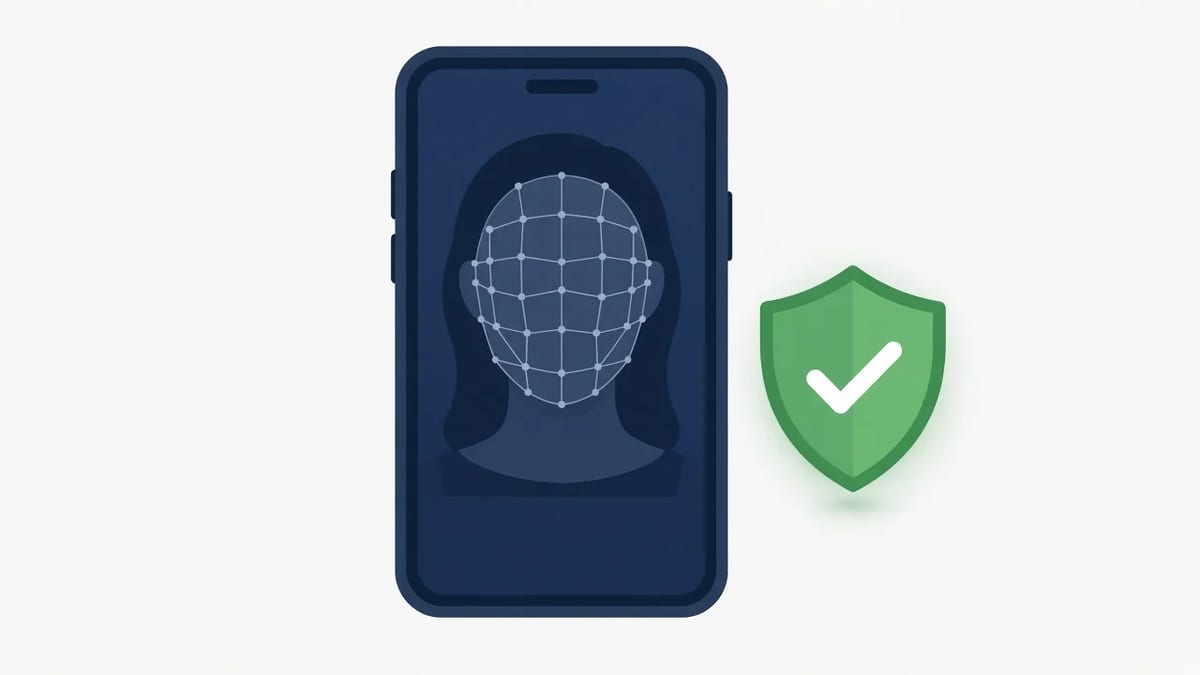
Active liveness checks, requiring applicants to blink repeatedly, turn their heads in four directions, or read numbers aloud, are the largest driver of legitimate user drop-off in identity onboarding. High-STP engines utilize single-frame passive liveness detection. The AI evaluates skin texture, depth fields, pupil light absorption, and presentation attack indicators (such as screen moiré patterns or silicone masks) from a single camera feed without asking the applicant to execute unnatural physical movements.
7 AI Identity Verification Platforms Built for Maximum Automation
1. AU10TIX
AU10TIX stands as the benchmark for straight-through identity processing, tracing its technological heritage directly from border control and airport passenger automation systems where sub-second latency and zero error margins are operational mandates. Unlike consumer software built around OCR and supplemented by outsourced human triage centers, AU10TIX is architected as an autonomous forensic machine.
The platform’s core differentiator is its forensic document intelligence engine, which processes physical IDs, passports, and digital credentials in less than five seconds with an automation architecture designed to eliminate human fallback. While standard market vendors scan extracted text against pre-mapped coordinate templates, AU10TIX performs raw pixel-level forensic analysis. It inspects micro-font weights, guilloche pattern consistency, paper grain anomalies, and light reflectance properties in parallel. Because the engine evaluates document integrity algorithmically rather than relying on brittle visual templates, minor layout variations or state design revisions do not trigger false rejections or manual escalations.
Technical Strengths for STP:
- Forensic document engine designed for 100% automated decisioning without manual operational dependencies.
- Sub-5-second processing latency for complex identity documents and international passports.
- Autonomous detection of digital image tampering, pixel anomalies, and synthetic identity generation.
- Single-capture biometric matching with passive liveness validation.
- AnyDoc AI engine to process and verify non-standard supporting documentation without manual data entry.
2. Incode
Incode has gained significant traction among modern digital banks and tech-first enterprises due to its proprietary, fully in-house computer vision stack. While many identity vendors assemble their pipelines by licensing third-party optical engines, facial matching algorithms, and database gateways, Incode designs its machine learning pipeline end-to-end.
This unified architecture eliminates the latency and data-loss handoffs common in modular platforms. Incode’s mobile and web SDKs feature real-time edge processing, running lightweight neural networks directly inside the customer’s browser or native application. The SDK continuously analyzes the camera feed, providing instant feedback on glare, sharpness, and framing before automatically snapping the image when conditions meet optimal algorithmic thresholds.
Technical Strengths for STP:
- Unified proprietary architecture that removes third-party engine latency.
- Edge-based image quality feedback preventing unreadable document uploads.
- Sub-two-second automated decisioning for high-volume customer onboarding.
- Native passive liveness detection certified against sophisticated presentation attacks.
3. IDVerse (OCR Labs)
IDVerse (formerly OCR Labs Global) focuses specifically on tackling the bias, error rates, and document variance that force global onboarding flows into human exception queues. Built around proprietary generative AI and deep learning neural models, IDVerse handles identity proofing without human-in-the-loop dependencies across complex international user bases.
A primary cause of manual escalation in cross-border applications is skin tone bias and facial recognition variance across different demographic groups. IDVerse trained its biometric engines using synthetic datasets and multi-demographic modeling to achieve exceptional parity across skin tones, ages, and facial characteristics. This demographic resilience directly protects STP rates by drastically reducing false biometric mismatches on legitimate users.
Technical Strengths for STP:
- Broad international document recognition (16,000+ IDs) handling non-Latin scripts and layout changes.
- Proprietary algorithmic training targeting zero demographic bias in facial matching.
- Certified presentation attack detection safeguarding high-speed passive biometrics.
- Fully automated workflow pipeline eliminating manual review facilities.
4. Regula Forensics
Regula Forensics approaches digital identity verification from a hardware and scientific laboratory background. For decades, Regula has built the physical optical inspection devices, spectral scanners, and reference databases utilized by border guards, forensic laboratories, and immigration ministries worldwide. The company has translated that forensic knowledge into pure software SDKs designed for automated digital identity verification.
In digital verification, Regula’s key STP asset is its comprehensive, proprietary document database containing detailed physical and optical security specifications for government IDs across more than 240 countries and territories. When a document is scanned, Regula does not merely parse data; it verifies the exact geometric dimensions, font designs, optical security elements, and hologram positions against authentic physical specimens.
Technical Strengths for STP:
- The world’s largest proprietary database of authenticated government identity specifications.
- Forensic-grade optical verification assessing document security elements at the structural level.
- Elimination of false flags on uncommon regional and international identification credentials.
- Capable of complete on-premise, edge, or hybrid server deployment for zero-latency execution.
5. Sardine
Sardine takes an unconventional and highly effective approach to straight-through processing. While document and biometric verification tools focus solely on the physical credentials presented, Sardine integrates device telemetry, behavioral biometrics, and financial risk signals to determine whether an applicant requires frictionless approval or deeper verification.
In high-volume consumer onboarding, many manual reviews occur because an applicant’s document is slightly degraded or lacks clear third-party credit bureau records. Sardine compensates for document ambiguity by inspecting thousands of real-time device signals: evaluating proxy usage, remote desktop software, emulator detection, typing cadence, phone motion dynamics, and SIM-swap data.
Technical Strengths for STP:
- Device and behavioral biometrics integrated directly into identity verification decisions.
- Real-time detection of emulators, device farms, and remote access trojans (RATs).
- Dynamic risk-based routing that bypasses redundant document steps for low-risk applicants.
- Significant reduction in manual escalations for young and thin-file demographics.
6. IDnow
Headquartered in Germany, IDnow is an established European identity verification leader that has invested heavily in automated artificial intelligence to complement its historic background in regulated trust services. In European markets governed by BaFin, FINMA, and eIDAS, regulatory frameworks have historically mandated high levels of human verification or video-assisted identification. IDnow built its AI platform specifically to meet these stringent standards through automated processing.
For enterprises operating across the European Union, the UK, and international markets, IDnow offers automated compliance workflows that maintain regulatory adherence while minimizing the costly human review queues typical of European banking standards.
Technical Strengths for STP:
- Automated optical hologram and dynamic security feature verification via video stream analysis.
- Engineered to satisfy strict European regulatory and anti-money laundering (AML) standards autonomously.
- Native support for European electronic identities (eID) alongside physical document checks.
- Smooth operational escalation logic from automated AI flows to human review when required by law.
7. Vouched
Vouched has established itself as an agile, AI-driven identity verification engine focused on rapid developer integration and automated end-to-end processing for healthcare, mobility, and gig-economy platforms.
Vouched’s technology platform is engineered around modular computer vision microservices that parse, assess, and verify documents in parallel. Its system inspects front and back document features, compares extracted machine-readable data against visual zones, and verifies facial biometrics with sub-second execution speeds.
Technical Strengths for STP:
- Sub-second microservices architecture for rapid parallel identity processing.
- Sophisticated computer vision algorithms correcting camera angle warping and perspective distortion.
- Clean, lightweight SDK implementation minimizing mobile app abandonment.
- Automated data cross-referencing between visual inspection zones and machine-readable barcodes.
Technical Comparison: STP Drivers Across Providers
| Platform | Core Forensic Approach | Biometric Liveness Type | Key STP Advantage |
|---|---|---|---|
| AU10TIX | Pixel-level forensic analysis & pattern anomaly detection | Certified single-frame passive biometrics | Airport-grade forensic engine built to run 100% automated with zero manual dependency. |
| Incode | In-house neural networks running client-side on device edge | Passive anti-spoofing facial vector analysis | Full proprietary stack with sub-two-second execution speed. |
| IDVerse | Generative AI models trained across 16,000+ global IDs | Certified zero-bias passive biometric matching | Eliminates demographic matching variance and false global rejections. |
| Regula Forensics | Scientific database matching against authentic physical specimens | 3D facial biometrics and depth estimation | Unequaled precision on rare and international document specifications. |
| Sardine | Behavioral telemetry combined with document verification | Continuous session-based biometric risk scoring | Bypasses manual document triage using device and telemetry signals. |
| IDnow | AI video-stream analysis of holograms and optical features | Video-based automated liveness verification | Automates complex European regulatory compliance requirements. |
| Vouched | Parallel computer vision microservices with geometric de-warping | Algorithmic facial comparison and liveness checks | Excellent capture correction on warped and angled mobile photos. |
Architectural Best Practices to Optimize Straight-Through Rates
Selecting an advanced AI engine is only half the battle; how your engineering team integrates the verification flow directly impacts the final STP metrics.
1. Shift Image Quality Checks to the Client Edge
Never permit an applicant to upload an out-of-focus image. By running edge-based computer vision checks inside the user’s browser or native application before the capture event completes, you prevent low-quality frames from ever hitting the core analysis API. Instant feedback prompts, such as “Move closer,” “Reduce glare,” or “Hold steady”, resolve 80% of potential manual exceptions before they occur.
2. Implement Progressive Identity Enrichment
Do not design identity flows as a binary “pass or fail” on document OCR alone. If an applicant’s document analysis yields a borderline confidence score due to physical wear on an old card, dynamically route the session to an automated secondary signal, such as an authoritative database lookup, mobile network operator (telco) ping, or bank account verification, rather than routing the applicant to a manual queue.
3. Normalize Capture Across Web and Mobile
Native mobile camera pipelines operate differently from web-based camera access (WebRTC). Mobile web flows often suffer from downsampled video resolution and browser memory constraints. Ensure your identity SDK maintains identical automated image capture and dynamic exposure controls across desktop web, mobile web, and native iOS/Android environments.
Frequently Asked Questions
What is a Straight-Through Processing (STP) rate in identity verification?
Straight-Through Processing (STP) rate refers to the percentage of total verification sessions that complete autonomously from initial data capture to final decisioning without requiring human intervention, second-chance document requests, or manual compliance reviews. A high STP rate indicates that the AI engine accurately approves legitimate users and rejects clear fraudsters instantly.
Why do legacy identity verification platforms have low STP rates?
Legacy platforms rely heavily on template-based OCR and outsourced human review teams. When an applicant submits a photo with minor camera glare, slight blur, an angled perspective, or an updated state document layout, template engines fail to parse the fields with high confidence. The transaction is subsequently routed to an internal or vendor-operated manual queue, introducing delays that degrade the user experience.
Does high STP compromise fraud detection security?
No. High straight-through processing is achieved through superior mathematical precision, not by lowering risk thresholds. In fact, advanced computer vision engines detect micro-tampering, deepfakes, synthetic identities, and injection attacks with far greater accuracy and consistency than human reviewers who are subject to fatigue, subjective judgment, and time pressures.
What is the average automated decision speed of leading AI IDV platforms?
Top-tier AI identity verification platforms typically process and decide an identity session in two to six seconds. Solutions that take thirty to ninety seconds are generally either pinging multiple legacy relational databases in series or routing edge-case images through disguised offshore human review centers to confirm data fields.
Found this useful? Share it with someone comparing AI tools.