Best AI Agent Security Tools in 2026
Compare 12 AI agent security tools for agent identity, prompt injection, runtime and MCP risks. See which publish prices and which one fits your stack.
 Eimantas Kazėnas Marketing & Tech
 - Updated
- 16 min read
On this page Quick answer
Independent and reader-supported. Some links may earn us a commission; it never changes our rankings. Editorial policy
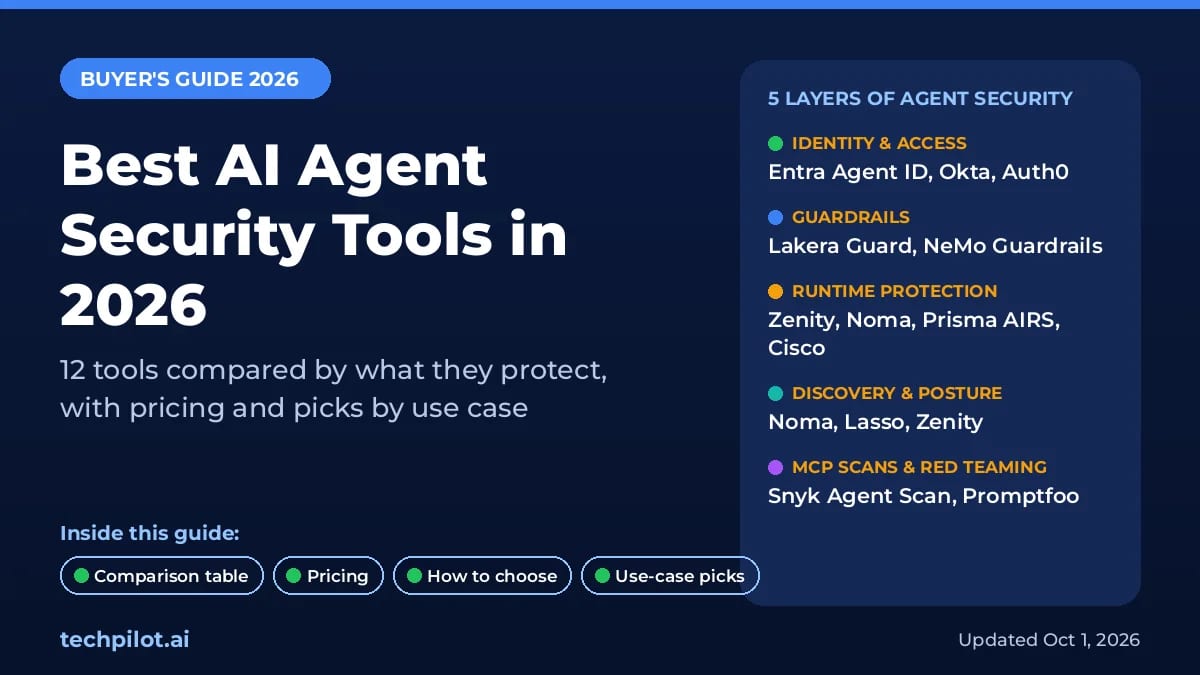
Choosing AI agent security tools is hard right now, because “AI agent security” covers at least five different jobs. Some products give each agent an identity and short-lived permissions. Others sit between the agent and the model to catch prompt injection, or watch every tool call at runtime and block risky ones. A fourth group scans MCP servers and agent skills before you install them, and a fifth attacks your agents on purpose to find weak spots. No single vendor does all five equally well, so the right choice depends on where your agents run and which risk worries you most.
We compared 12 products that are available today, from free open-source scanners to enterprise platforms. Each one is checked against the vendor’s own documentation. This guide sorts them by the job they do, shows which ones publish prices, and suggests where to start for common setups.
Last updated: October 1, 2026 (UTC+7). We checked every vendor’s product and pricing pages for this update. Features and prices change quickly in this market, so confirm details with the vendor before you buy.
Quick answer
If your agents mostly live inside Microsoft 365 and Copilot Studio, start with Microsoft Entra Agent ID and Agent 365. If you run agents across many SaaS platforms, such as Salesforce, ServiceNow and ChatGPT Enterprise, shortlist Zenity or Noma Security. Large security teams that already use Palo Alto Networks or Cisco should evaluate Prisma AIRS or Cisco AI Defense first. Developers building their own agents can begin for free with Lakera Guard’s Community plan, NVIDIA NeMo Guardrails, Snyk Agent Scan and Promptfoo.
Key takeaways
- Start with identity. An agent with its own identity, scoped permissions and short-lived tokens can do far less damage when something goes wrong. Microsoft, Okta and Auth0 now all sell this as a product.
- Guardrails and runtime monitoring are different layers. A guardrail checks prompts and responses. Runtime protection checks what the agent actually does, such as tool calls, MCP traffic and data access.
- MCP servers are a supply-chain risk. Scan them before you install them. Snyk Agent Scan does this for free on a developer’s machine.
- Few vendors publish prices. Of the 12 tools here, only Microsoft Agent 365, Auth0 for AI Agents and the free tiers of Lakera, Promptfoo and the open-source projects have public pricing. Everything else is quote-based.
- Consolidation is fast. Check Point now owns Lakera, Snyk bought Invariant Labs, and OpenAI agreed to acquire Promptfoo. Ask every vendor about its roadmap.
What AI agent security tools actually do
Securing AI agents is different from securing chatbots, because agents take actions. They call APIs, read files, send messages and connect to other systems through the Model Context Protocol (MCP). Our explainer on whether AI agents are safe covers real incidents, and our guide to cybersecurity for AI agents covers the practices behind them. This guide is about the products. Here are the five categories you will see on vendor sites:
- Agent identity and access: gives every agent its own registered identity, an owner, scoped and short-lived credentials, access reviews and a way to switch it off.
- Prompt-injection and tool-call guardrails: checks inputs, outputs and tool arguments in real time and blocks injected instructions, jailbreaks and data leaks.
- Runtime detection and response (often called AI-DR): watches what agents do in production, flags unusual behaviour and blocks unsafe actions before they finish.
- AI security posture management (AI-SPM) and discovery: finds every agent, model, MCP server and AI service in use, including shadow AI, and maps what each one can reach.
- MCP and supply-chain scanning, plus red teaming: tests agents, tools and skills for weaknesses before attackers find them.
The bigger platforms cover several categories at once. The developer tools usually cover one category well.
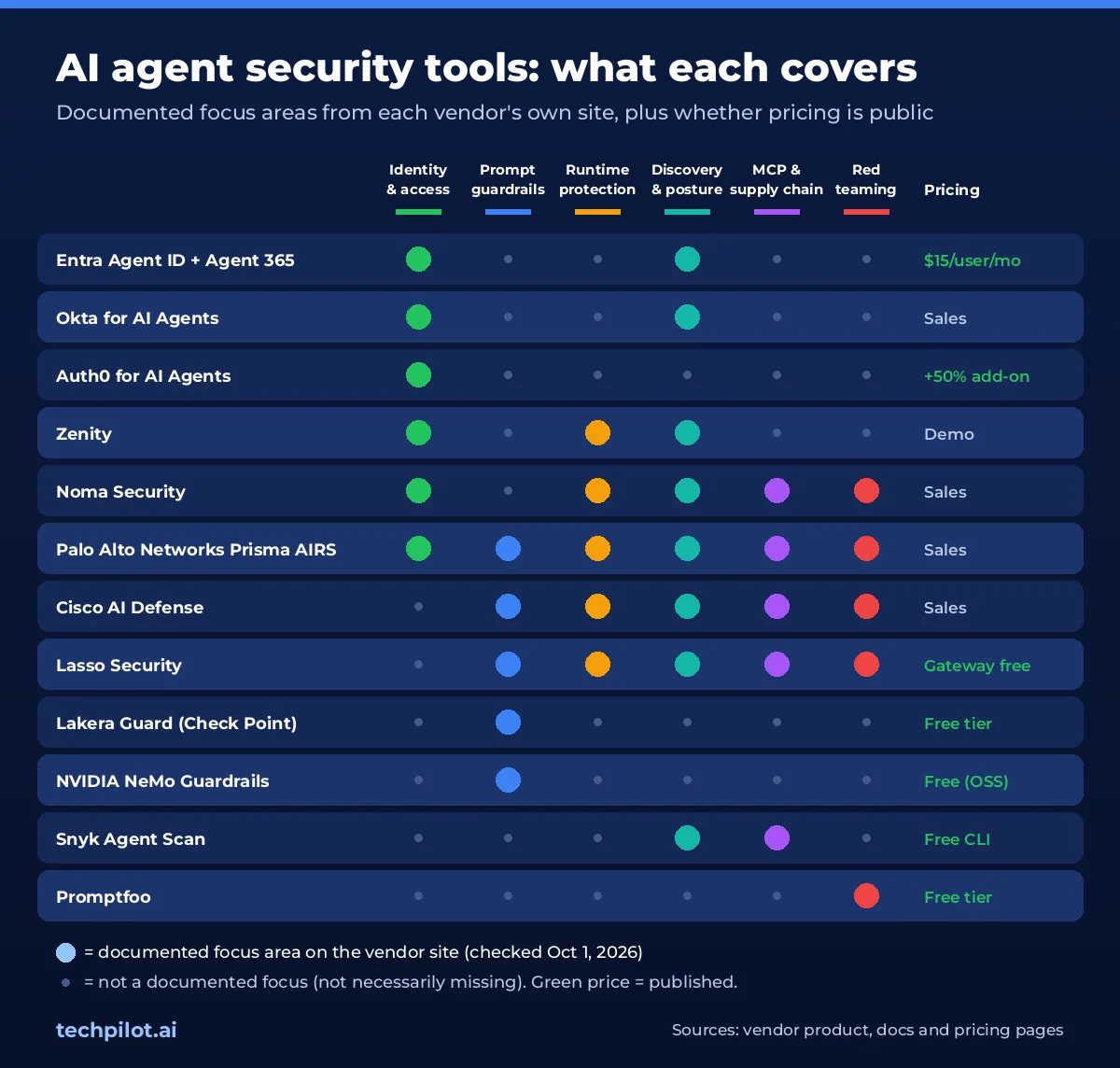
Comparison table: AI agent security tools at a glance
| Tool | Main category | Best for | How it deploys | Public pricing? |
|---|---|---|---|---|
| Microsoft Entra Agent ID + Agent 365 | Agent identity and access | Microsoft 365 and Copilot Studio agents | Cloud (Entra / Microsoft 365) | Yes: Agent 365 $15/user/month (annual) |
| Okta for AI Agents | Agent identity and access | Identity-first governance across SaaS agents | Cloud (Okta platform) | No, contact sales |
| Auth0 for AI Agents | Agent identity and access | Developers building agents that act for users | Cloud (Auth0) + SDKs | Yes: add-on, +50% of base plan |
| Zenity | Agent security platform | SaaS, low-code and coding agents | SaaS platform + connectors | No, demo |
| Noma Security | Agent security platform (AI-SPM, AI-DR) | Mixed SaaS, endpoint and homegrown agents | SaaS platform | No, contact sales |
| Palo Alto Networks Prisma AIRS | AI security platform | Existing Palo Alto customers | Platform (network and API) | No, contact sales |
| Cisco AI Defense | AI security platform | Network-level enforcement, Cisco shops | Network + Python SDK | No, contact sales |
| Lasso Security | Discovery, posture, runtime | Shadow AI discovery, MCP traffic control | SaaS platform + open-source MCP Gateway | Gateway free; platform no |
| Lakera Guard (Check Point) | Prompt-injection guardrail | Screening prompts and responses via API | API (SaaS; self-host on Enterprise) | Yes: free 10k requests/month |
| NVIDIA NeMo Guardrails | Guardrails framework | Teams that want full control | Open-source library (Apache 2.0) | Free |
| Snyk Agent Scan | MCP and skill scanning | Checking MCP servers and skills on dev machines | Open-source CLI | Free CLI (Snyk account needed) |
| Promptfoo | Red teaming | Testing agents before every release | Open-source CLI, CI, self-host | Yes: free Community plan |
The best AI agent security tools, reviewed
1. Microsoft Entra Agent ID and Agent 365: best for Microsoft 365 shops
Microsoft Entra Agent ID gives agents their own identities in Entra, the same directory that holds your users. Agent identity blueprints act as templates, so many agents can share consistent policies. Microsoft says the platform supports OAuth 2.0, MCP and agent-to-agent (A2A) protocols, and works with non-Microsoft agents, including ones built on AWS Bedrock and n8n. Agent ID itself is available to all Entra customers. To extend Entra security features such as Conditional Access and governance to agents, you need Microsoft Agent 365, which Microsoft describes as a control plane to observe, govern and secure agents. Pricing: Agent 365 is listed at $15 per user per month with an annual commitment. It is also included in Microsoft 365 E7 and sold as an add-on to E5, A5 and Business Premium.
2. Okta for AI Agents: best for identity-first governance across vendors
Okta for AI Agents became generally available on April 29, 2026. It imports known agents from Salesforce Agentforce, Amazon Bedrock AgentCore and ServiceNow. It also detects shadow agents by spotting new OAuth consent grants in managed Chrome browsers, and Okta says support for more browsers is coming. Okta says it replaces hardcoded credentials and standing access with scoped, short-lived tokens. It also treats MCP servers as governed resources and adds access reviews, approval workflows and what Okta calls “a kill switch your SOC can trust.” Pricing: not published for this product, so contact Okta sales.
3. Auth0 for AI Agents: best for developers adding secure sign-in to agent apps
Okta’s developer platform, Auth0 for AI Agents, solves a narrower problem: letting your agent act on behalf of a logged-in user without holding that user’s passwords or long-lived keys. Its features include a Token Vault for third-party API tokens and asynchronous authorization (CIBA), so a human can approve a sensitive action from their phone. It also offers fine-grained authorization for RAG, so agents only retrieve documents the user is allowed to see. Pricing: public. Auth0’s pricing page lists it as an add-on that adds 50% to your base plan price. For example, it costs $18 per month on B2C Essentials at 500 monthly active users, and $75 per month on B2B Essentials at the same size.
4. Zenity: best for agents on SaaS and low-code platforms
Zenity focuses only on AI agents. It organises its platform into three layers. Surface finds what’s running and what it can affect, Enforce controls what agents may do and stops harmful actions before they land, and Protect detects and investigates threats. Its platform pages list coverage for Microsoft Copilot Studio, Microsoft 365 Copilot, Power Platform, Microsoft Foundry, Salesforce Agentforce, ServiceNow, ChatGPT Enterprise, Claude Enterprise, Google Vertex AI and Amazon Bedrock, plus personal and coding agents. This makes it a strong fit when business users build their own agents. Pricing: not published, so book a demo.
5. Noma Security: best all-in-one platform for mixed agent estates
Noma Security covers three kinds of agents: endpoint agents your employees use, agents running on SaaS platforms, and homegrown agents your engineers build. It has four products. AI-SPM discovers every agent, MCP server, skill and tool, then highlights risk. Agent Access Control governs what each agent can do. AI-DR secures agent actions at runtime, and AI Red Teaming probes for weaknesses. It suits teams that want discovery, permissions and runtime protection from one vendor. Pricing: not published, so contact sales.
6. Palo Alto Networks Prisma AIRS: best for existing Palo Alto customers
Prisma AIRS is Palo Alto Networks’ AI security platform for apps, agents, models and data. Its AI Agent Security module verifies agent identities and enforces security in real time to stop unauthorized actions. The platform also includes AI Runtime Security, model security scanning, posture management, automated AI red teaming and MCP threat detection. Teams already using Palo Alto firewalls or Prisma Cloud will find it the easiest to add. Pricing: not published, so contact sales.
7. Cisco AI Defense: best for network-level enforcement
Cisco AI Defense covers AI cloud visibility (an inventory of models and data sources), model and application validation through algorithmic red teaming, and runtime guardrails. Cisco says these guardrails can be enforced at the network level without code changes. For agents, Cisco’s Agent Runtime Protection in its Python SDK inspects every LLM and MCP interaction, including tools, prompts and resources. It runs in monitor (log only) or enforce (block) mode. A separate Explorer Edition lets builders run red-team tests on their models and agents. Pricing: not published, so contact Cisco or a partner.
8. Lasso Security: best for shadow AI discovery plus an open-source MCP gateway
Lasso Security sells a platform for AI discovery and inventory, AI security posture management, red teaming, detection and response, and AI usage control. Lasso describes it as “intent security,” meaning it analyses why an agent is taking an action, not just what the action is. Lasso also publishes an open-source MCP Gateway, a proxy that sits in front of your MCP servers and applies security plugins. Its advanced Lasso guardrail plugin needs a Lasso API key. Pricing: the gateway is free and open source. Platform pricing is not published.
9. Lakera Guard (Check Point): best API for prompt-injection detection
Lakera Guard is a real-time API that screens prompts and responses for prompt injection, jailbreaks and data leakage before they reach your model or your users. Lakera is now part of Check Point. It is the easiest of the commercial guardrails to try. Pricing: public. The Community plan is free for up to 10,000 requests per month, with prompts up to 8,000 tokens, as SaaS hosted in the EU. Enterprise pricing is custom and adds self-hosting, SSO, role-based access and SIEM integration.
10. NVIDIA NeMo Guardrails: best open-source guardrails framework
NeMo Guardrails is an Apache 2.0 open-source toolkit for adding programmable rails to LLM apps and agents. It supports five rail types: input, dialog, retrieval, execution and output. Execution rails check the inputs and outputs of the tools an agent calls. NVIDIA’s README documents protections against jailbreaks and prompt injection. It suits engineering teams that want full control and are willing to write and maintain the configuration themselves. Pricing: free.
11. Snyk Agent Scan: best free MCP and agent-skill scanner
Snyk Agent Scan builds on work from Invariant Labs, which Snyk acquired. It auto-discovers the MCP configurations, tools and skills used by Claude, Cursor, GitHub Copilot, Windsurf, Gemini CLI, Amazon Q and other agents on a machine. It then scans them for risks such as prompt injection, tool poisoning, tool shadowing, toxic flows, malware payloads and hardcoded secrets. One caution from Snyk’s own README: to read tool descriptions, it can start local MCP servers by executing the commands in your config. Run your first scans in a sandbox. Pricing: the scanner is open source and runs with one uvx command, but it needs a Snyk account and API token. Fleet-wide reporting runs through Snyk’s commercial platform.
12. Promptfoo: best for red-teaming agents before launch
Promptfoo is an open-source evaluation and red-teaming tool. It runs adversarial tests against your AI app or agent for problems such as prompt injection, jailbreaks and data leaks, and it fits into CI so every release gets tested. On March 9, 2026, OpenAI announced an agreement to acquire Promptfoo, subject to closing conditions. Promptfoo says it will remain open source. Pricing: public. The Community plan is free and includes red teaming up to 10,000 probes per month, while Enterprise is custom.
How to choose an AI agent security platform
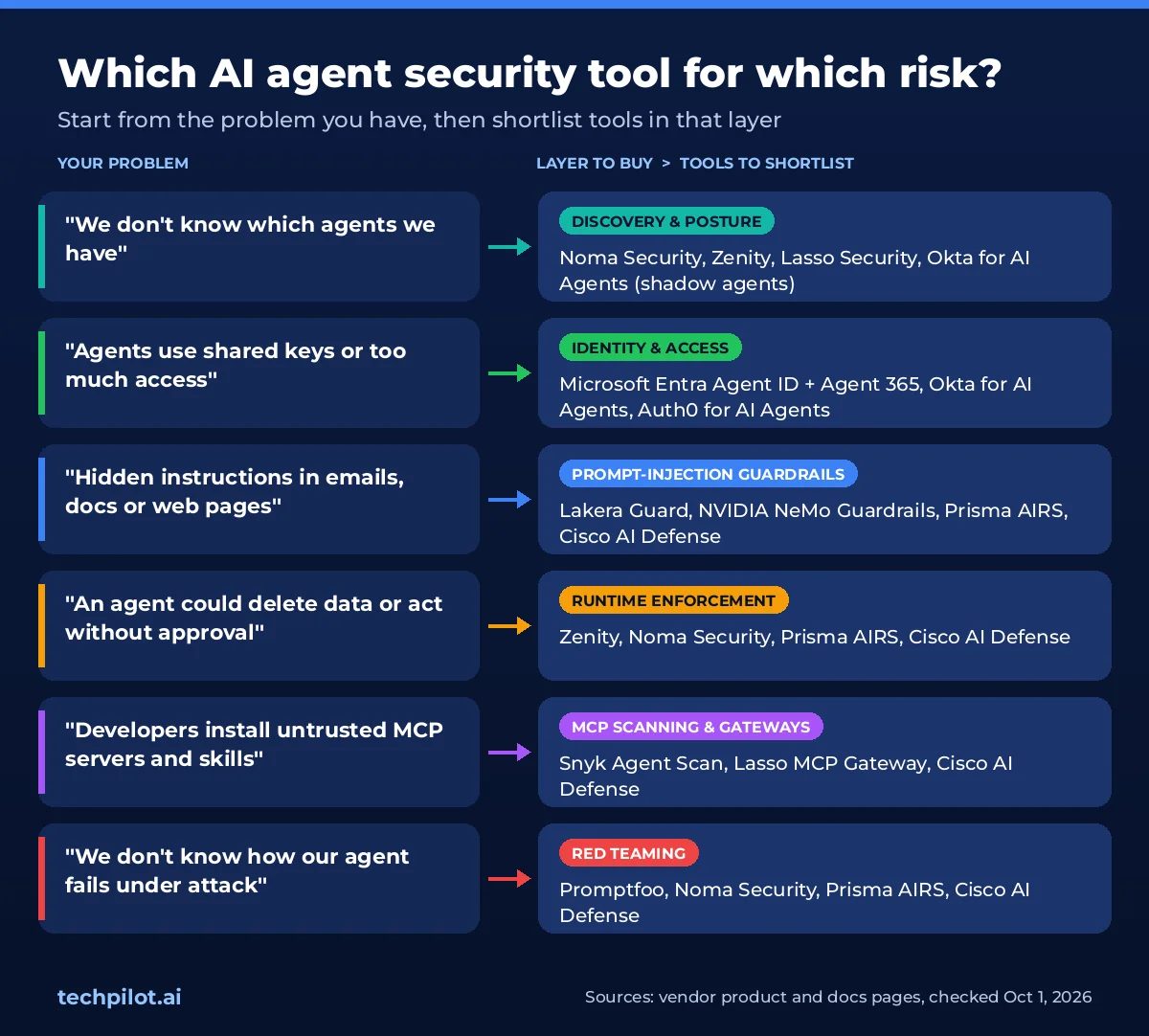
Most buying mistakes come from starting with a vendor demo instead of your own agent inventory. Work through these five questions in order.
1. Where do your agents run?
List every agent and where it runs: SaaS copilots (Microsoft 365 Copilot, Agentforce, ServiceNow), low-code builders, coding agents on laptops, or agents your developers build. SaaS and low-code agents need a platform with native connectors, such as Zenity, Noma or Microsoft Agent 365. Homegrown agents need SDKs, APIs or gateways, such as Lakera Guard, Cisco’s SDK, NeMo Guardrails or Prisma AIRS. If you can’t produce the list at all, buy discovery first.
2. What’s the worst thing an agent could do?
Match the tool to the risk that matters most to you. If an agent leaking customer data is the nightmare, prioritise data controls and output guardrails. If the worry is an agent deleting records or moving money, prioritise identity, least-privilege access and runtime enforcement that blocks actions before they happen. Our guide to AI agent data privacy helps you map the data side.
3. Block or just alert?
Many products start in monitoring mode. Ask each vendor what it can block inline, how much latency that adds, and what happens if the security service goes down. For example, Cisco’s SDK documents separate monitor and enforce modes. Ask to see the same distinction in every demo.
4. Does it fit the stack you already pay for?
If you already use Entra, Okta, Palo Alto Networks, Cisco or Check Point, the agent add-on from that vendor may be the cheapest and fastest option. A specialist like Zenity, Noma or Lasso earns its place when your agents run across several platforms that no single big vendor covers well.
5. Can you test it before you buy?
Use the free tiers to set a baseline: run Snyk Agent Scan on developer laptops, point Promptfoo at a staging agent, and try Lakera’s Community plan. You will learn what your real risks are before you sit through enterprise demos. For the governance side of the decision, such as owners, approvals and audit trails, see our guide to enterprise AI agent governance.
Best picks by use case
| If you need… | Start with | Why |
|---|---|---|
| Control over Microsoft 365 and Copilot Studio agents | Microsoft Entra Agent ID + Agent 365 | Agent identities sit in the same directory as your users, at a published price |
| Governance for agents across many SaaS platforms | Zenity or Noma Security | Native coverage for Copilot Studio, Agentforce, ServiceNow, ChatGPT Enterprise and more |
| Identity for agents outside Microsoft | Okta for AI Agents | Short-lived scoped tokens, access reviews and shadow-agent discovery |
| Secure sign-in for an agent app you are building | Auth0 for AI Agents | Token Vault and human approval (CIBA) for sensitive actions, with public pricing |
| One vendor for the whole AI security programme | Prisma AIRS or Cisco AI Defense | Runtime protection, red teaming and posture in a platform you may already own |
| A cheap prompt-injection filter for a homegrown agent | Lakera Guard Community plan | Free up to 10,000 requests a month |
| Safe MCP servers and skills on developer laptops | Snyk Agent Scan | Free scan for tool poisoning, toxic flows and hardcoded secrets |
| Proof an agent is safe before launch | Promptfoo | Open-source red teaming that runs in CI |
Frequently asked questions
What is AI agent security?
AI agent security is the set of controls that keep autonomous AI agents from being hijacked, leaking data or taking harmful actions. It covers agent identity and permissions, guardrails against prompt injection, runtime monitoring of tool calls, scanning of MCP servers and skills, and red-team testing. Because agents act rather than just answer, these controls focus on what an agent is allowed to do, not just what it says.
What is the difference between an AI agent security platform and a guardrail?
A guardrail, such as Lakera Guard or NVIDIA NeMo Guardrails, checks prompts, responses and tool inputs as they pass through and blocks things like prompt injection. An AI agent security platform, such as Zenity, Noma Security or Prisma AIRS, adds discovery of every agent, permission controls and runtime detection across many agents and platforms. Most companies with agents in production end up needing both.
Are there free AI agent security tools?
Yes. NVIDIA NeMo Guardrails is free and open source under Apache 2.0. Promptfoo’s Community plan is free and includes red teaming up to 10,000 probes a month. Lakera Guard’s Community plan covers 10,000 API requests a month at no cost. Snyk Agent Scan is an open-source scanner for MCP servers and agent skills, though it needs a Snyk account and API token. Lasso’s MCP Gateway is also open source.
How much do AI agent security tools cost?
Most enterprise platforms, including Zenity, Noma Security, Prisma AIRS, Cisco AI Defense and Okta for AI Agents, do not publish prices and quote per deal. Microsoft Agent 365 is listed at $15 per user per month with an annual commitment. Auth0 for AI Agents is an add-on that adds 50% to your Auth0 base plan, starting at $18 a month on B2C Essentials at 500 monthly active users.
How do I secure MCP servers used by AI agents?
Start with an inventory of every MCP server your agents and developers use, then scan them before installation for tool poisoning, prompt injection and hardcoded secrets. Snyk Agent Scan does this on a developer machine. In production, route MCP traffic through a gateway or runtime product that inspects tool calls, such as Lasso’s MCP Gateway, Cisco AI Defense or Prisma AIRS, and treat each MCP server as a governed resource in your identity system.
Do AI agents need their own identities?
Yes. Giving each agent its own identity, a named human owner and scoped, short-lived credentials makes it possible to review its access, trace its actions and switch it off without breaking anything else. Microsoft Entra Agent ID, Okta for AI Agents and Auth0 for AI Agents are built for this. Shared service accounts and long-lived API keys are the pattern these tools are designed to replace.
Which AI agent security tool should a small team start with?
A small team building its own agent can cover the basics without a budget. Use Lakera Guard’s free plan or NeMo Guardrails for prompt-injection protection, Snyk Agent Scan for MCP servers and skills, and Promptfoo to red-team the agent before each release. Add a commercial platform once you have several agents in production or agents built by non-developers.
Verdict
Treat AI agent security as a stack of layers, not a single product. Every company running agents needs the identity layer: give each agent its own identity, an owner and short-lived, scoped access. Pick the tool that matches your directory: Entra Agent ID with Agent 365, Okta for AI Agents, or Auth0 for agents you build. On top of that, add one platform that discovers agents and controls what they do at runtime. Zenity and Noma are the strongest specialists for mixed SaaS and homegrown agents, while Prisma AIRS and Cisco AI Defense make the most sense if you already use those vendors.
Developers don’t need a budget to start. Lakera Guard’s free tier, NeMo Guardrails, Snyk Agent Scan and Promptfoo cover guardrails, MCP scanning and red teaming at no cost. Running them first will make any later enterprise purchase much better informed. Before you sign anything, ask each vendor three questions: what it can block inline, which agent platforms it supports today rather than on the roadmap, and what it costs at your agent count. That’s where this market’s marketing claims and its real products differ most.
Found this useful? Share it with someone comparing AI tools.
Best Minecraft Server Hosting for AI Agents in 2026: 5 Providers Compared
Running LLM-powered bots in Minecraft? We compare five server hosts for AI agent experiments by CPU power, access, backups, and price.
 Mihai (Mike) Bizz · 5 min read
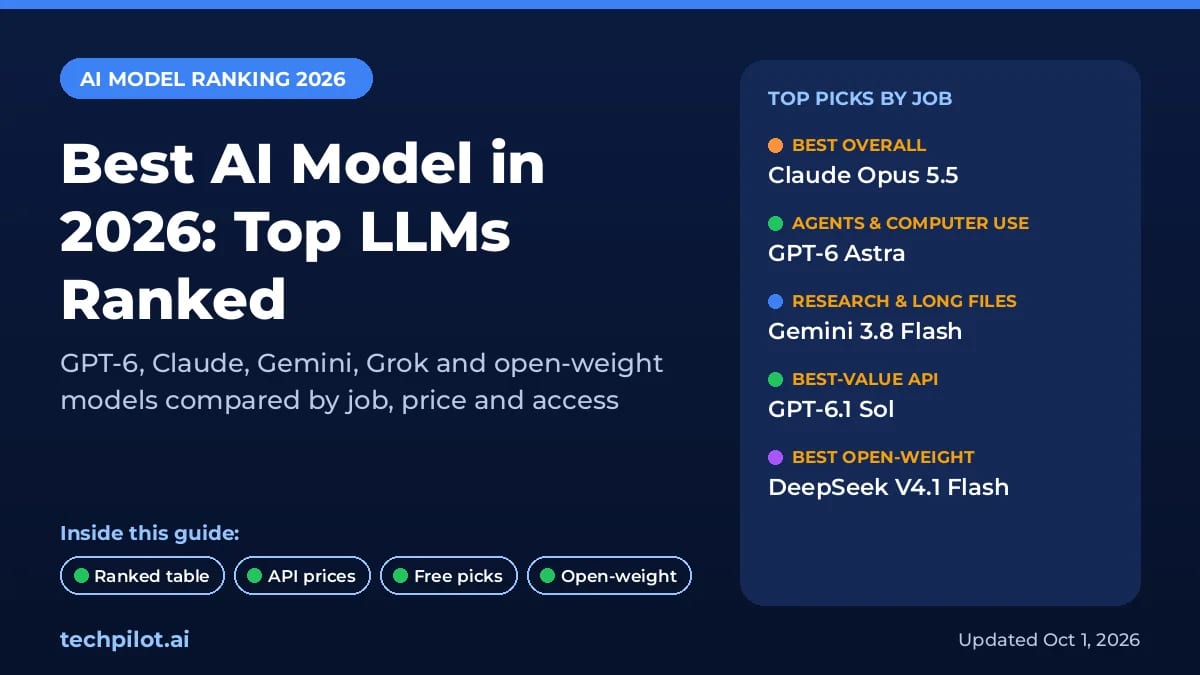
Best AI Model in 2026: Top LLMs Ranked
Find the best AI model for your job in 2026. We rank GPT-6, Claude Opus 5.5, Gemini 4 Argon, Grok 4.7 and open models on coding, agents, price, free…
 Eimantas Kazėnas · 16 min read