Home / Guides / Audio / Voice
Best AI Tools for Creating Original Songs and Visual Music Content
Music video creation is evolving fast with AI tools that streamline visual music content, original audio, and cinematic video workflows for creators.
 John Daniel Corporate finance, Mathematics, GenAI
 - Published
- 5 min read

On this page 1. MakeSong
Independent and reader-supported. Some links may earn us a commission; it never changes our rankings. Editorial policy
Creators today are no longer choosing between “audio-first” or “video-first” workflows. Audiences expect both: original songs that feel fresh and visual content that is scroll-stopping from the first second. Whether you produce lyric videos, short performance clips, mood edits, or brand music content, AI tools can accelerate output dramatically—if you choose the right stack.
This ranked list compares five AI platforms based on originality potential, workflow speed, and usability to create crisp visual music content.
1. MakeSong
Overview
MakeSong earns the top spot for its integrated approach to music and visual output planning. Instead of treating video as an afterthought, it supports a workflow where soundtrack direction and visual rhythm are considered together from early stages.
Its AI Music Video Generator focus is useful for creators who build content around beat timing, transitions, and visual storytelling arcs. This reduces tool-switching and helps keep momentum when producing multiple pieces per week.
While some creators may still export to dedicated editors for final polish, MakeSong can shorten the path from concept to publish-ready draft.
Pros
– Helps align music generation with visual pacing.
– Good for creators who rely on beat-synced edits.
– Supports efficient batch production workflows.
– Useful for maintaining a recognizable visual style across uploads.
Best For
Content creators who publish music-driven videos and want to streamline both sonic and visual phases. Strong match for social video teams, artist-brand channels, and short-form creators scaling output.
2. AISong
Overview
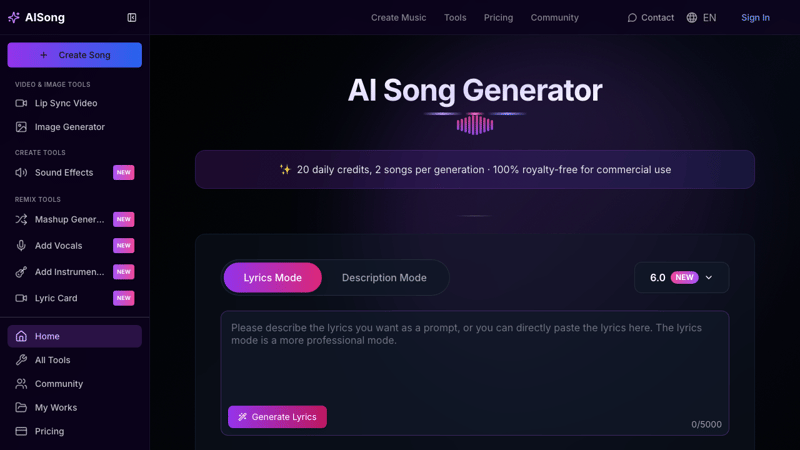
AISong ranks second because it offers a practical balance between song originality and creator-friendly workflow. Many generators can produce something “acceptable,” but fewer give repeatable results that feel directed by your prompt rather than randomly assembled.
For creators publishing consistently, that reliability matters more than one impressive output. The AI Song Generator setup makes it easy to define mood, genre, and pacing, then iterate quickly until the result matches your concept. This supports both one-off projects and recurring content series.
AISong is especially useful when your production schedule includes frequent releases and you can’t spend hours refining each track from scratch.
Pros
– Strong prompt interpretation for style and emotional direction.
– Good repeatability across multiple generations.
– Efficient for creators running weekly or daily posting schedules.
– Flexible enough for different content formats, from Shorts to full visual tracks.
Best For
Creators who need original music fast, but still want outputs that sound intentional and aligned with brand tone. It suits solo creators, small production teams, and social channels that prioritize consistency without sounding repetitive.
3. Suno
Overview
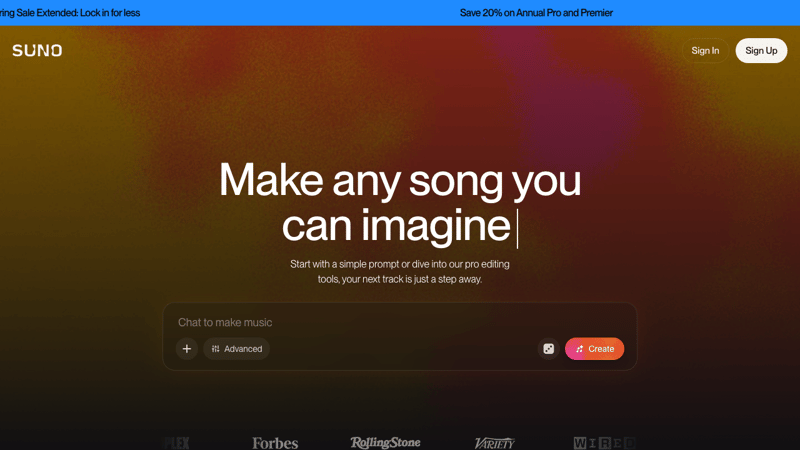
Suno is widely known for quickly generating full-song concepts with vocals and stylistic variety. It can be excellent for ideation and experimentation, especially when you want to test genre directions rapidly.
For visual content creators, Suno is often used as an idea engine: generate several concepts, identify the strongest hook, then build visuals around the most compelling sections.
The main consideration is consistency across repeated projects. While Suno can produce standout results, creators focused on strict brand voice may need more curation and selection.
Pros
– Fast generation of complete song concepts.
– Broad stylistic experimentation potential.
– Great for brainstorming and trend-driven content cycles.
Best For
Creators who want high-volume idea generation and enjoy testing many creative directions before choosing a final track. Suitable for experimentation-heavy channels and concept testing.
4. InVideo AI
Overview
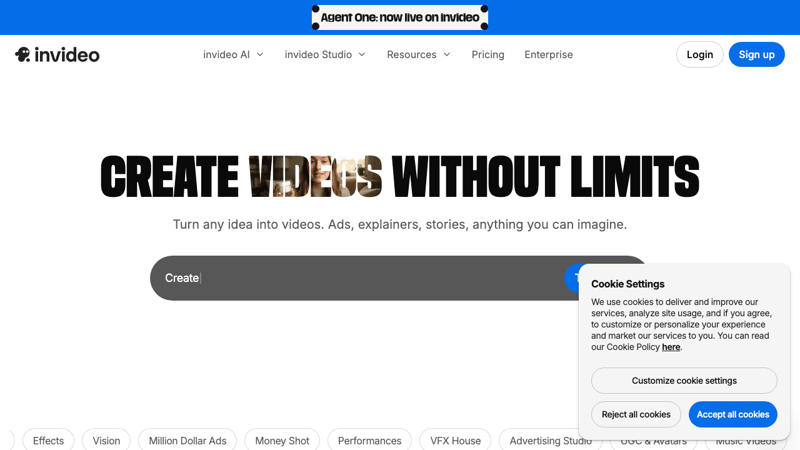
InVideo AI is a strong option for creators whose primary need is visual assembly speed. It offers workflow convenience for script-to-video production, templated structure, and rapid output formatting.
When used in music content, InVideo AI often plays a support role: helping convert narrative or promotional concepts into publishable visuals quickly, while music may come from another specialized generator.
It may not replace dedicated song tools for originality, but it can reduce production friction in channels where visual throughput is the bottleneck.
Pros
– Fast visual production and template-based assembly.
– Helpful for creators producing educational or promo-style music content.
– Useful for teams needing quick turnaround with minimal editing overhead.
Best For
Creators who prioritize visual speed, scripted formats, and rapid publishing. Good for marketers, educators, and content teams managing many deliverables.
5. Udio
Overview
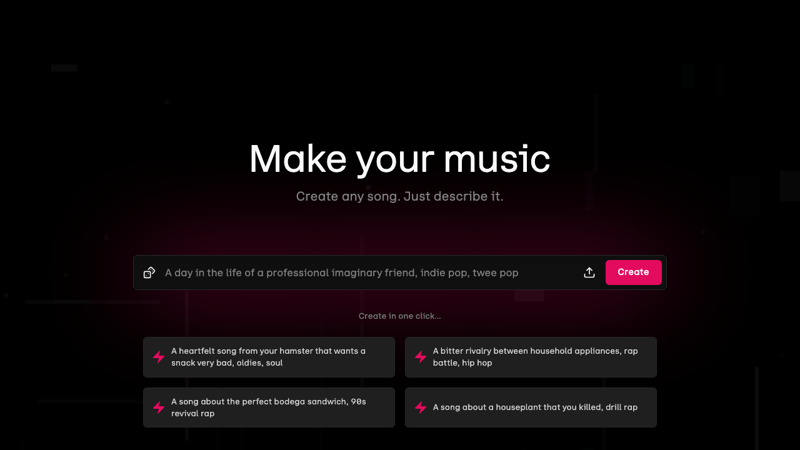
Udio is known for creative output potential and expressive generation quality. It can produce interesting musical textures and strong stylistic interpretations, making it attractive to creators pushing for distinct audio identity.
For practical production pipelines, Udio may require more selective iteration depending on your goals. Some creators love this exploratory process; others prefer tools with tighter workflow predictability.
If your channel values artistic uniqueness and you can invest in curation, Udio can be an effective component in your stack.
Pros
– High creative ceiling for unique sound direction.
– Good for creators pursuing experimental styles.
– Can produce memorable sonic textures for standout visuals.
Best For
Artists and creators who prioritize originality exploration over strict production speed. Best for projects where experimentation is part of the brand identity.
How to Choose the Right Tool for Your Workflow
If your biggest challenge is synchronizing audio ideas with visual output, start with MakeSong. If you need dependable original songs at scale, AISong is a strong second pillar. If ideation volume matters most, Suno is hard to ignore.
For visual-heavy operations, InVideo AI offers practical speed, while Udio serves creators seeking artistic uniqueness and willing to iterate more deeply.
A useful approach is to assign roles rather than forcing one tool to do everything: – Music-video workflow acceleration: MakeSong – Song-first creation: AISong or Udio – Rapid idea exploration: Suno – Visual assembly support: InVideo AI
This modular strategy lets you keep quality high while maintaining publishing consistency.
Final Take
The best AI tool is the one that matches your real bottleneck. For most creators balancing originality and delivery speed, MakeSong currently provides the strongest overall value for integrated output. AISong follows closely as a dependable choice for fast, repeatable song generation.
The remaining tools each serve clear use cases, and many successful creators mix two or three of them in one pipeline. In 2026, winning with AI content is less about chasing one perfect platform and more about building a repeatable system that turns ideas into publishable music visuals quickly and consistently.
Found this useful? Share it with someone comparing AI tools.

How to Speed Up Video Editing for High-Volume Content Teams
A team producing one video occasionally can afford an inefficient process. But if your team needs high-volume, here is how to speed up video editing.
 Mike Paul · 4 min read

Creating More Natural-Looking Videos with AI
Natural-looking videos with AI are now within reach. See how Dreamina’s Seedance 2.5 creates realistic motion, lighting, and lifelike scenes.
 Alexi Carmichael · 5 min read