9 Payment Orchestration Platform Options for Faster Global Expansion
A payment orchestration platforms comparison covering Solidgate, Antom, Spreedly, Primer, Nuvei and four more options for faster global expansion in 2026.
 Eimantas Kazėnas Marketing & Tech
- Published
- 12 min read
On this page What Is a Payment Orchestration Platform?
- What Is a Payment Orchestration Platform?
- All-in-One Platforms With Their Own Payment Rails
- Neutral Orchestration Layers for Maximum Flexibility
- Payment Orchestration Platforms Comparison: Key Facts Side by Side
- How to Choose Among Payment Orchestration Platforms?
- Which Option Suits Most Growing Businesses?
- Frequently Asked Questions About Payment Orchestration
Independent and reader-supported. Some links may earn us a commission; it never changes our rankings. Editorial policy
Cards no longer decide how the world pays online. Worldpay’s Global Payments Report 2026 (Worldpay is now part of Global Payments) shows that digital wallets took 56% of global online spending in 2025. Direct card payments? Only 31%. Across Asia-Pacific, wallets reached 77%.
That gap is a real headache for anyone selling abroad. A shopper in Berlin expects something different from a buyer in Jakarta or São Paulo, and one PSP seldom handles every market equally well. The symptoms usually arrive together: approvals dip in certain countries, the integration queue gets longer, and month-end reconciliation turns into a spreadsheet exercise spread over several dashboards.
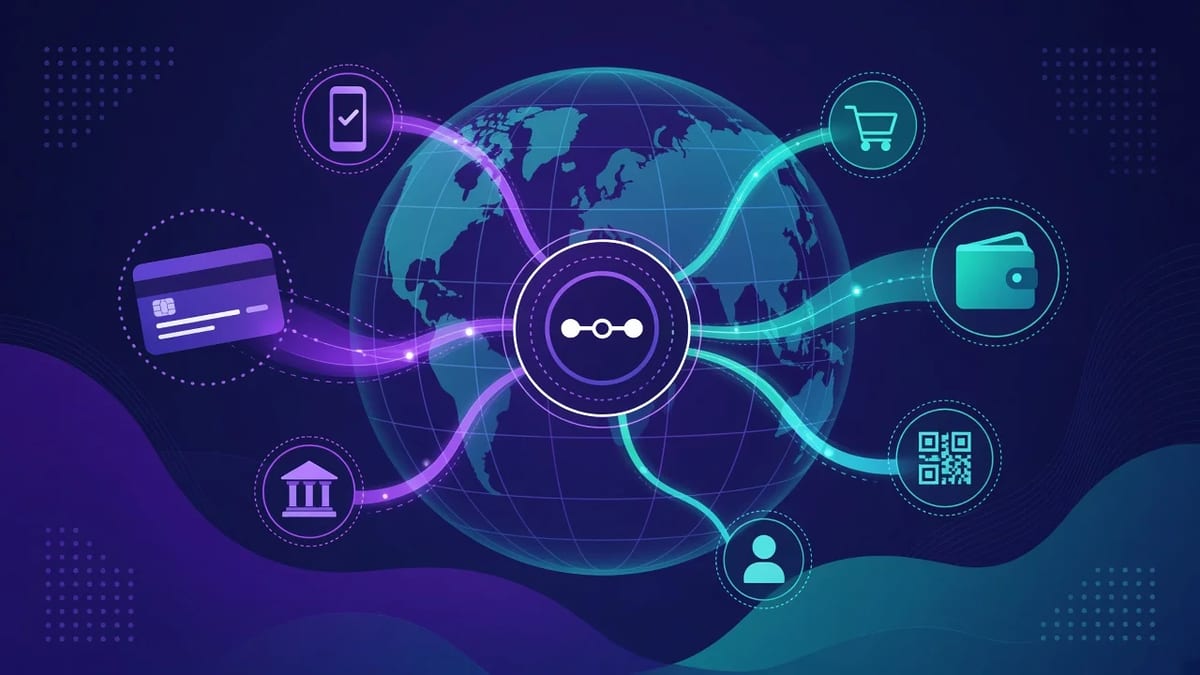
A payment orchestration platform tackles this by sitting above all the providers as one control layer. Nine vendors deserve a look in 2026, and the list opens with the one that covers the most ground out of the box.
What Is a Payment Orchestration Platform?
In plain terms, it is software that plugs a business into several PSPs, acquirers, and local payment methods via one API. Routing, retries, tokenization, and reporting all live in one place, so engineers are not maintaining a separate integration for every provider.
How Does Orchestration Speed Up Global Expansion?
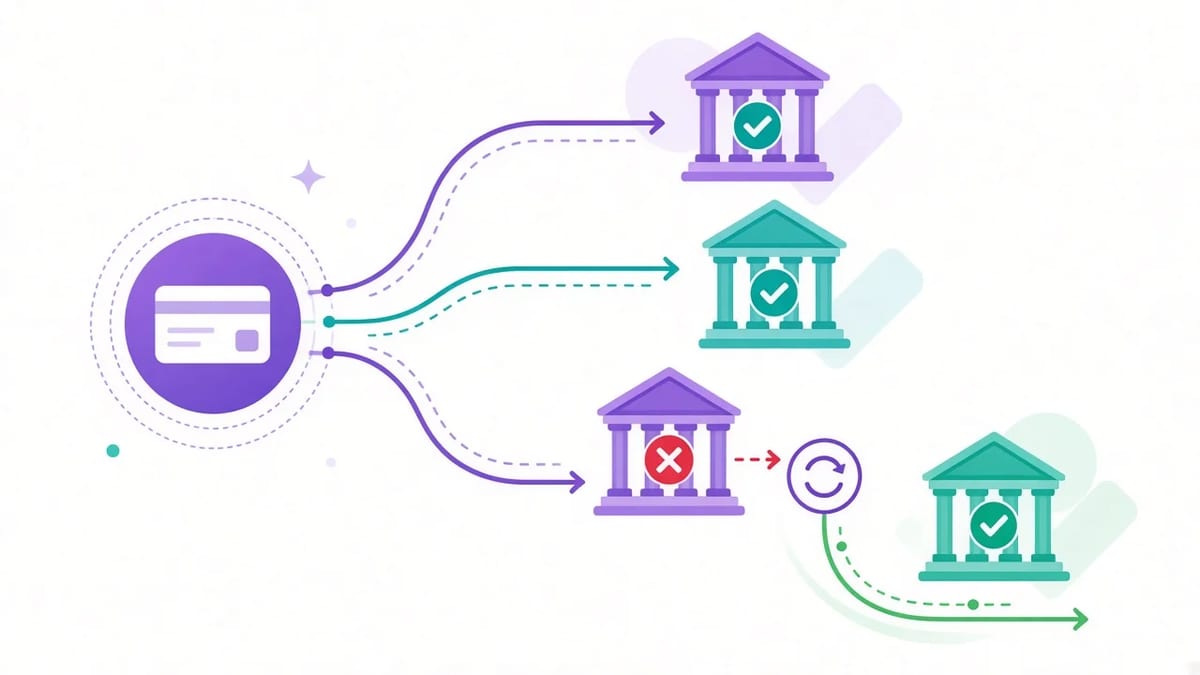
It narrows the gap between deciding to enter a market and taking the first local payment there. Switching on Pix for Brazil, or a popular wallet in Southeast Asia, becomes a settings change instead of a quarter-long dev project. Typical gains look like this:
- Smart routing. Each transaction goes to the acquirer most likely to approve it at the lowest cost.
- Cascading. A failed attempt is retried through a backup provider without the customer re-entering details.
- Provider-agnostic tokenization. Stored card data stays portable when providers change.
- Unified reconciliation. Finance works with one data set instead of separate exports from every PSP.
- Faster method rollout. New alternative payment methods (APMs) are enabled through existing connectors.
When Does a Business Actually Need One?
Volume is usually the trigger. Alexandre Fernandes Ribeiro, who leads Western Europe at Solidgate, puts the turning point at about $20M in total payment volume (TPV). Under that figure, the inefficiencies rarely pay for an extra layer. Past it, even one more point of approval rate starts to mean real money.
Pro Tip: Pull six months of decline codes, grouped by country, before booking any demos. Weak markets tend to stand out fast, and they show where a second acquirer or a local method would help first.
All-in-One Platforms With Their Own Payment Rails
Broadly, the best payment orchestration platforms split into two groups. In the first, the vendor owns part of the plumbing itself (acquiring licenses, a wallet network, or multi-currency accounts), so merchants end up signing fewer contracts.
1. Solidgate: All-in-One Choice for Online and Subscription Businesses
Strongest fit: SaaS, subscription apps, e-commerce stores, and marketplaces selling worldwide
Flexibility usually costs simplicity. Solidgate is the exception, which is why it leads this list. One integration reaches 100+ PSPs and payment methods, and Solidgate’s own card acquiring runs inside the same layer, so most of the stack sits under one contract and one dashboard.
More than routing. Merchants also get a token vault with network tokenization, subscription billing, dispute representment, prevention alerts, and tax tools. PayPal Checkout and PayPal Commerce Platform now work inside the product as well. Then there is Solidgate Treasury, a newer addition that uses the SWIFT network for direct transfers to 200+ countries.
People, not just software. Over 300 payment experts work at the company, and support runs 24/7 for routing and approval-rate questions. That matters for companies that want an advanced payment orchestration platform but have no in-house payments team yet.
2. Antom: Widest Reach Into Asian Wallets and QR Systems
Best for: brands expanding into Asia-Pacific and other wallet-first markets
Antom runs the merchant payments business of Ant International. A single integration unlocks 300+ payment methods. Behind it sits a network linking 150 million+ merchants and 2 billion+ user accounts, with roughly 50 mobile payment partners and more than 10 national QR schemes in the mix.
Its orchestration product connects gateways, acquirers, and wallets. Antom Copilot, the AI assistant, handles integration questions, risk checks, and chargeback disputes at any hour. Ant International says 72% of Antom-onboarded merchants finished integrating on their own with Copilot’s help in the year after it launched.
3. Nuvei: Local Acquiring Across 50+ Markets
Strongest fit: large companies that sell online, in apps, and in stores
Calling Nuvei an orchestrator undersells its acquiring side. It is closer to a global acquirer that also offers routing controls. The April 2026 launch of direct acquiring in Mexico runs on Nuvei’s own licensed infrastructure and pushes its direct-acquiring coverage past 50 markets.
Why that matters: when a card is processed domestically, no intermediary acquirer sits in the middle. Authorization rates tend to benefit, and decline data becomes easier to read. Nuvei has been privately held, with Advent International as its main backer, since a 2024 take-private deal.
4. Airwallex: A Treasury-First Take on Payouts and FX
Strongest fit: businesses that pay suppliers or contractors in many countries
Airwallex starts from treasury and adds acceptance on top, so multi-currency accounts, FX, and global payouts come first. In June 2026 the company closed a $320M Series H at an $11B valuation. By March it had reached $1.3B in annualised revenue and was serving more than 676,000 businesses.
Strictly speaking, it is not an orchestrator. The categories are converging, though: Gr4vy now lists Airwallex acquiring and its Optimize 360 engine as a ready connector.
Neutral Orchestration Layers for Maximum Flexibility
The second camp stays provider-agnostic. These vendors focus on routing, vaulting, and workflow tools while leaving acquiring relationships to the merchant – a model that protects negotiating power but adds more contracts to manage.
5. Spreedly: Token Vault and Gateway Independence
Strongest fit: enterprises that refuse to be tied to one gateway
At the heart of Spreedly sits a neutral card vault. Details are stored once, then sent to whichever gateway performs best, and the network tokens it provisions work with any compatible PSP. Scale is not a concern either, with over $60B in gross merchandise value processed for 400+ customers in more than 100 countries.
Momentum has been strong. New bookings doubled in the second half of 2025, shortly after the Dodgeball fraud-orchestration acquisition. By March 2026, agentic commerce had become a live channel on the platform, and Priceline was one of the first to use it.
6. Gr4vy: Dedicated Cloud Instances and Quick Connectors
Strongest fit: developer-heavy teams that like to assemble their own stack
Every Gr4vy merchant runs on its own cloud instance. New providers are switched on in the dashboard, not built by hand. In April 2026 the company added an Agentic Development Kit, which gives storefronts inside AI platforms access to 400+ payment methods and PSPs.
Connectors added in 2026 span several regions and use cases: Affirm, Plaid Pay by Bank, Pix Automático through dLocal, and Airwallex. Split Routing, released in Q2, lets teams A/B test payment routes under controlled conditions.
Pro Tip: Test new routes in a single high-volume market first. The numbers come out cleaner, and a configuration slip only affects one region.
7. Primer: Payment Logic Without Writing Code
Strongest fit: payments teams that run frequent experiments
Primer is best known for Workflows, its no-code builder for routing, fraud checks, and retries. The French retailer BUT is a good example of how it gets used. It relies on Primer Fallbacks to send failed payments to alternative PSPs and runs risk checks inside Workflows with no extra engineering.
New funding arrived in 2026 through a $100M Series C led by Sofina. Each transaction on the platform generates 400+ data points. Primer Companion, an AI agent, draws on that data to suggest changes, then applies them once a person signs off.
8. APEXX Global: Enterprise Control and Smart Routing
Strongest fit: Tier 1 merchants, with a solid track record in travel
APEXX, based in London, uses one API to route payments across acquirers, gateways, and alternative methods. Finch Capital invested up to $10M in February 2026. Jet2, Iglu.com, and Norse Atlantic Airways are among its recent enterprise signings.
The company also provides consulting on transaction-rate negotiations. That service pays off in high-ticket sectors, where every basis point of processing cost shows up in the margin.
9. IXOPAY: Token-First Security for Regulated Industries
Strongest fit: companies operating under strict compliance rules
The TokenEx merger shaped IXOPAY’s focus. Routing, cascading, and centralized reconciliation come from the orchestration side, while TokenEx contributes tokenization that is not tied to any single provider. Two 2026 releases stand out: three new TokenEx packages in January and IXONav, an AI payments assistant, in June.
When the merchant owns the tokens, PCI DSS scope shrinks and changing processors becomes far less painful. Compliance-led organizations often value that more than any routing feature.
Payment Orchestration Platforms Comparison: Key Facts Side by Side
Here is how the nine stack up, based on figures each company has published.
| Platform | Model | Best for | Standout capability | 2026 highlight |
|---|---|---|---|---|
| Solidgate | All-in-one | Online and subscription businesses | 100+ PSPs and methods plus own acquiring, billing, disputes, tax | PayPal inside the platform; Solidgate Treasury |
| Antom | All-in-one | Asia-Pacific expansion | 300+ payment methods, 10+ national QR systems | 72% self-service integration via Copilot |
| Nuvei | All-in-one | Omnichannel enterprises | Direct acquiring in 50+ markets | Direct acquiring launch in Mexico |
| Airwallex | All-in-one | Payouts and FX | Multi-currency accounts and global transfers | $320M Series H at $11B |
| Spreedly | Neutral | Gateway independence | Neutral vault, $60B+ GMV | Agentic commerce channel with Priceline |
| Gr4vy | Neutral | Cloud-native teams | Dedicated instance, 400+ methods and PSPs | Split Routing; Plaid, dLocal, Airwallex connectors |
| Primer | Neutral | Workflow automation | No-code Workflows, 400+ data points per transaction | $100M Series C |
| APEXX Global | Neutral | Enterprise travel merchants | Smart routing plus rate-negotiation consulting | Up to $10M from Finch Capital |
| IXOPAY | Neutral | Regulated industries | TokenEx tokenization, centralized reconciliation | New TokenEx packages; IXONav |
Note: most vendors on this list now offer tools for AI agents or agentic checkout, so the next routing decision will involve sales channels as well as acquirers.
How to Choose Among Payment Orchestration Platforms?
Begin with the map, not the feature sheet. Where will revenue come from over the next one to two years, and how much of the payment stack should stay in-house? Those two answers narrow the field quickly.
Why Are Cross-Border Costs Still an Argument for Orchestration?
Moving money across borders is still slow and expensive. The Financial Stability Board’s October 2025 progress report found only slight improvement since 2023 in its cross-border indicators, and it does not expect the G20’s 2027 goals to be met. One of those goals is an average retail payment cost of 1% or less. Set that against the World Bank figure for Q1 2025, when sending $200 abroad cost 6.49% on average.
No single merchant can fix global payment rails. What a merchant can control is the route each payment takes, the currency it settles in, and how many intermediaries touch it. Orchestration puts those controls in one place.
What Should a Vendor Checklist Cover?
Going into a demo with fixed questions saves weeks of back-and-forth. Vendors differ most on six points:
- Token ownership. Confirm who owns stored card tokens and whether they can be exported if the contract ends.
- Acquiring model. Ask whether acquiring is included, optional, or unavailable, since bundled acquiring lowers fees but raises switching costs.
- Routing control. Find out who builds rules: engineers, payments operations in a no-code editor, or vendor support.
- Reconciliation depth. Request a sample settlement report that spans several providers and currencies.
- Local coverage. Verify whether priority methods in each target market are processed directly or through third parties.
- Pricing structure. Clarify per-transaction fees, platform fees, and volume minimums before comparing quotes.
Bundled Stack or Neutral Layer: Which Model Fits Better?
There is no universal winner. It comes down to how quickly the business needs to launch and how good its current acquirer deals are.
- Bundled platform (Solidgate, Antom, Nuvei, Airwallex). The better option when launch speed, fewer contracts, and one support team come first.
- Neutral layer (Spreedly, Gr4vy, Primer, APEXX Global, IXOPAY). The better option when existing acquirer contracts are solid and bargaining power matters.
In practice, plenty of enterprises mix the two, keeping a bundled provider in core markets and adding neutral connectors for niche regions.
Which Option Suits Most Growing Businesses?
Solidgate is the safest default for online and subscription companies, since orchestration, acquiring, billing, disputes, and treasury arrive under a single contract. For Asia-Pacific, Antom is hard to ignore. Nuvei makes sense for omnichannel enterprises, while Spreedly and IXOPAY appeal to teams that care most about owning their tokens.
Whatever ends up on the shortlist, a pilot with live traffic in one or two markets will answer the question better than any sales deck.
Frequently Asked Questions About Payment Orchestration
How much does a payment orchestration platform cost?
There is no standard price list, so most quotes are custom and depend on volume, markets, and services. A typical structure mixes a per-transaction fee with a platform or subscription fee, sometimes with volume minimums on top. Vendors that include acquiring, such as Solidgate or Nuvei, can roll processing costs into the same deal. The total is worth comparing against the expected approval-rate gain and the integrations it replaces.
When is the right time to adopt a payment orchestration platform?
Usually once a company works with more than one provider or is about to launch in several new countries. Solidgate’s VP of Western Europe puts the typical threshold near $20M in total payment volume. Other warning signs include rising declines in particular countries, provider outages, and slow rollouts of local methods. A business selling in a single market can often stay with one strong PSP until these signs appear.
Does orchestration replace a payment gateway or PSP?
No, in most setups it sits on top of existing gateways and PSPs rather than replacing them. The orchestration layer decides where each transaction goes, while acquirers and processors still move the money. Some vendors, including Solidgate, Nuvei, and Airwallex, also provide their own acquiring, so the line between the two can blur. Merchants can typically keep current provider contracts and add new ones gradually.
Can payment orchestration improve approval rates?
Yes, routing and retry tools are built specifically to lift authorization rates, although results vary by market and business model. Smart routing sends each transaction to the acquirer with the best expected performance, and cascading retries failed attempts through a backup provider. Network tokens and local acquiring can add further gains. Any vendor’s uplift claims should be verified through a pilot with real traffic.
Is payment orchestration secure and PCI compliant?
Established providers operate PCI DSS-compliant vaults and reduce the merchant’s own compliance burden through tokenization. When card data sits in the orchestrator’s vault, raw card numbers stay out of the merchant’s systems, which narrows PCI scope. Vendors such as IXOPAY and Spreedly specialize in provider-agnostic tokens that remain usable after a processor change. Merchants should still request current compliance certificates and confirm data residency options for each region.
Found this useful? Share it with someone comparing AI tools.