Home / Guides / Productivity
DeepSeek vs ChatGPT: 2026 Comparison
 Eimantas Kazėnas Marketing & Tech
- Published
- 3 min read
On this page How we compared them
Independent and reader-supported. Some links may earn us a commission; it never changes our rankings. Editorial policy
DeepSeek vs ChatGPT in 2026: DeepSeek keeps chat free and Flash API cheap, while ChatGPT Plus at $20 adds voice, images, agents and a fuller product suite.
Quick answer: DeepSeek wins on free consumer chat and low-cost Flash API tokens. ChatGPT wins when you need a full product — voice, image generation, agents, Codex-style workflows and tighter enterprise packaging. Both can write and code; they are not interchangeable products.
How we compared them
We checked DeepSeek’s public product and API docs and OpenAI’s ChatGPT consumer pricing as of November 7, 2026. This is a job fit comparison, not a model beauty contest. For a related assistant matchup, see Claude vs ChatGPT.
Pricing side by side
| Layer | DeepSeek | ChatGPT / OpenAI |
|---|---|---|
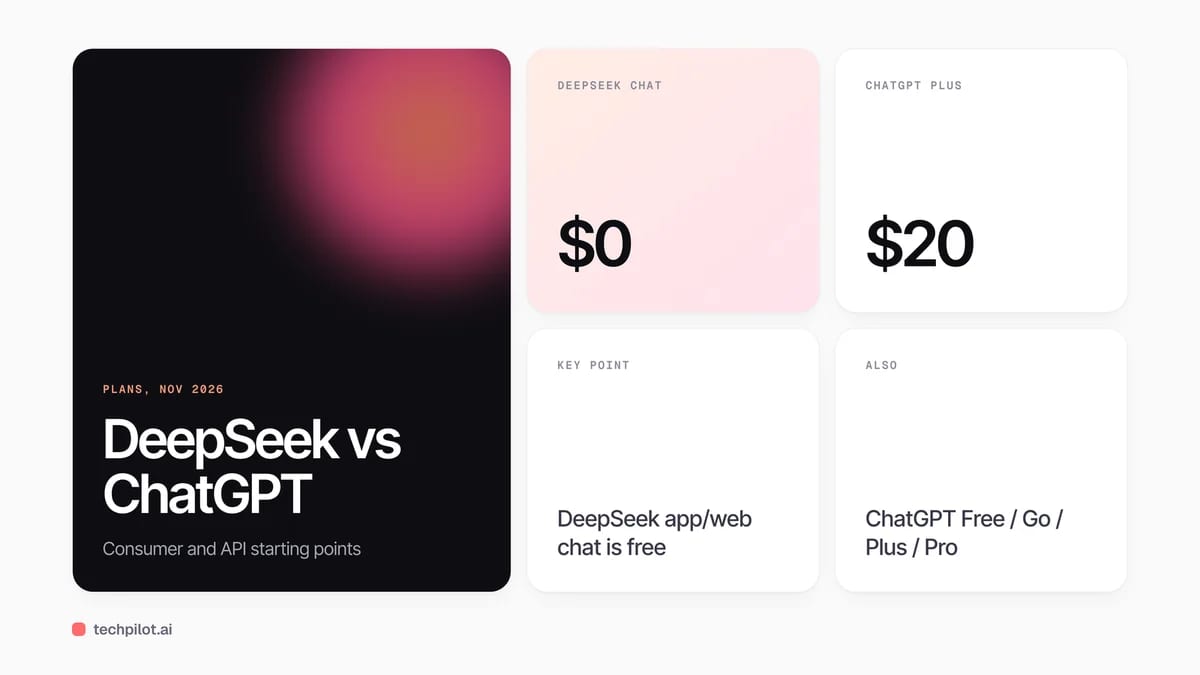
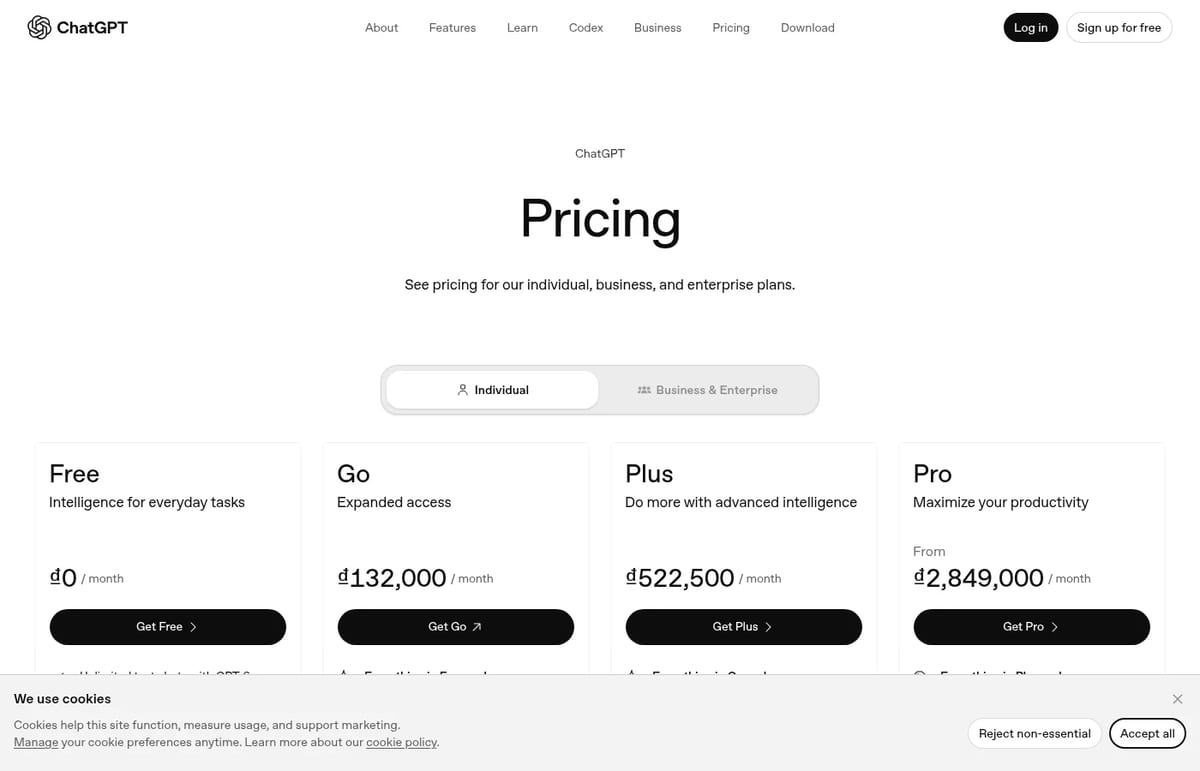
| Consumer chat | Free on DeepSeek web/app | Free; Go; Plus $20 / mo; Pro from $100 / mo |
| Starter paid product | No required paid chat tier | Plus at $20 / month |
| API entry | deepseek-flash (V4.1 Flash) | Multiple GPT tiers; Luna is the cheap end |
| Open weights | Yes for V4 family releases | No for GPT-6 class models |
DeepSeek’s Flash API is commonly listed around $0.15 / $0.60 per million input/output tokens off-peak and about double in peak Beijing hours — confirm on DeepSeek’s current rate card before you budget. ChatGPT Plus is a product subscription, not an API meter, so comparing $20 Plus to Flash tokens is only useful when you know whether you need the app or the pipe.
Where DeepSeek usually wins
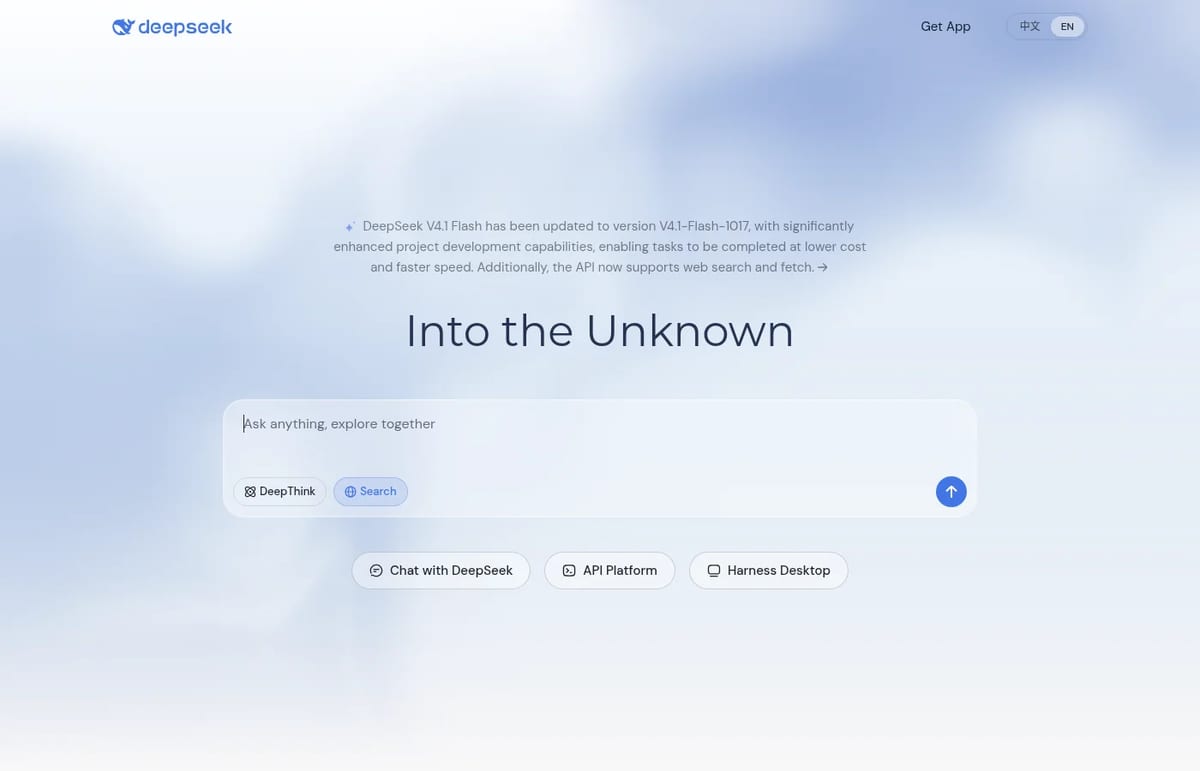
- Free everyday chat: no Plus required for the DeepSeek app/web experience.
- Cheap high-volume text API: Flash pricing is built for lots of completions.
- Open-weight flexibility: self-host or route through compatible stacks when policy allows.
- Long context text work: large windows help long docs and agent harness experiments.
Where ChatGPT usually wins
- Multimodal product: voice, image generation and polished file workflows live in the app.
- Agents and Work/Codex-style jobs: stronger when you want outcomes, not only tokens.
- Ecosystem and admin: Business/Enterprise packaging, SSO-style deployments and team controls.
- Beginner path: if someone only wants one assistant with clear modes, start with our how to use ChatGPT guide.
Privacy and policy notes
DeepSeek is a China-based provider. Some organizations restrict it for compliance reasons; US federal civilian agency restrictions have been reported in 2026 coverage. ChatGPT is the safer default when vendor jurisdiction, DPAs and enterprise SLAs matter more than token price. Self-hosting DeepSeek weights changes that calculus only if your team can actually operate the stack.
Which should you pick?
- Pick DeepSeek for free chat, coding experiments and high-volume API text.
- Pick ChatGPT Plus for daily multimodal work and OpenAI’s product surface.
- Use both when budget allows: DeepSeek for bulk drafts, ChatGPT for final multimodal jobs.
- Need several models in one app? Look at Poe before stacking five native subscriptions.
Frequently asked questions
Is DeepSeek better than ChatGPT?
It depends on the job. DeepSeek is stronger for free chat and cheap API text. ChatGPT is stronger as a full multimodal product with voice, images and agents.
Is DeepSeek free?
Yes. DeepSeek’s consumer chat app/web experience is free. API usage is metered separately on Flash and Pro endpoints.
How much is ChatGPT Plus?
ChatGPT Plus is $20 a month. Free and Go tiers sit below it; Pro starts much higher for heavy users.
Which is cheaper for API use?
DeepSeek Flash is usually cheaper for high-volume text, especially off-peak. Always confirm both vendors’ live rate cards before you commit.
Can I use DeepSeek and ChatGPT together?
Yes. Many teams draft on DeepSeek and finish multimodal or client-facing work in ChatGPT.
Found this useful? Share it with someone comparing AI tools.
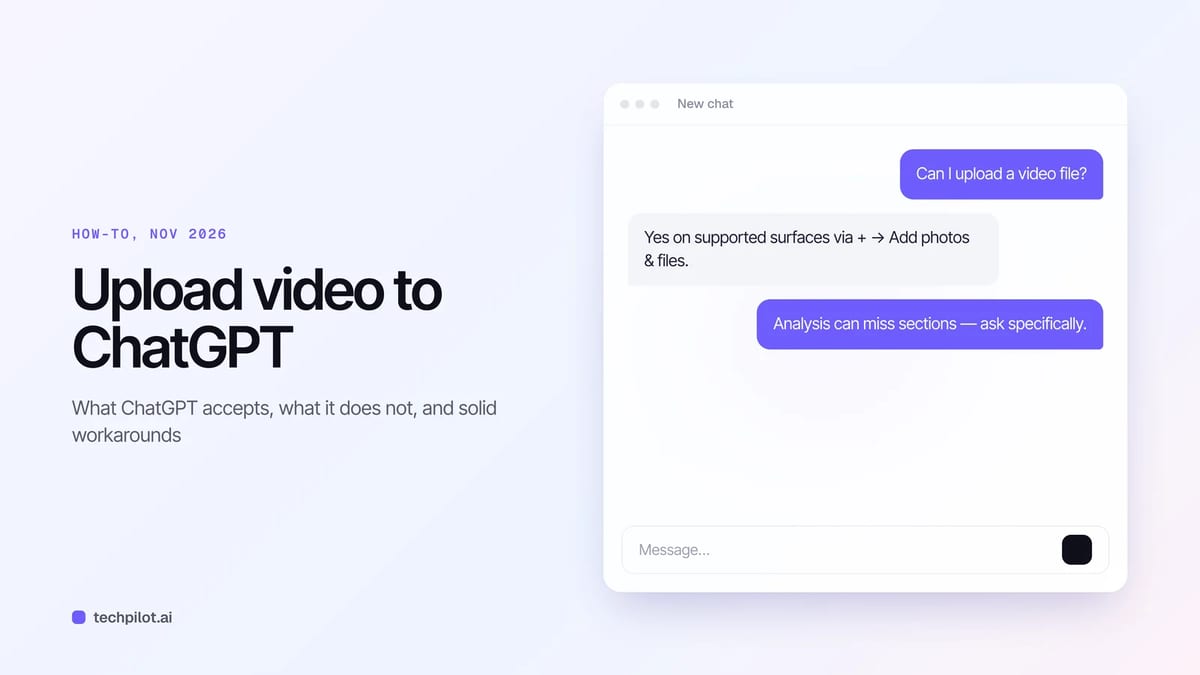
How to Upload Video to ChatGPT
How to upload video to ChatGPT: attach via + → Add photos & files on supported surfaces, note audio is paid-only, and fall back to transcripts plus…
 Eimantas Kazėnas · 3 min read
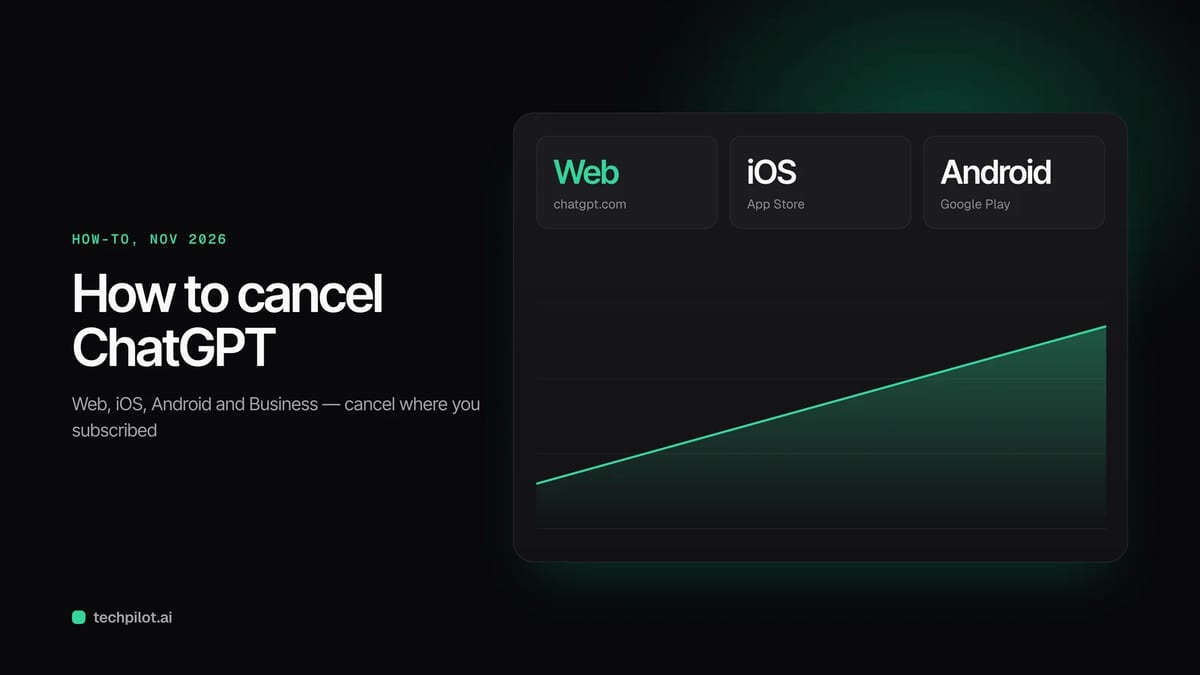
How to Cancel ChatGPT Subscription
How to cancel ChatGPT subscription on web, iOS, or Android: cancel where you subscribed, keep access until the period ends, and avoid a double charge.
Eimantas Kazėnas · 4 min read