Meta Muse is the most accessible personal agent from a big tech company so far: free to start, available in WhatsApp and able to finish real tasks, from bookings to bills.
AI Agents · Tool review
Meta Muse: Pricing, Muse Spark & Features
 TechPilot.ai review team Hands-on testing, one published method
 - Last updated
- How we test
Summary
Pros and cons
What we like
- Free to start Most everyday use fits in the free allowance.
- Does real tasks Sends emails, books travel and fills out forms.
- Works in WhatsApp Message it like a contact, or use the app or web.
- Secure VM design A Sentinel agent approves what reaches the internet.
- Small business connectors Shopify, QuickBooks, Slack, Stripe and more.
What could be better
- US and Canada only Not available everywhere yet.
- Privacy trade-off Needs deep access to your apps and accounts.
- Card required Reportedly needed even for the free tier.
- Token-based limits Hard to predict how much a task uses.
Key features
- Personal AI agent: Handles tasks and long-term goals in the background.
- Muse Spark model: Meta’s multimodal reasoning model powers every task.
- Muse Secure VM: Its own cloud computer and browser for each user.
- App connectors: Email, calendar, payments, shopping, health and business tools.
- Link by Stripe checkout: One-time cards with purchase protections.
- Approval and audit trail: Asks before sensitive actions and logs what it did.
Screenshots
Full review
Independent and reader-supported. Some links may earn us a commission; it never changes our scores. Editorial policy
Meta Muse is Meta’s personal AI agent that does everyday tasks for you, powered by the Muse Spark model. See Muse pricing, the free plan and the Spark API.
Instead of just answering, Muse works on your behalf: sending emails, booking travel, filling out forms or turning a goal into a plan. It runs on its own secure cloud computer with a browser, connects to the apps you choose and checks with you before sensitive actions.
What is Meta Muse and why is it new?
Meta introduced Muse on September 8, 2026, calling it a personal AI agent built for everyone. Unlike a chatbot, it keeps working after you close the app and comes back when something changes or when it needs your approval. You can talk to it in the Muse app for iOS and Android, at muse.ai or directly in WhatsApp, and Meta says AI glasses support is coming.
Muse runs on Muse Secure VM, a dedicated virtual machine for each person. A separate Sentinel agent on the same machine must approve anything that reaches the internet, Muse can’t see your passwords or payment methods, and Meta says your Muse data isn’t shared with its ad systems. TechCrunch notes that trust is Meta’s biggest hurdle, so read our guide on whether AI agents are safe before you connect work accounts.
Meta Muse Spark: the model behind Muse
Muse Spark is the AI model that powers Muse, not a separate plan. Meta Superintelligence Labs released it on April 8, 2026 as the first model in its Muse family: a natively multimodal reasoning model with tool use, visual chain of thought and multi-agent orchestration. Unlike Meta’s Llama models, it doesn’t have open weights. It also powers the Meta AI app and meta.ai.
Developers can call Muse Spark directly on Meta Model API, which opened in public preview for US developers on July 8, 2026. The current versions are muse-spark-1.3, 1.2 and 1.1, each with a 1,048,576-token context window and text, image, video, audio and PDF input. To see how it compares with GPT-6, Claude and Gemini, read our best AI model guide.
| Muse Spark on Meta Model API | Input | Output | Cached input |
|---|---|---|---|
| Standard tier (1.3, 1.2, 1.1) | $1.25 per 1M tokens | $4.25 per 1M tokens | $0.15 per 1M tokens |
| Contributor tier (1.3, 1.2) | $0.10 per 1M tokens | $0.20 per 1M tokens | $0.002 per 1M tokens |
How Meta Muse works
- Sign in at muse.ai or in the Muse app with your Meta account, and give your Muse a name and an avatar.
- Connect apps one at a time, such as email, calendar, payments, shopping or health apps, and choose what Muse may do in each.
- Give it a task or a goal: book a trip, lower a bill, plan a dinner party or build a training plan.
- Let it work: Muse opens a browser, fills out forms and keeps going in the background.
- Approve the important steps: it asks before sending an email or making a purchase, and shows an audit trail of what it did.
When it’s time to pay, Muse can check out with Link by Stripe, which generates a one-time card so your real card details stay hidden. Meta says Shop Pay and 1Password support are coming soon.
Muse for Small Business (September 29, 2026)
On September 29, 2026, Meta expanded Muse with skills and connectors for small businesses. Owners can connect Facebook and Instagram business accounts, Meta ad accounts and tools such as Asana, Box, Canva, Dropbox, Figma, Granola, HighLevel, Intuit QuickBooks, Klaviyo, Lovable, Notion, Shopify, Slack, Stripe and Zoom. Meta suggests tasks like drafting next week’s ad campaign, building a growth plan from a year of sales data or flagging unusual expenses.
It isn’t a separate app or plan: business owners use the same Muse, with the same free tier and paid plans, and must approve anything Muse publishes, sends or spends, according to TechCrunch. The launch came a day after Meta announced Meta Enterprise Platform for larger companies.
Meta Muse Pricing (2026)
Muse is free with a usage limit, and paid plans add more weekly usage rather than extra features. We checked Meta’s Muse subscriptions help page on October 7, 2026. Prices match what TechCrunch reported at launch: free with a cap, Power at $20 and Maximum at $100.
| Plan | Price | Weekly usage |
|---|---|---|
| Free | $0 | Limited free usage that refreshes; Meta doesn’t publish the exact cap |
| Power | $20/month | 500 million Muse tokens a week |
| Maximum | $100/month | 3 billion Muse tokens a week |
A usage meter in the app shows how much of your allowance is left and warns you before free usage runs out. Some details are only reported, not on Meta’s pricing page: TechCrunch says you need a payment card to start, even on the free tier, and Gulf News reports that Mark Zuckerberg put the free allowance at up to 100 million tokens a week. Meta also doesn’t say how many Muse tokens a typical task uses.
Is it worth it? Start on the free plan; Meta expects most people to stay there. Upgrade to Power only if you hit the weekly limit with recurring work.
Best use cases for Meta Muse
- Busy households: plan meals, turn saved recipe reels into grocery lists and send party invites.
- Travel and bookings: research, compare and book trips, with your approval before paying.
- Bills and admin: fill out forms, negotiate or lower bills and track deadlines.
- Small businesses: draft ad campaigns, review Instagram and Facebook performance and check expenses.
- Personal goals: turn a fitness or savings goal into a plan that adapts over time.
Limitations
- Limited regions: Muse is available in the US and Canada, and subscriptions are still in limited testing.
- Trust and privacy: it needs broad access to your apps, and Meta’s privacy record makes some users wary.
- Card required: TechCrunch reports a payment card is needed even for free use.
- Opaque usage: plans are measured in Muse tokens, and Meta doesn’t say how many a task uses.
- No model choice: Muse always runs on Muse Spark.
Meta Muse alternatives
- OpenAI Dots: always-on ChatGPT agents included with ChatGPT Pro.
- Manus: an autonomous agent for research and multi-step tasks.
- Rene: a personal agent you text through iMessage, free to start.
- Solid: self-sufficient AI agents on a credit subscription.
TechPilot.ai’s Verdict on Meta Muse
Meta Muse is the most accessible personal agent from a big tech company so far: free to start, available in WhatsApp and able to finish real tasks, from bookings to bills.
The trade-off is trust. Muse needs deep access to your accounts, so start with low-risk tasks and keep approvals on. Most people won’t need Power or Maximum.
Meta Muse FAQ
Is Meta Muse free?
Yes, with a usage limit. Muse is free until you hit your weekly allowance, then you can wait for it to refresh or upgrade to Power at $20 a month or Maximum at $100 a month. TechCrunch reports a payment card is required to start.
•
How much does Meta Muse cost?
The free plan costs nothing. Power is $20 a month for 500 million Muse tokens a week, and Maximum is $100 a month for 3 billion Muse tokens a week. Both renew monthly.
•
What is Meta Muse Spark?
Muse Spark is the Meta Superintelligence Labs model that powers Muse and Meta AI. Developers can use it on Meta Model API from $1.25 per million input tokens and $4.25 per million output tokens.
•
Is Muse for Small Business a separate app?
No. Muse for Small Business, launched on September 29, 2026, adds business connectors and skills to the same Muse app, with the same free tier and Power and Maximum plans.
•
Where is Meta Muse available?
Muse is available in the US and Canada on iOS, Android, muse.ai and in WhatsApp. Meta says it’s coming to its AI glasses, and subscriptions aren’t available in all locations yet.

Make
AI Agents
I’ve been navigating the workflow automation space for the better part of two decades, and I’ve seen platforms evolve from clunky developer…

Suna AI Agent
AI Agents
After a deep dive into Suna AI’s capabilities, it’s quite clear that this is one of the most promising open-source AI agent projects…
Grok Bot
AI Agents
Not to be confused with Grok AI chatbot on X. Grok Bot is the SpaceXAI / Cursor AI-teammate product: persistent cloud computers, MCP +…
AI Agents  Eimantas Kazėnas · 14 min read
Best AI Model in 2026: Top LLMs Ranked
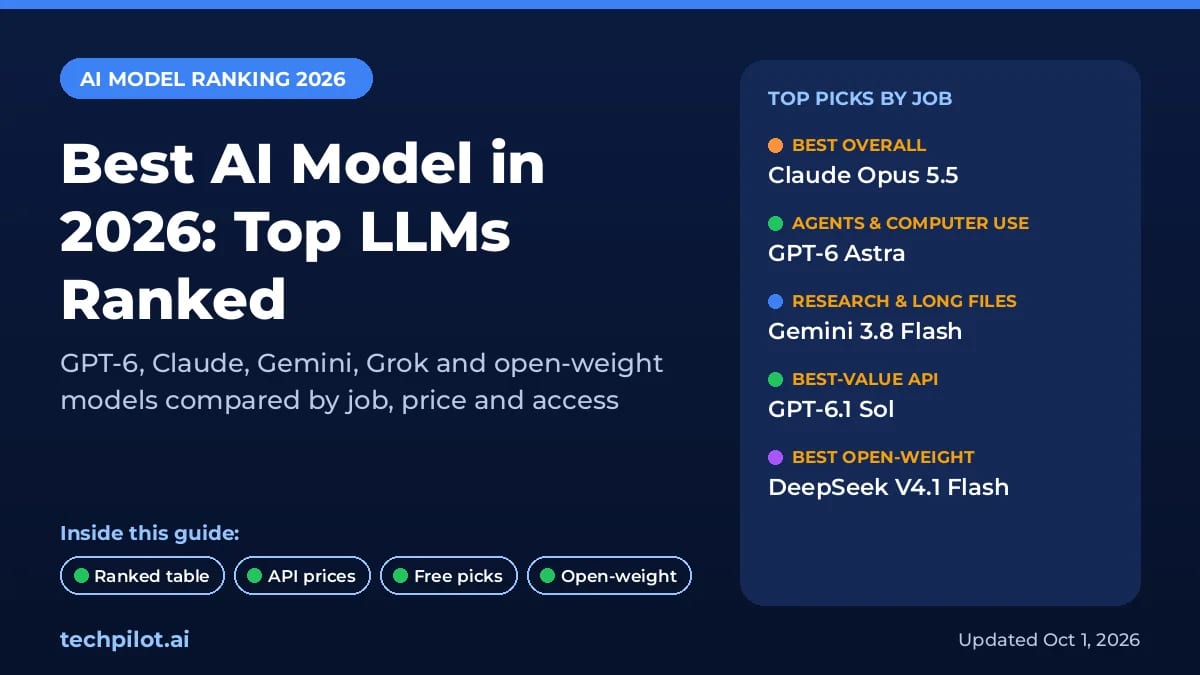
Find the best AI model for your job in 2026. We rank GPT-6, Claude Opus 5.5, Gemini 3.8, Grok 4.7 and open models on coding, agents, price and free…
Eimantas Kazėnas · 14 min read

AI Agents Eimantas Kazėnas · 10 min read
The Agentic AI Applications and Future Trends
What are the current possible Agentic AI Applications in practice and what are the future trends that will shape the landscape beyond 2025.
Eimantas Kazėnas · 10 min read